Postdoctoral researcher Renato Borras-Chavez‘s area of study—pinnipeds in the Southern Ocean—often takes him far away from the University of Rhode Island campus. Now the researcher in Sarah Kienle’s CEAL Lab is sharing more about dropping populations of certain seals and will present on the topic at the SCAR Open Science Conference in Oslo, Norway this August.
Borras-Chavez’s research focuses on ocean predators, food chain and behavioral ecology, population monitoring, and the use of field-based, analytical tools to understand how marine species interact with their environments.
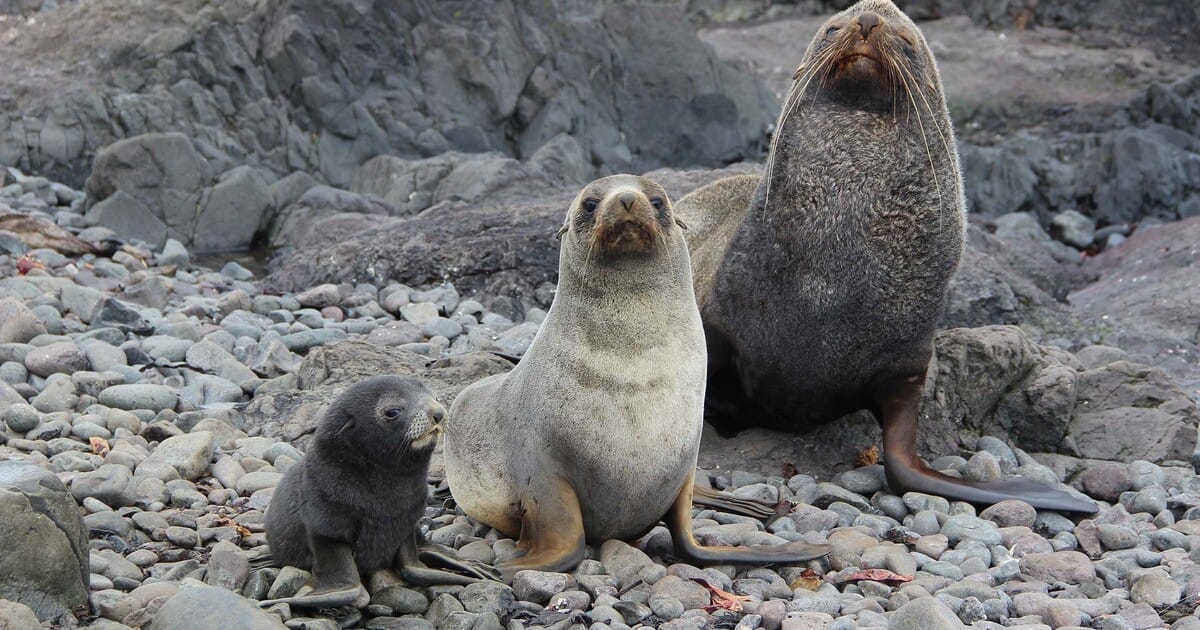
The leopard seal, assessed in a new report by URI’s Renato Borras-Chavez, is classified as of least concern, but should be reassessed with added data to inform conservation.
As a marine megafauna ecologist, Borras-Chavez is a member of the International Union for Conservation of Nature (IUCN), specifically the Species Survival Commission. They recently contributed to a new report from the Forty-eighth Antarctic Treaty Consultative Meeting (ATCM), with recommendations on Antarctic pinnipeds.
Borras-Chavez studies how marine species interact with their environments and has contributed to the assessments of two pinniped species. (URI Photo / Dept. of Natural Resources Science)
The Scientific Committee on Antarctic Research (SCAR) also convened an expert group, including Borras-Chavez and other experts, to evaluate the conservation status of Antarctic pinnipeds. This group presented its findings at the ATCM for the Committee for Environmental Protection to make recommendations to Antarctic stakeholders.
The IUCN is best known for the Red List, the world’s most comprehensive assessment of the conservation status of species. These assessments are prepared by species experts, peer-reviewed, and updated periodically to evaluate whether species are threatened, declining, stable, or recovering.
This July, new IUCN assessments were officially released, including pinnipeds, the marine mammals which include true seals, sea lions, fur seals, and walruses. Borras-Chavez assessed the status of two species: the leopard seal and the Juan Fernández fur seal.
Although both species remain in relatively good condition, Borras-Chavez and his colleagues say the results for other Antarctic pinnipeds are concerning. Antarctic fur seals have now been assessed as endangered and southern elephant seals as vulnerable, the latter due to dramatic declines likely caused by HPAI (or avian influenza), a current threat for multiple marine mammals and seabirds.
Climate change impacts, including declines in Antarctic sea ice, ocean warming and acidification, changes in prey availability and habitat, and disease, are threatening all of these species.
Their findings prompted the Scientific Committee on Antarctic Research to create an expert group, including Borras-Chavez, to communicate results to Antarctic policy and conservation bodies.
Borras-Chavez is among a number of scientists who have presented their team’s findings at these Antarctic working meetings, collaborating with colleagues from around the world. He is one of only a few US researchers on the committee, joined by colleagues at the University of Colorado and the National Oceanic and Atmospheric Administration (NOAA). Borras-Chavez said he is honored to represent URI and Rhode Island in this process.
“This announcement highlights the conservation implications of these new assessments,” he said, “and the importance of work in the Southern Ocean about species impact and other research happening at URI connected to study of wildlife in this region.”
Seal study
A postdoctoral researcher in URI’s Department of Natural Resources Science, Borras-Chavez focuses on the ecology of foraging, a primary means of sustenance for mammals in the Southern Ocean. His National Science Foundation-funded research supports science-based conservation and monitoring programs and he frequently connects his collaborative research to public engagement and policy-making agencies.
“My goal is to continue building research that connects ecology, marine monitoring, conservation, and public engagement,” he said. “Generating robust, science-based knowledge is impactful for society and, most importantly, helps decipher the beautiful nature that surrounds us.”
While the species he reported on are at healthy numbers, Borras-Chavez hopes other vulnerable Antarctic species receive more attention, highlighting the importance of monitoring all Antarctic seals and expanding available information. He says that major knowledge gaps limit scientists’ ability to accurately assess seals’ conservation status; the new working group hopes to rectify this and raise more public awareness about declines in seal populations and what that signifies.
“Our recommendations have been endorsed during the Antarctic Treaty Consultative Meeting,” Borras-Chavez said, “so now hopefully the southern elephant and Antarctic fur populations will be considered as Antarctic Specially Protected Species.”
These developments, Borras-Chavez said, show the significant impact rapid environmental change can have on species that forage in marine environments.
“The work done by the working group on leopard seals led by URI professor Sarah Kienle has been a significant help to those of us assessing some of these Antarctic species,” he said. “While what we’re observing about these seals is concerning, the larger endorsement of our group’s research is a great outcome.”
In August, Borras-Chavez will discuss their findings with other polar researchers from around the world in Norway as the SCAR Open Science Conference presents the latest research findings to address critical challenges facing the southernmost region of the world. Hosted by the Norwegian Polar Institute, this year’s conference aims to showcase cutting-edge polar research and inspire collaboration for a sustainable future.