But is this population recovering? Is there just one population of Antarctic blue whales, or multiple? Why do these questions matter for conservation?
Zoe Rand, a Ph.D. student in the UW Quantitative Ecology & Resource Management program (QERM), is tackling these questions in a new study published in Endangered Species Research. Building on the last assessment of Antarctic blue whales in 2004 and using old whaling records, which were surprisingly detailed, Zoe has been investigating if there are different populations or one big circumpolar population. The study also involved the UW School of Aquatic and Fishery Sciences (SAFS) professor and faculty for the QERM Program, Trevor Branch, and Jennifer Jackson from the British Antarctic Survey.
Antarctic blue whales are listed as an endangered species, and understanding their population structure is essential for their conservation. Conservation at the population level increases biodiversity, and this diversity helps the species adapt better to environmental changes and increases the chances of long-term survival.
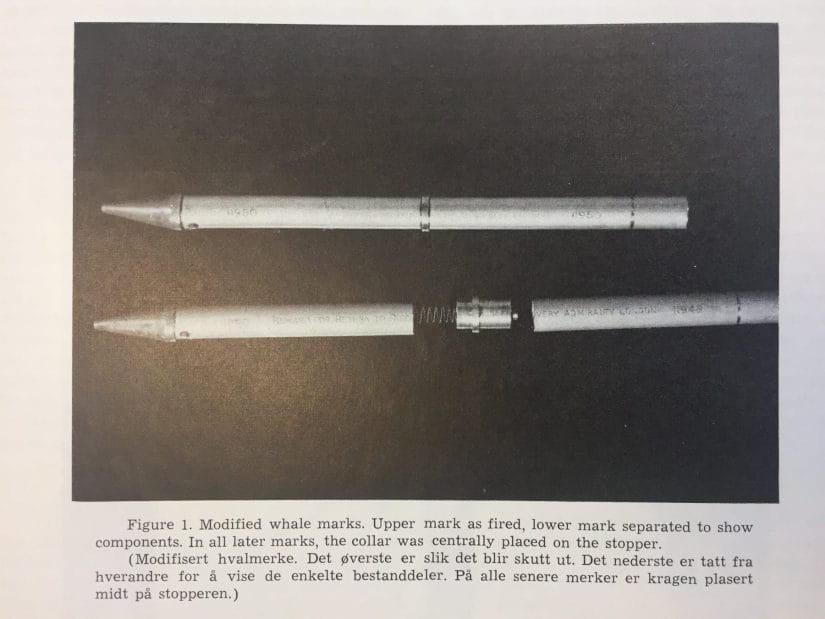
During the whaling years, biologists began the Discovery marking program. Foot-long metal rods with serial numbers were shot into the muscles of whales. When these whales were caught, the metal rod was returned, and information about the whale’s size, sex, length, and where they were caught was collected. Looking at where whales were marked compared to where they were caught can shed valuable insight into the movement of Antarctic blue whales, but this data has never been used before to look at population structure.
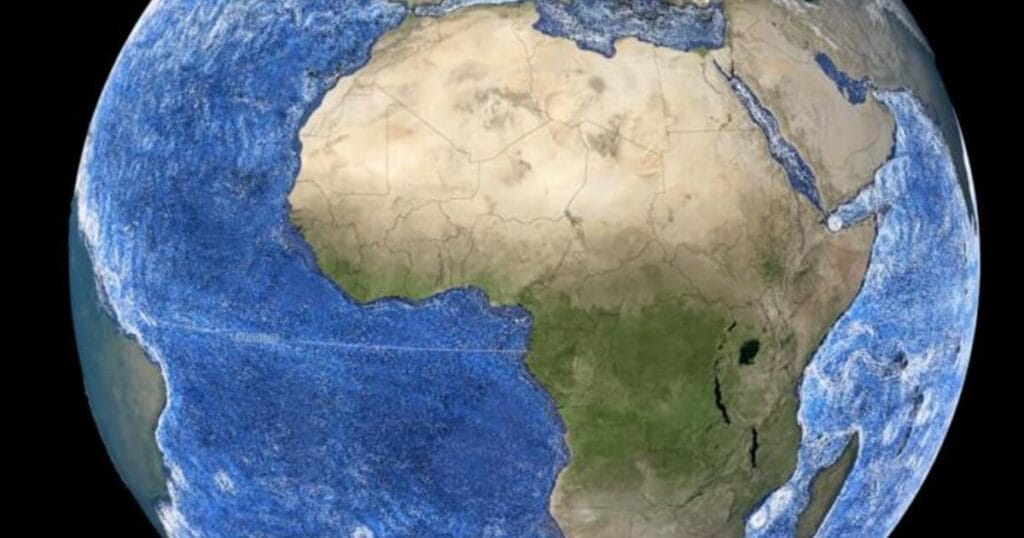
In this new study, this historical data was used alongside contemporary survey data in Bayesian models to calculate inter-annual movement rates among the three ocean basins that make up the Southern Ocean (Atlantic, Indian, Pacific), which are the feeding grounds for Antarctic blue whales. They found frequent mixing among the ocean basins, suggesting that whales do not return to the same basin every year. This points to Antarctic blue whales being one single circumpolar population in the Southern Ocean.
These results are consistent with evidence from Antarctic blue whale songs heard throughout the Southern Ocean. Only one song type has been recorded amongst the Antarctic blue whales. In comparison, pygmy blue whales have five different songs corresponding to five different populations. These results are also consistent with genetic studies that found that Antarctic blue whales are genetically similar.
This is the first time that historical mark-recovery data from the Discovery marking program has been analyzed using modern quantitative methods. This data exists for many other hunted whale species, such as fin and sei whales, so it could provide a framework for similar analyses for those whale species, too.
There is still a lot we don’t know about the Antarctic blue whale. Acoustic data and their movement on the feeding grounds suggest there is just one population in the Southern Ocean. Even though they do not appear to be separated geographically on their feeding grounds, they could still have population structure because of differences in breeding habitats or the timing of migration. However, almost nothing is known about Antarctic blue whale breeding behavior. Using historical data from whaling alongside contemporary data such as satellite tagging and photo-identification is our best hope for uncovering the secrets of the largest animal on earth.