A Long-Standing Assumption Put to the Test
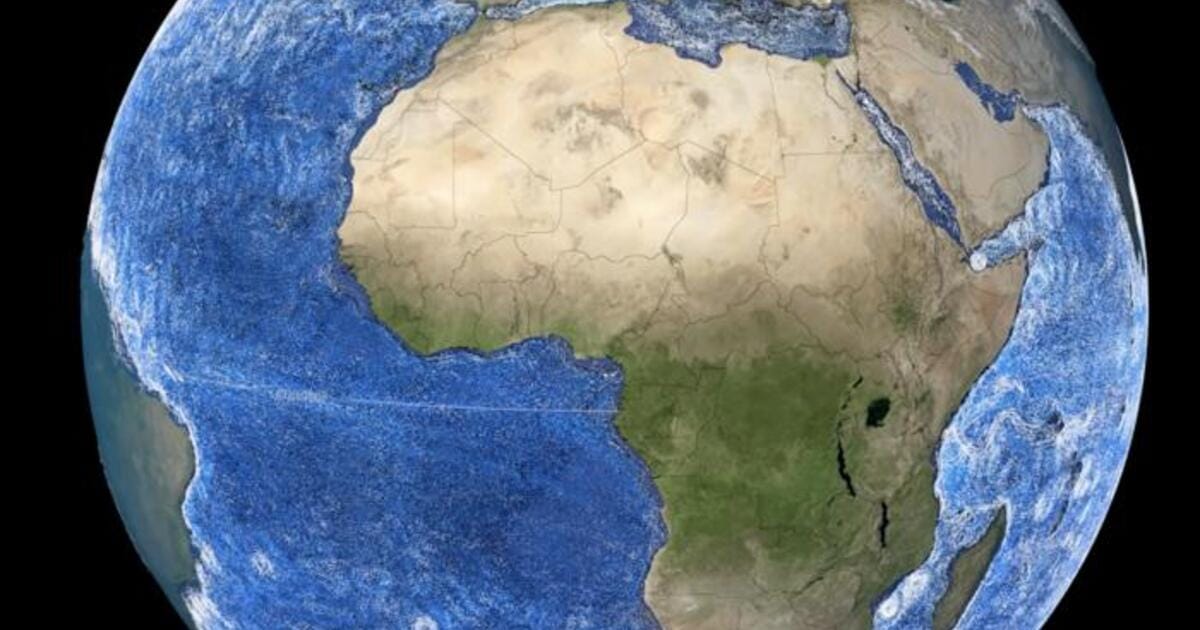
The Atlantic Meridional Overturning Circulation (AMOC) carries warm surface water northward and returns colder, denser water at depth, shaping the climate across the North Atlantic and far into the European continent. As such, the AMOC plays a pivotal role in the Earth’s climate system. For decades, scientists have proposed that Agulhas Leakage, which is the transfer of warm, saline Indian Ocean water around South Africa into the Atlantic controlled by shifts in the subtropical front position, supplies salt that supports North Atlantic Deep Water formation and helps sustain or strengthen the AMOC.
“This was basically the first textbook concept, that I learnt when I was a bachelor student. It was surprising to find geological evidence showing that it isn’t universally true. The AMOC can remain strong even when Agulhas Leakage weakens,” explainED lead author Dr. Suning Hou from Utrecht University.
Hou and his team studied the late Pliocene (3.6–2.6 million years ago): a brief but pronounced glacial event followed by the mid-Piacenzian Warm Period with warmer climate conditions than today. This interval offers a valuable geological test of ocean-circulation dynamics around South Africa and in the region of AMOC during a cool-to-warm transition.
Tracking an Ocean Front in Seafloor Sediments
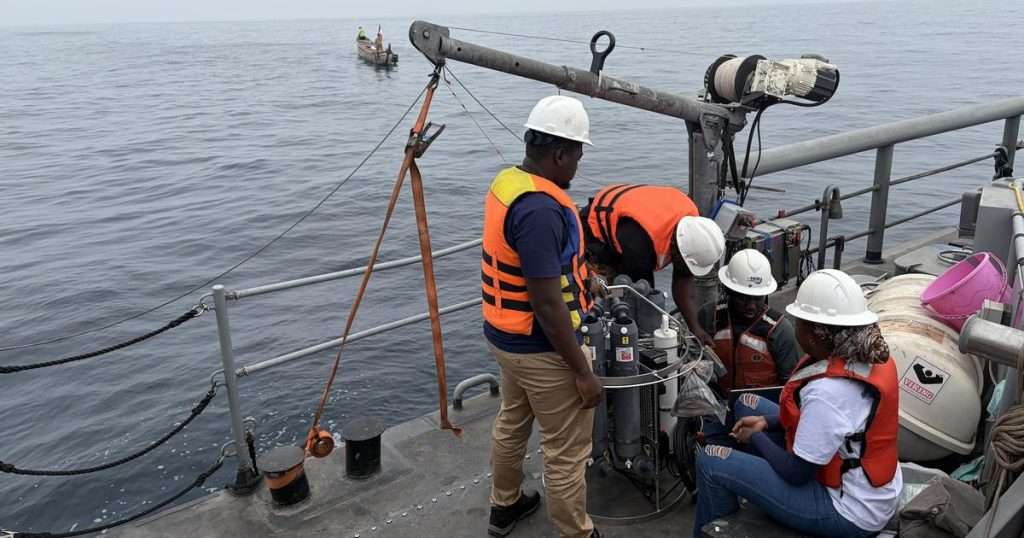
The researchers analyzed an ocean sediment core from International Ocean Discovery Program Site U1475 on the Agulhas Plateau, located about 500 km south of South Africa. A study of fossil microplankton called dinocysts and organic lipid biomarkers in this sediment core allowed them to reconstruct north-south shifts of the Southern Ocean subtropical front and changes in ocean temperature. Hou: “If you find a change in the dinocyst assemblage in the sediment, this means that the front shifted. For instance, if you find more of the warmer species and less of the colder ones, the front has moved south. A more southerly front generally opens a wider pathway for Indian Ocean water to leak into the Atlantic, and vice-versa.” This resulted in a detailed record of the potential Agulhas Leakage throughout the late Pliocene.
To trace responses of the oceanography in the Atlantic Ocean to the changes in Agulhas Leakage, the team also generated temperature records from Ocean Drilling Program Site 625 in the northern Gulf of Mexico, and combined these results with published evidence from the equatorial and North Atlantic and the Caribbean Sea. They then compared the results with numerical climate-model simulations of the late Pliocene glacial event and its subsequent warmer period. Together, the records form a multi-basin line of evidence linking Southern Ocean frontal movement, Atlantic water-column structure, and overturning circulation.
Leakage Weakened as Overturning Strengthened
The new reconstructions from offshore South Africa indicate that the subtropical front shifted northward from about 3.4 million years ago into the glacial event. During this period, the Agulhas region cooled by roughly 3 degrees Celsius and Site U1475 experienced subpolar conditions, suggesting that Agulhas Leakage weakened substantially and may have approached shutdown.
Under the conventional hypothesis, reduced salt transport should have weakened the AMOC. The geological evidence and simulations instead show a contrasting pattern. Although the North Atlantic Current reached less far into high northern latitudes during the glacial event, North Atlantic Deep Water formation and lower-latitude overturning intensified and caused a shoaling thermocline across the Atlantic.
Co-author Carolien van der Weijst, a previous Ph.D. student with Utrecht University, first identified this puzzling signal in a single sediment record years ago, which hinted something unexpected was happening. “When the same pattern was discovered in the Agulhas Plateau, we realized we were looking at a basin-wide reorganization of the ocean thermocline rather than a local anomaly. Then we confirmed this with climate model simulations,” said Prof. Francien Peterse from Utrecht University. “The whole story suddenly made sense.”
A Geological Perspective on Future Ocean Circulation
The findings challenge the idea that Agulhas Leakage directly regulates the AMOC through salt transport. It shows that connections among major components of global ocean circulation can be different in different climate states and ocean-boundary conditions. Assessments of AMOC behavior should therefore consider both southern salt supply and the local processes governing deep-water formation in the North Atlantic.
The researchers caution that the conclusion applies to the specific geography and climate of the late Pliocene and may not be applicable as a direct prediction of the AMOC response to present-day or future warming. Yet, a southward shift of the subtropical front might occur in the future, which would stimulate salt supply to the Atlantic. On the other hand, the salt and freshwater supply from the Arctic affects AMOC as well and is different from the late Pliocene geography. The broader significance of the study is mechanistic: the dominant controls on overturning are not necessarily fixed through geologic time.
This research was part of a larger research project called “OceaNice”, funded by the European Research Council.