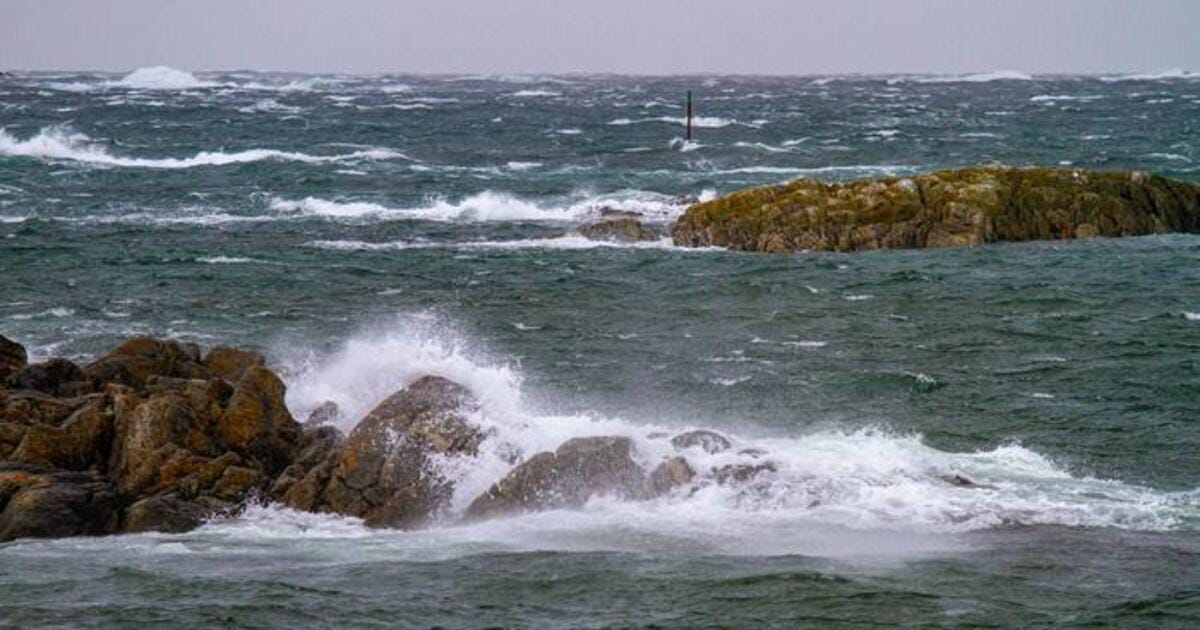
“The factor of twelve is extremely alarming,” said Marzeion. “It shows how much a moderate rise in sea level can alter the frequency of storm surges and extreme water levels.”
Human-Caused Sea Level Rise Is the Decisive Factor
The authors combined tide gauge records with climate model simulations. This allowed them to distinguish the respective contributions of natural fluctuations, local processes such as land uplift or subsidence, and human-induced climate change. Marzeion was responsible for reconstructing the contribution of melting glaciers to sea level rise. The result: Human influence has been the dominant driver of the increase in storm surge events since the 1960s. On its own, human influence has roughly quadrupled the frequency of historical 100-year events.
“Humans are one factor among many,” said Marzeion. “But our study shows that man-made sea-level rise is now the most important reason for the increase in such extreme events.”
The key point is that even a relatively small rise in the mean sea level can have significant consequences. Since 1900, the global mean sea level has risen by about 20 centimeters. This is relevant for storm surges because they start from a higher baseline.
“Many people underestimate what a 20-centimeter rise in sea level means,” said Marzeion. “In the case of a storm surge, these 20 centimeters aren’t just added on top—they shift the entire baseline.”
The study is global in scope, not a local risk assessment for the German North Sea coast. Nevertheless, the results are relevant for northern Germany because they demonstrate how a few centimeters can significantly impact the strain on coastal protection infrastructure.
Ben Marzeion summarizes: “For coastal protection, it is crucial to recognize that historical experience no longer applies. We must respond to this by planning early for adaptation.”