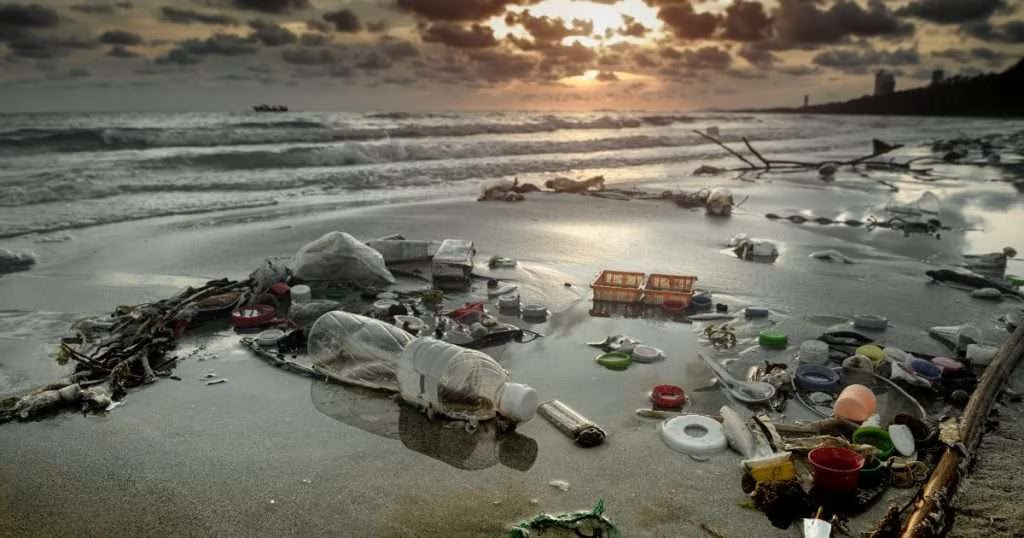
Due to the wide range of ways in which microplastics can enter the natural environment, microplastic pollution is extremely diverse in terms of material make-up, size, shape, chemical composition, color and state of degradation. This diversity causes challenges not only for marine life but also for scientific studies.
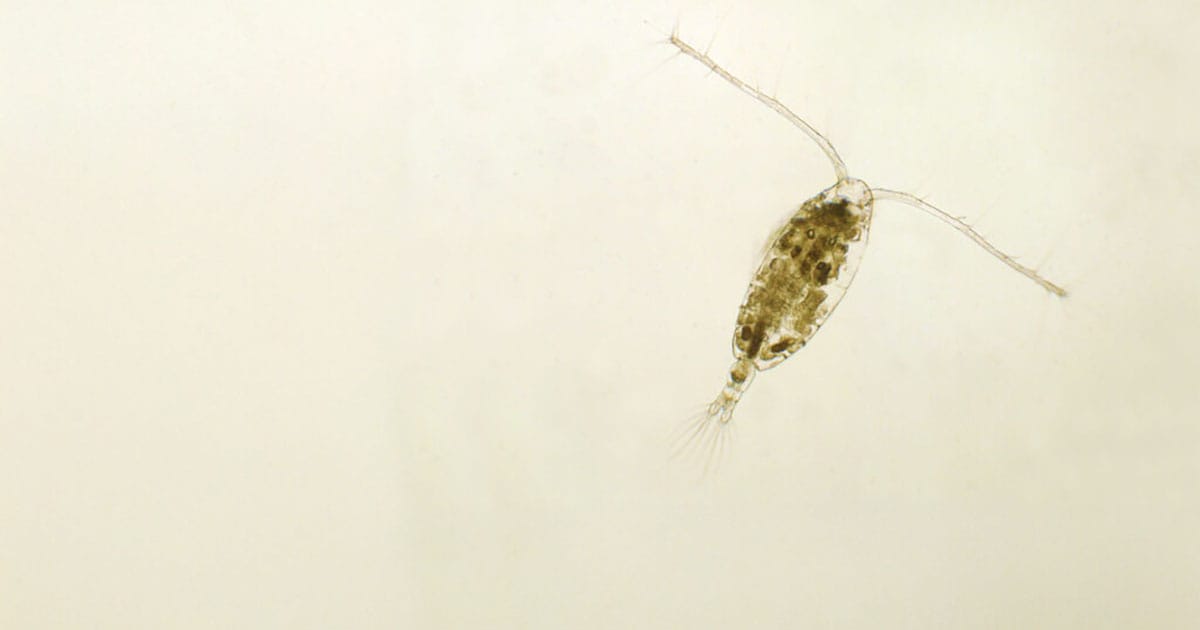
To help address these challenges in monitoring and experimentation, facilitate methodological harmonization and promote comparative analyses between studies, a team of scientists from the UK and Norway adapted existing experimental methods to conduct full and partial life-cycle, mixed-microplastic toxicity tests on the adult and juvenile stages of the ecologically-important copepod Acartia tonsa.
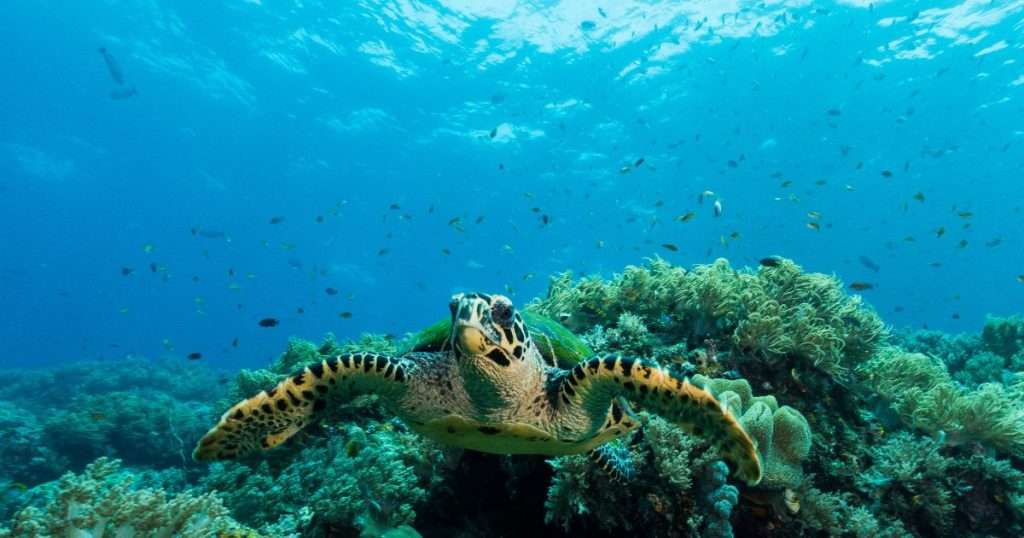
Marine copepods play a critical role in the global ocean, supporting food webs and contributing to fisheries productivity, nutrient flux, and carbon sequestration. Given their ecological importance, global distribution, high abundance, sensitivity to environmental stressors, and ease of culturing, copepods are recommended as valuable model organisms for toxicological testing.
Prior studies have observed that 0.006–0.032 millimeters (mm, 6–31 μm) microplastics can be readily ingested by A. tonsa while 0.00004–0.0038 mm (0.4–3.8 μm) microplastics can adhere to the exterior and appendages of certain copepod species.
Experiment and Findings
The aim of the experiments was to reveal whether acute and chronic exposure to a blend of microplastics poses lethal or sublethal risks to a globally relevant marine species. With endpoints such as adult survival, algal ingestion rates, egg production, egg size, larval development ratio, and juvenile survival, this research would support the development of risk assessments and pollution thresholds.
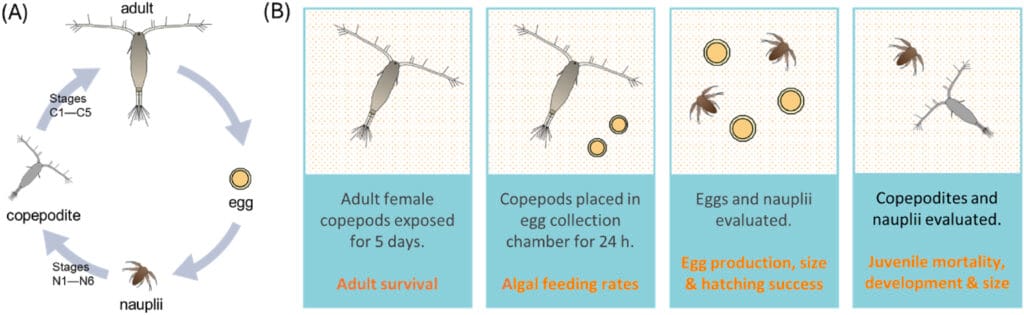
Acartia tonsa life cycle, whereby fertilized eggs hatch into nauplii (six stages), which subsequently develop into copepodites (five stages) before maturing into adults. The partial life-cycle toxicity test involves exposing adult female copepods and their progeny to particulates, with evaluations of a number of endpoints (orange text).
The methodology comprises a 72-hour acute toxicity test with adult A. tonsa and a 5-day exposure using adult females to determine the effects on egg production and offspring development.
The microplastics constituting the tri-polymer blend were chemically characterized to reveal the chemicals present in the polymers, which could potentially contribute to observed toxicity. The blend comprised cryoground polyethylene (a post-consumer mixed polymer), polypropylene (used for packaging, textiles, and automotive parts), and nylon particles at concentrations ranging from 0–1 milligrams (mg) per liter, and were selected as these are commonly found within environmental water samples.
Mortality, egg size, and larval development ratio proved to be the most sensitive endpoints when A. tonsa was exposed to the fully characterized tri-polymer microplastic blend.
The experiment resulted in a 50% mortality rate when individuals were exposed to a tri-polymer concentration of 0.182 mg per liter, comparable with high environmental concentrations found in microplastic hotspots, and a 100% mortality rate at concentrations between 0.4 and 0.6 mg per liter.
Given that mortality is an uncommon endpoint in microplastic studies, with microplastic effects typically being associated with sublethal harm, this study suggests that the tri-polymer blend is substantially more toxic than a single polymer exposure.
Dr. Zara Botterell, lead author and Ph.D. Fellow at Plymouth Marine Laboratory and the University of Exeter said: “This study provides important data for subsequent risk evaluations and the determination of toxicity thresholds. For adult A. tonsa, there was a 50% mortality rate at a concentration of 0.182 mg per liter, and overall, adult survival was identified as a significantly sensitive endpoint.”
The chronic exposure study showed limited evidence of sub-lethal health effects on juvenile life stages. Additionally, chemical analysis of the tri-polymer blend revealed several leachate compounds; however, the number of chemicals with expected hazardous properties was low compared to consumer plastics, which indicates a limited number of chemicals with potential for contributing to toxicity.
Dr. Botterell added: “Despite measuring many endpoints within the partial life-cycle test, there was limited evidence of sub-lethal effects on the juvenile life stages using environmentally relevant concentrations. However, we provide several recommendations and suggestions which may aid and improve future toxicity test protocols, including increased replication (individual and treatment numbers) and software automation.”