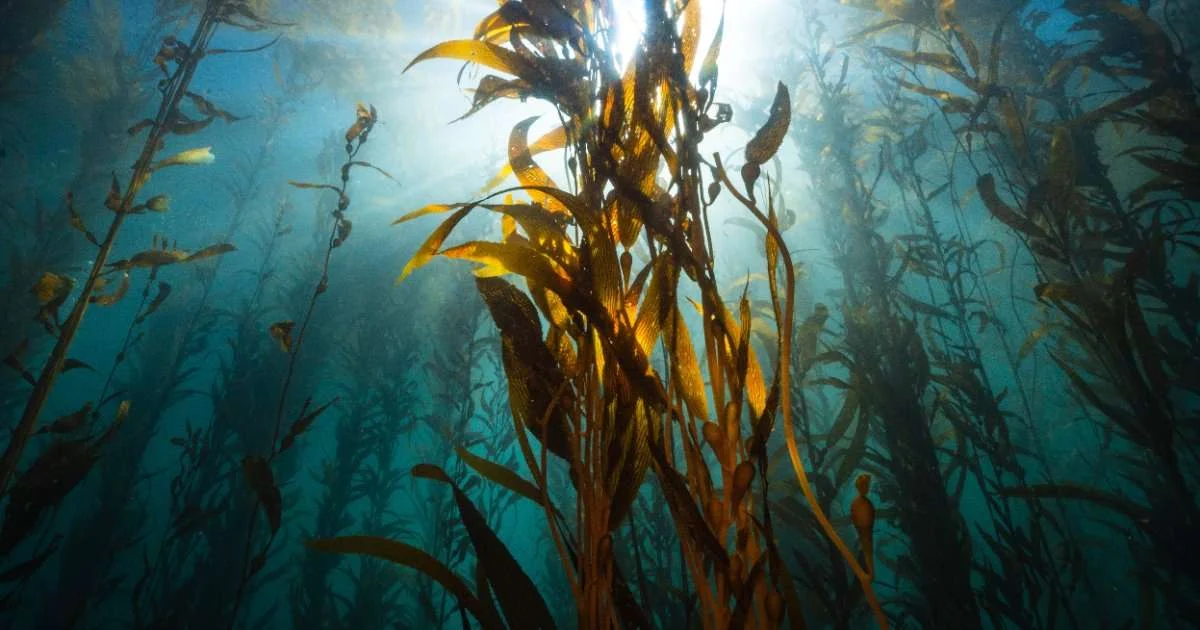
Natural ecosystems have played an important role in mitigating greenhouse gas emissions over the last century by absorbing carbon dioxide from the atmosphere, but this vital ecosystem service is being jeopardized by climate change itself. Planting and restoring seaweed forests is often promoted as a natural climate solution due to their ability to sequester carbon and store it in the deep ocean. However, declines in seaweed forests globally threaten to undermine restoration efforts.
Researchers analyzed published data on global seaweed forest gains and losses to estimate the net effect on carbon sequestration. They found that declines in kelp forests—the most widespread and productive seaweed ecosystem—could result in a reduction in natural carbon sequestration of 1.5 to 30 million tons per year. This loss is between 1,000 and 10,000 times greater than the gain in annual carbon dioxide sequestration from kelp forest restoration projects to date.
An estimated 25 million hectares of wild kelp forests will be lost by 2050 due to climate change—more than 6,000 times the area that has been restored since 1958. Large-scale kelp restoration projects in Norway and California required huge investments of time, money, and effort. Tens of thousands more projects like these would be needed to compensate for kelp forest losses due to climate change, at a cost of tens or even hundreds of billions of dollars.
Carbon sequestration by natural ecosystems has been so reliable that it has been implicitly embedded in climate projections and net-zero planning, but climate change is now compromising those natural services. The authors conclude that the current focus on seaweed forest restoration as a natural climate solution could distract conservationists from protecting threatened seaweed habitats, even though preventing habitat loss is a cheaper and more effective climate change mitigation strategy. Promoting seaweed restoration as a method for carbon dioxide removal may also offer false hope, delaying the phase-out of fossil fuels, the authors warn.
The authors added: “Conserving and restoring seaweed forests is worthwhile, but we need to be realistic about what it can achieve in terms of meaningful climate change mitigation through carbon dioxide removal. Currently, climate-driven losses of seaweed forests are orders of magnitude greater than gains due to restoration. We contend that restoring seaweed forests cannot deliver meaningful climate change mitigation at the scales and speeds required to offset our growing emissions.”
For full access to PLOS Biology, visit: https://plos.io/4wjUoTm.