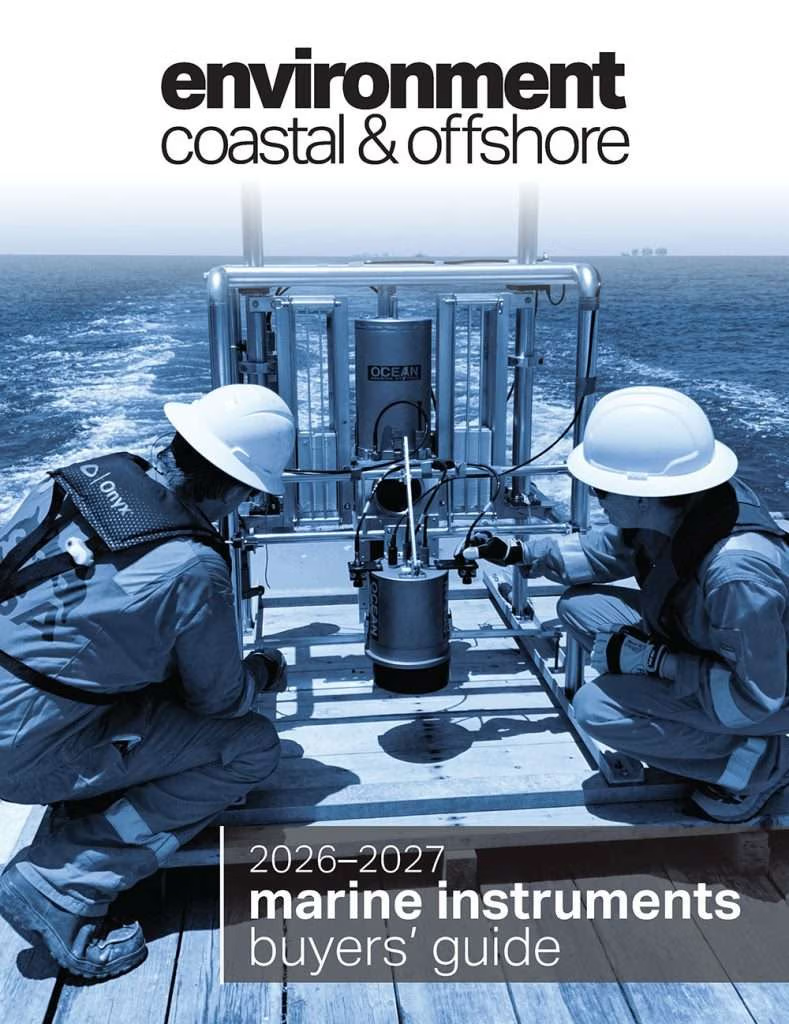
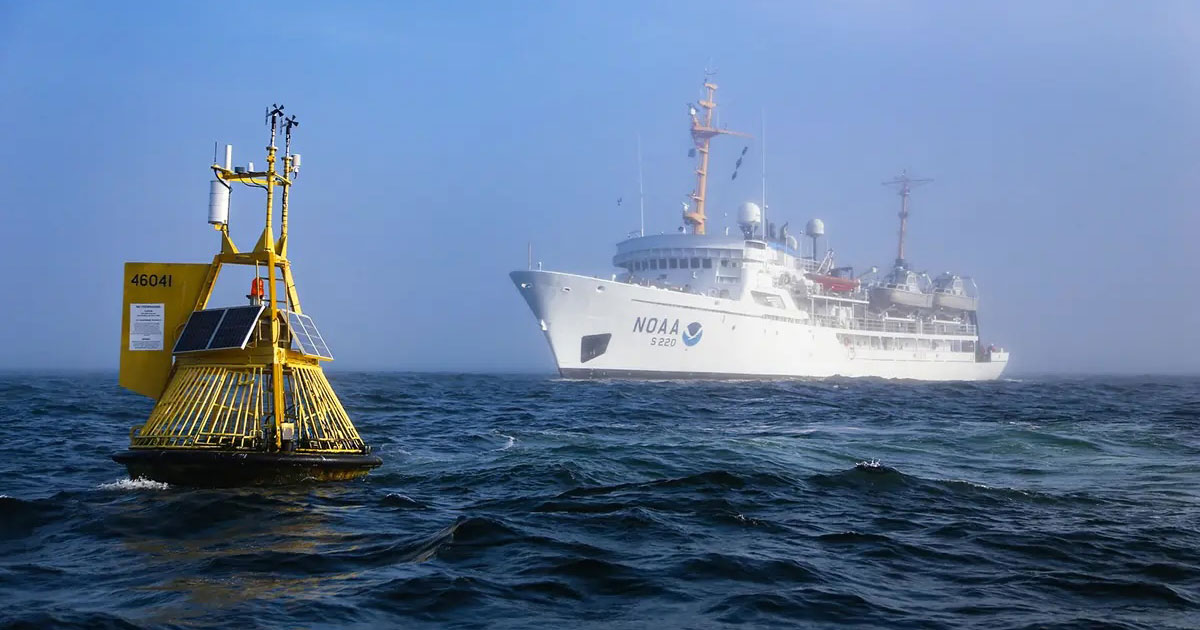
OAP’s East Coast (ECOA-4) and West Coast (WCOA 2026) Ocean Acidification research cruises collect the highest quality information that serves as vital benchmarks for research, monitoring, and modeling in each region. By coupling ocean chemistry, biology, and physics, researchers are able to better understand how ocean acidification impacts marine life. Each coastwide cruise occurs every four years on average.
Data collected during these cruises “serve as a vital backbone to NOAA’s ocean acidification observing enterprise, allowing us to document the primary drivers and risks of acidification along much of the nation’s coastal waters,” said OAP Acting Director Dwight Gledhill.
Tracking Potential El Niño Effects
This year’s missions are particularly timely as a predicted El Niño builds during the missions. This concurrence provides a unique opportunity to assess how these conditions affect ocean chemistry and marine ecosystems. El Niño is a natural variation in sea temperature that occurs when weaker-than-normal trade winds occur. Warmer conditions can shift where marine species occur—and where people need to fish—and significantly alter ecosystems and fisheries. If conditions develop as predicted, ECOA-4 and WCOA 2026 will both capture how El Niño conditions affect ocean acidification and impacts to marine resources.
Delivering Critical Information on Two Coasts
The ECOA-4 research cruise will survey the Atlantic seaboard from Florida to Canadian waters and launches first in early June for a 50-day journey. WCOA 2026 departs from San Diego, CA, and heads north to Washington over a month of sampling. Both coastal research cruises collect coastwide data of ocean biogeochemical and physical conditions and how conditions are affecting marine resources. Research cruises are needed to obtain the quality and breadth of measurements required to infer long-term changes and to see how marine life responds to ocean acidification.
Already, each coast has experienced the effects of ocean acidification on fisheries, aquaculture, and ecosystems. The data collected by ECOA-4 and WCOA 2026 are fundamental to validating ocean models and forecasting changes in ocean acidification and other conditions like hypoxia and warming to better prepare for future impacts to valued fisheries and ecosystems.
East Coast Atlantic sea scallop fishermen are working together with researchers to develop research and adaptive management strategies addressing the impacts of ocean acidification and warming. The information also validates ocean and other models such as the Chesapeake Bay Environmental Forecast System (CBEFS) used by resource managers, shellfish growers, and fishermen. The West Coast, which first saw devastating impacts to oyster farming, now produces forecasts through J-SCOPE that incorporate measures of ocean acidification and other ocean conditions into integrated ecosystem assessments and fisheries management. Research on economically, ecologically, and culturally valuable species like Dungeness crab, krill, and oysters also benefits from the data produced by these coast-wide research missions.