New research led by the University of Cambridge with contributions from scientists at the National Oceanography Centre (NOC) highlights the crucial role of ocean turbulence in regulating the global movement of heat, nutrients, and carbon.
The study, published in the journal Nature Communications, found that tiny, previously overlooked processes in the ocean interior play a major role in the movement of heat, nutrients, and carbon around the globe.
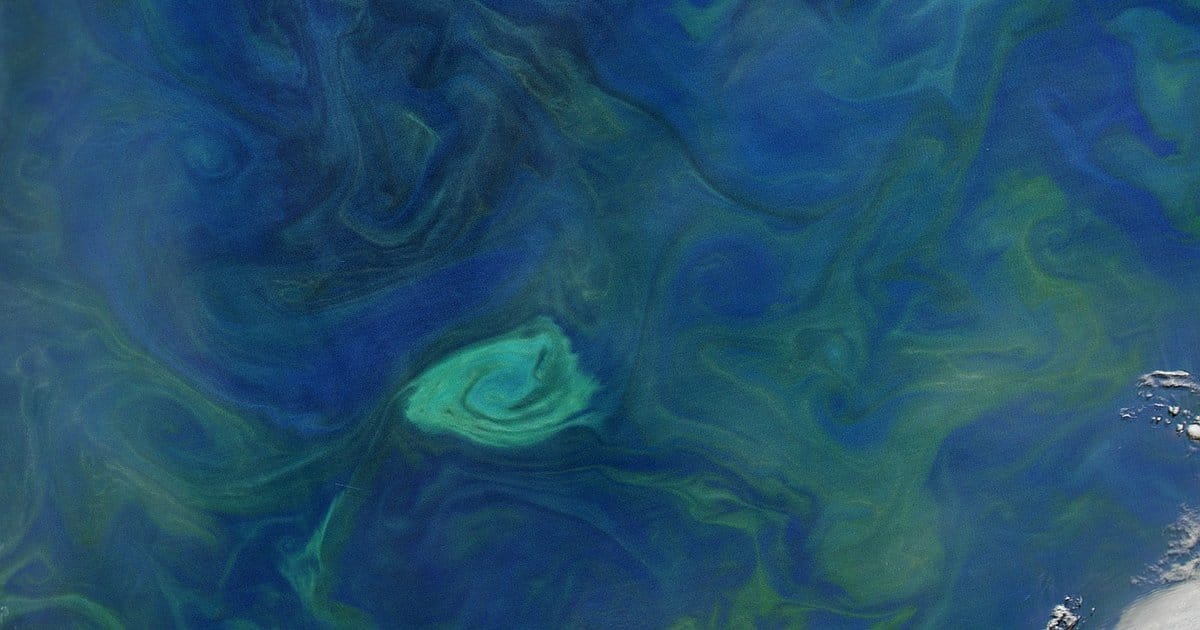
In particular, it is the combined effects of tiny turbulent mixing in the vertical with lateral stirring by much larger ocean eddies (ranging up to the size of a city) that can provide faster overall mixing processes with wider reach. The research revealed these processes can affect climate, sea level rise, marine ecosystems, and carbon storage on timescales relevant to human lives, rather than over thousands of years as previously thought.
However, researchers also found that current climate models and tools used to predict these effects and inform policy do not adequately represent this turbulence, or the speed at which it acts, meaning more research is critical to better understand these changing patterns and their impacts.
Shifts in ocean turbulence could affect our climate in tangible ways, which is why this type of ocean monitoring is key. For example, if nutrients are not being pulled from the deep ocean to the surface, it could cause marine food chains to break down, which would in turn cause fisheries to collapse. The way that heat is transferred from the deep ocean to shallower waters and back affects how Arctic and Antarctic ice melts, which affects sea level rise, storm intensity, and flooding levels.
“Despite major effort over several centuries, a general theoretical description of fluid turbulence remains one of the great unsolved problems in science. This paper highlights recent progress in understanding climatic turbulence and why now is the most important moment to target research activities to more accurately predict our rapidly changing climate system, which depends so crucially on turbulent mixing.”
Dr. Chris Wilson, a senior research scientist at NOC and one of the co-authors of the paper.
NOC’s Dr. Carl Spingys added: “Our findings show that some of the smallest size processes in the ocean can add up to play a key role on a global scale. This small-scale turbulence can accelerate the movement of heat, carbon, and nutrients much more quickly than we previously realized.
“This means changes occurring beneath the ocean surface may have consequences for climate, sea level, and marine ecosystems within timescales that matter for society. Continued investment in ocean observations and research is essential if we are to improve climate predictions and make informed decisions about our future.”
Using a combination of previously collected physical and chemical measurements, the researchers identified several fast-moving climatic processes affected by small-scale turbulence, including the distribution of heat, nutrients, and carbon. When compared with how climate models predict how turbulence in the deep ocean will affect life on land, the researchers found these models require significant improvements.
Lead author Dr. Laura Cimoli from the University of Cambridge’s Department of Applied Mathematics and Theoretical Physics (DAMTP) commented: “There is a microphysics of the ocean, similar to cloud physics, that is extremely difficult and expensive to observe, but it governs our lives on human-relevant timescales—from ocean circulation changes to ecosystem dynamics, with implications for fisheries and food security, to coastal flooding and heatwaves.
“We need the tools we use to predict these effects to be as accurate as possible, and we found that’s currently not the case.”
The study was supported in part by Schmidt Sciences LLC, the Advanced Research and Invention Agency (ARIA), the US National Science Foundation (NSF), the Natural Environment Research Council (NERC), and the Engineering and Physical Sciences Research Council (EPSRC), part of UK Research and Innovation (UKRI).