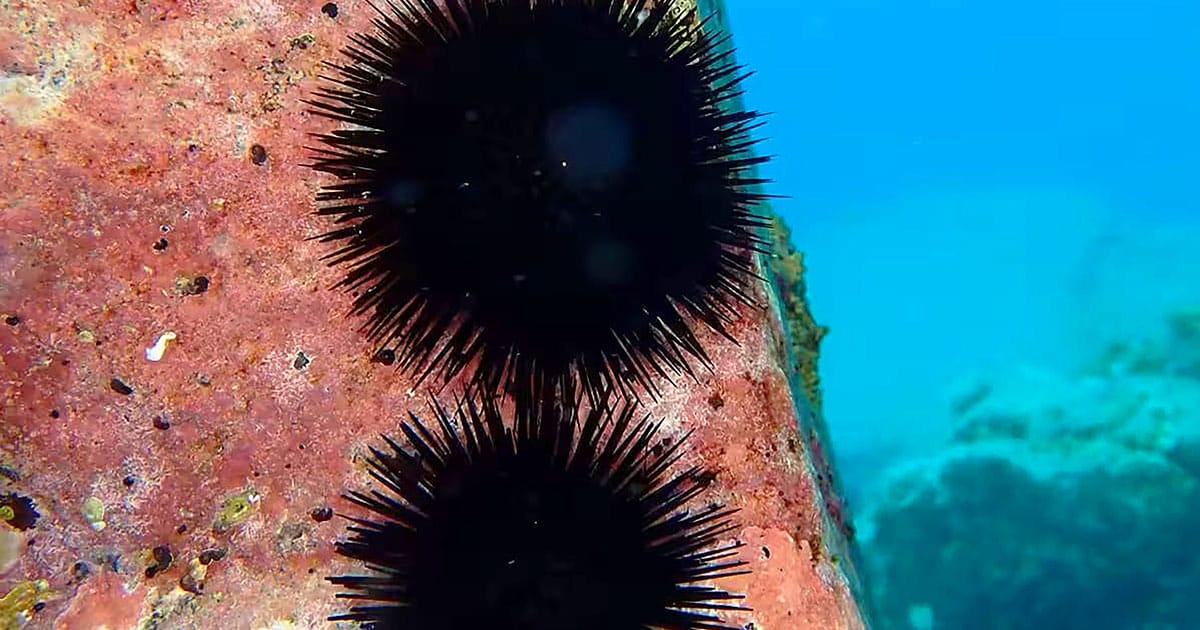
The widespread presence of potential photosynthetic microorganisms associated with these eggs and offspring led scientists to suspect that these might also impact their development. To investigate this, they examined whether larvae of the sea urchin Arbacia lixula might enter a symbiotic relationship with photosynthetic cyanobacteria. Using microbiome sequencing and microscopic analyses, they instead discovered an unexpected, previously unknown form of interspecies interaction: for the first time, they were able to demonstrate that sea urchin eggs can integrate certain components of so-called chromoplasts—cellular organelles or plastids found in plants and algae that are derived from chloroplasts—into their egg. The researchers were able to demonstrate experimentally that the chromoplast-derived carotenoid crystals obtained in this way made the larvae more viable and may thus contribute to their wide geographic distribution in the Atlantic Ocean. The joint Kiel University and GEOMAR research team has now published the new findings together with international colleagues from the University of La Laguna (Canary Islands, Spain) and the University of California, San Diego (United States) in the scientific journal PLoS Biology.
Plastid DNA Detected in an Animal’s Germ Cells for the First Time
The research team, led by Dr. Tyler Carrier, now at the University of North Carolina at Charlotte (United States), who was a postdoctoral researcher with Professor Ute Hentschel Humeida at GEOMAR and a member of the CRC 1182 in Kiel, initially focused on the potential influence of single-celled cyanobacteria on sea urchin development. “We initially wondered whether these microorganisms could support larval development through their ability to perform photosynthesis,” said Carrier. An analysis of the genetic information of the sea urchin eggs did indeed indicate the presence of what was thought to be foreign DNA that originated from cyanobacteria. However, due to their shared history, “we were detecting genes from photosynthetic eukaryotes. More specifically, the sequences originated from plastids, which is the cellular organelle of photosynthetic eukaryotes. Most of these were from microscopic diatoms,” Carrier continued.
This observation raised the question of how these genes had ended up in the sea urchin eggs and whether a complete cellular organelle might have been transferred. “Stealing any organelle from one part of the tree-of-life is incredibly rare amongst animals, and this stolen organelle is never transferred to their offspring,” Carrier continues. However, based on microscopic examinations, supported by Professor Marc Bramkamp and Dr. Urska Repnik from Kiel University’s central microscopy, the research team did not find chloroplasts. Instead, they found auto-fluorescent particles and a distinct crystal structure. “We found large crystalline structures at the cellular level that are most in line with these being carotenoid crystals from chromoplasts, a cellular cousin of chloroplasts,” said Carrier.
In plants, for example, this same crystal forms when leaves change color from orange to red in autumn and is what gives carrots their orange color. Therefore, the researchers suspected that they might also have a light-dependent function inside the sea urchin eggs.
With this observation, they stumbled upon an absolute novelty in the animal kingdom: the first instance in which a component of a foreign eukaryotic organelle was in an animal reproductive cell, the germ line. “To date, there is no other case recorded of a plastid component being integrated into the germ cells of an animal. This suggests that we’ve stumbled across something unique and intriguing, and it made us curious if this influences their performance,” Carrier emphasized.
Sea Urchin Larvae Use a Novel Strategy to Enhance Their Fitness
To identify this previously unknown influence of plastid-derived carotenoid crystals on the development and fitness of sea urchins, the researchers subsequently conducted various functional experiments. Since they hypothesized a light-dependent effect, they compared the growth and development of the larvae in light and dark.
“This showed us that the larvae develop much faster and had a 50 percent higher survival rate with the benefit of these plastid-derived carotenoid crystals. This light-dependent activity is not linked to photosynthetic energy production, but there appeared to be an influence on the larvae’s metabolism,” said Carrier.
In the next step, the scientists investigated whether there was a metabolic effect that accounted for this fitness advantage. Two aspects stood out in particular. First, the activity of these carotenoid crystals drastically altered the animals’ fat metabolism. “When you lose the activity of this plastid-derived structure, the larvae lose a notable capability to utilize their energic lipids and, as a result, have to use structural lipids instead,” explained Carrier. Second, increased levels of phytohormones were produced, leading the researchers to suspect a connection between these two factors. “We also noticed that carotenoid-derived phytohormones were more abundant for larvae in light. What is neat is that those phytohormones are known to regulate lipid metabolism as well as promote development. So, we think that these plastid-derived carotenoid crystals are concentrated in the precursors for this phytohormones and that is converted by the larvae into components that promote their development and survival,” Carrier summarized.
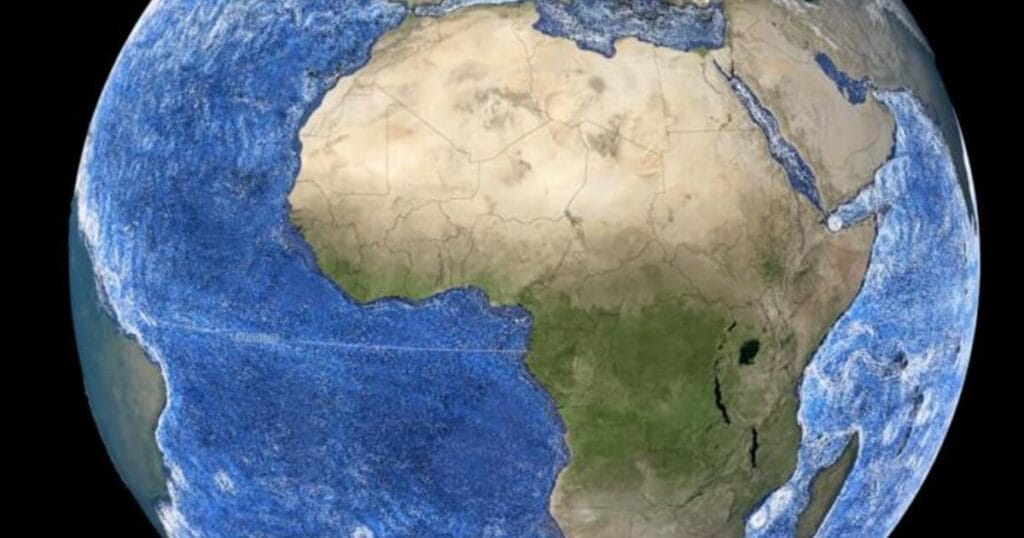
The presence of a plastid-derived structure in the offspring, thus, leads to an increased fitness. This, in turn, also increases their potential to disperse from location to location and, uniquely, to use major oceanic highway—autobahns in the sea, if we may—to disperse from one side of the Atlantic Ocean to the other. This would be one of the few known mechanisms that may account for how these far-dispersing larvae function. “Our study describes the first observed case in which components of a eukaryotic plastid are present in an animal’s germ cells and influence its development. We interpret this previously unknown strategy as a symbiosis-like interaction that promotes the survival and fitness of an animal species and may thus help it expand its geographic range in the ocean,” said Hentschel Humeida, the study’s last author, summarizing the significance of the new publication.