Reliable Data as a Basis
Rijkswaterstaat and the NIOZ aim to gain the best possible understanding of the Wadden Sea. Through this partnership, Rijkswaterstaat is supporting a number of research programs that have been collecting data on plankton, benthic life, and fish for many years. These data series form an important basis, both now and in the future, for high-quality research, data-driven management, and evidence-based policy for the Wadden Sea.
The data is not only available to the NIOZ and Rijkswaterstaat, but is also made publicly accessible as part of the Basic Monitoring Program. This means that anyone involved with the Wadden Sea can make use of it: other public authorities, researchers, and the general public.
“Effective management of the Wadden Sea starts with good, reliable data,” said Mieke Langedijk, Director of Network Development at Rijkswaterstaat Northern Netherlands. “The NIOZ has been building up this knowledge for many years. These working agreements will strengthen our collaboration. We are sharing knowledge more effectively, not only within Rijkswaterstaat, but with everyone committed to the Wadden Sea.”
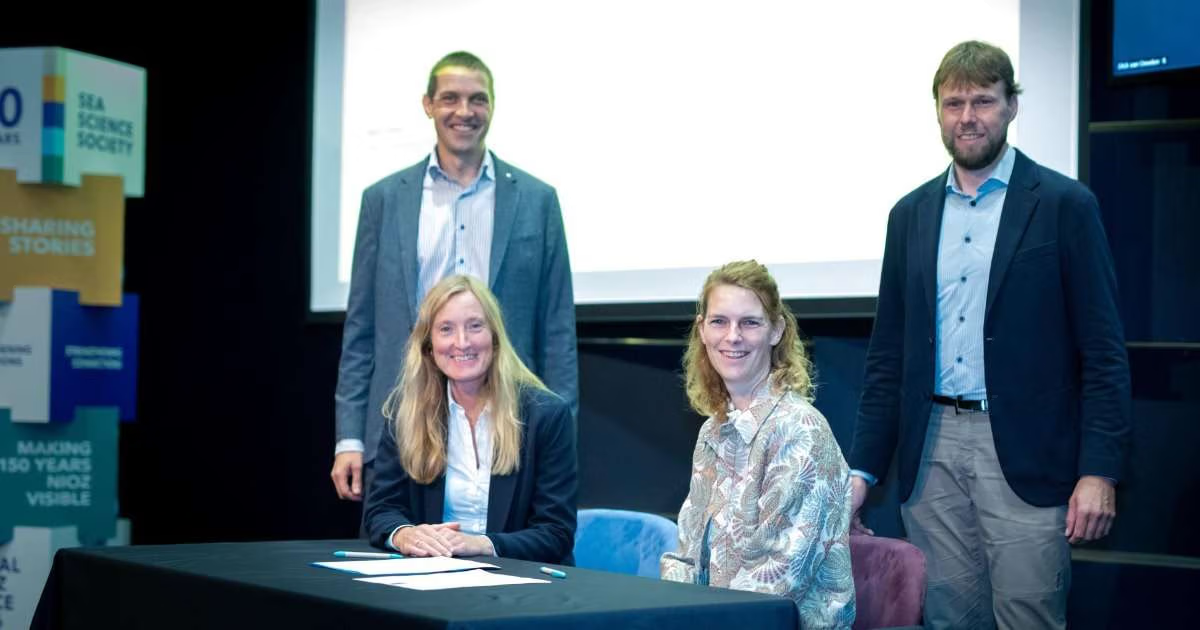
New Director Signs Working Agreements
The new director of the NIOZ, Maaike van de Kamp-Romijn, signed on behalf of the NIOZ. “I am proud to begin my appointment by signing these working agreements,” said Van de Kamp-Romijn. “The Wadden Sea is a UNESCO World Heritage Site of exceptional universal value and therefore deserves data and research of the highest quality. Through this collaboration, we can continue to collect, analyze, and interpret Wadden Sea-wide data in the coming years. At NIOZ, we ensure the continuity of long-term measurement series and invest in new techniques and data-driven methods to continuously improve our monitoring.”
Rijkswaterstaat and the NIOZ will continue this collaboration for the next five years, up to and including 2030. The data is made available via Datahuis Wadden on the Wadden Sea Baseline Monitoring website.
Long-Term Monitoring Programs
Examples of these research projects include the annual SIBES sampling of mudflats that fall dry and the SUBES program, which specifically samples the permanently submerged mudflats. Another example is the fish sampling using the NIOZ fyke, which has been taking place since 1960 and provides a unique insight into the changing conditions and seasonal dynamics of the Wadden Sea–North Sea system for fish. A final example is the sampling of phytoplankton and zooplankton from the NIOZ jetty. Together, all these programs map out different levels of the food web. As this has been ongoing for a long time, it is possible to investigate changes in, for example, biodiversity and the effects of climate change.