Funded via a donation from TKT, the Turner Kirk Trust Antarctic Krill Project brought together researchers from Imperial, the British Antarctic Survey (BAS), and other partners, with the aim of deepening our understanding of Antarctic krill distribution to better inform krill management and conservation decisions.
Antarctic krill play a crucial role in mitigating climate change by acting as a carbon sink, removing carbon from the atmosphere and storing it in the ocean abyss. But overfishing, rising sea temperatures, and a reduction in sea ice threaten to disrupt krill behavior—undermining efforts to combat climate change and further endangering the Antarctic ecosystem.
Aiding efforts to conserve krill populations through research and protective fishing regulations, the Turner Kirk Trust Antarctic Krill Project has devised a successful advanced spatiotemporal model to better understand Antarctic krill distribution.
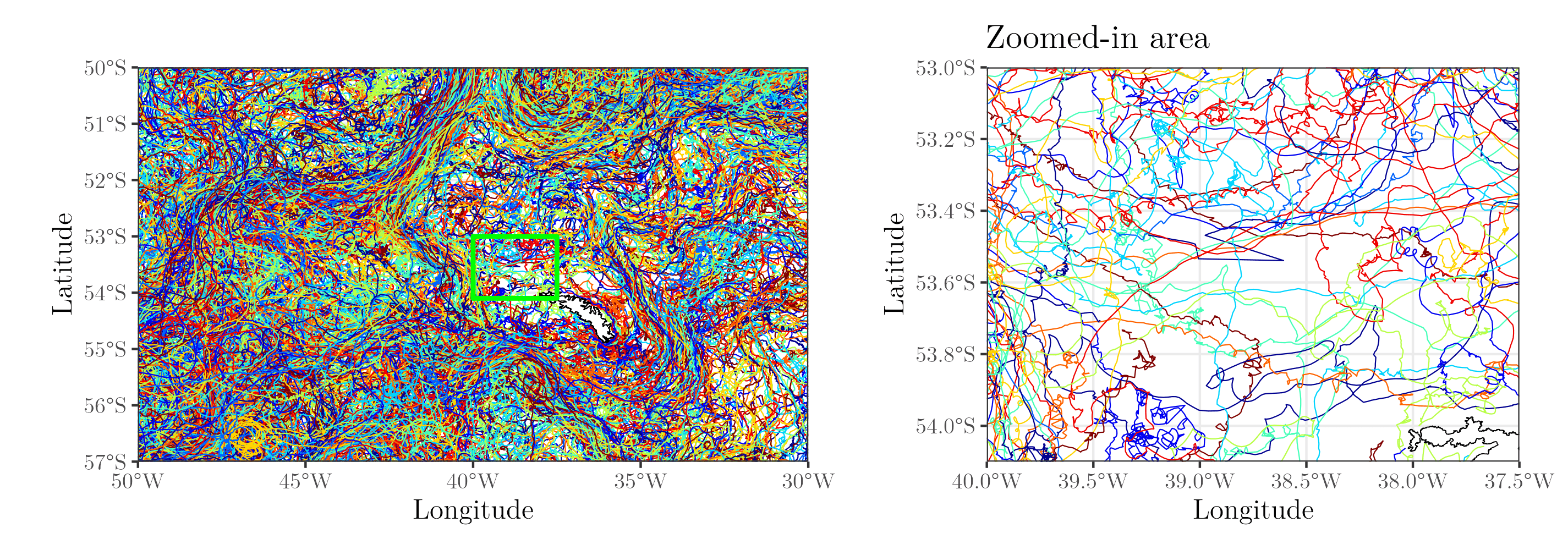
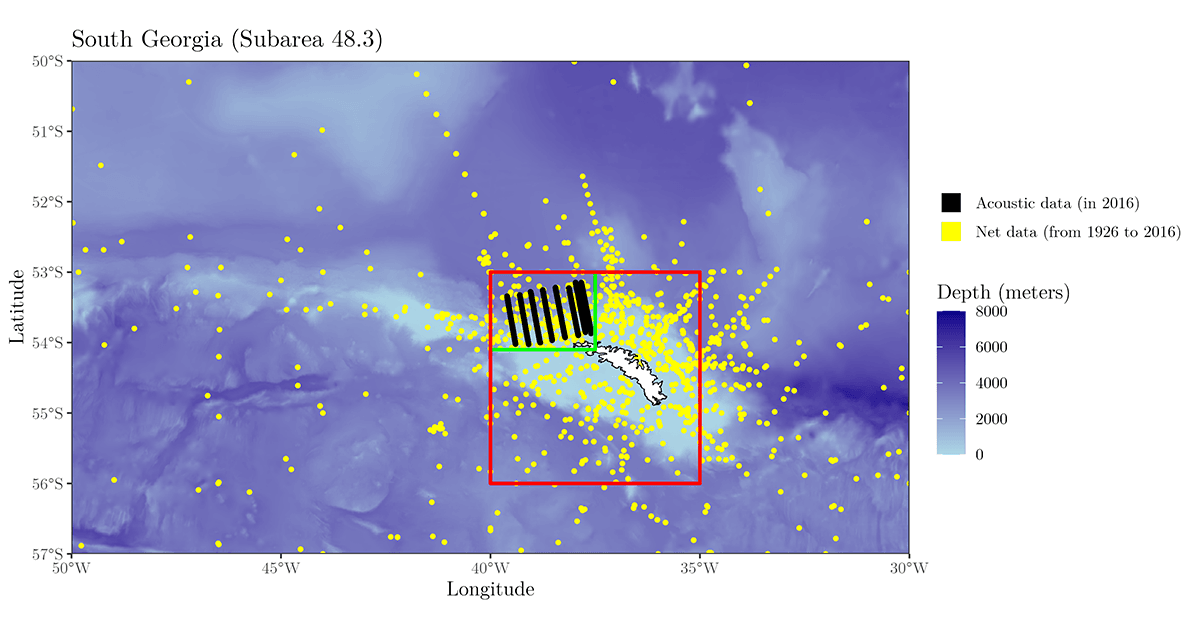
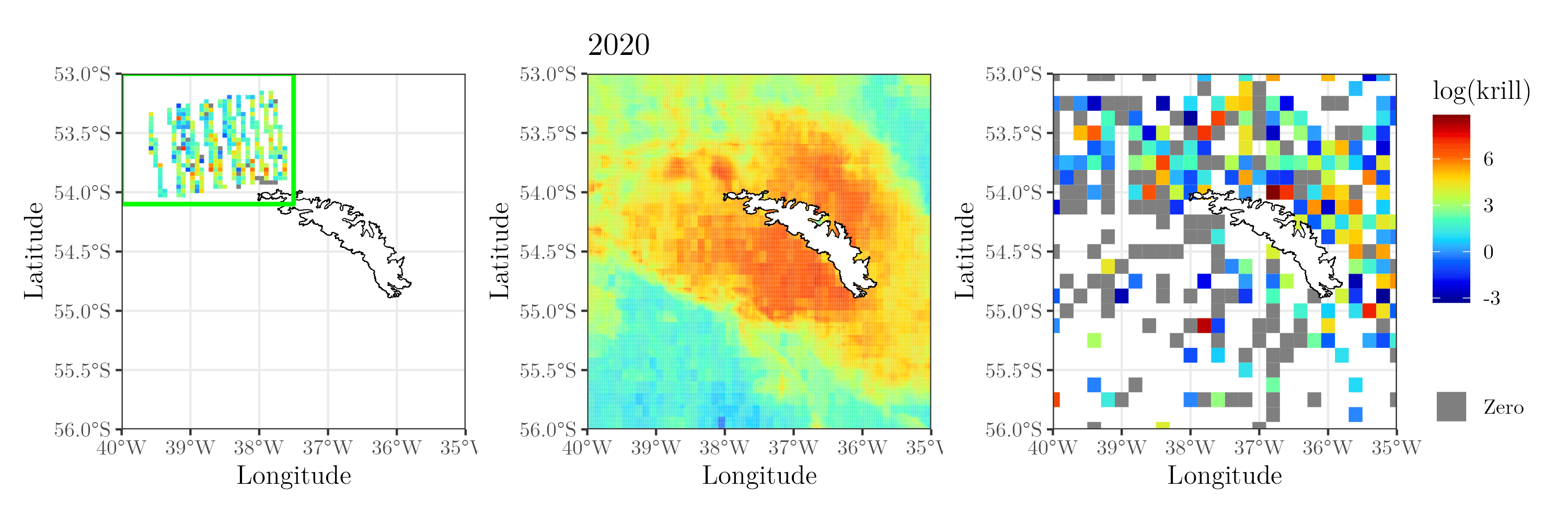
Imperial researchers used a novel dataset comprising acoustic in situ data of krill swarms. This was achieved by integrating climate covariates, obtained via satellite imagery, with information gathered by floating buoys.
The modeling has already been successful in the South Georgia Island region, providing a critical foundation for a better understanding of krill availability in the Scotia Sea.
Leading on from the findings of the TKT-backed research, two further Ph.D. projects have since been designed and advertised, with the goal of expanding these insights to other regions and investigating broader impacts on the carbon cycle. Discussions with BAS are also planned in 2025 to explore the next steps.
The donation from the Turner Kirk Trust marks one of the latest charitable initiatives launched by the foundation. Other recent work from the trust includes a collaboration with the University of Glasgow on the STEM Spatial Cognition Enhancement Project, which is seeking to revolutionize mathematical education for children through spatial skills-based teaching, and a partnership with SolarAid to support its Light a Village project, which is working with the Malawian government towards a nation-wide rollout of its solar lighting systems.
Founded in 2007 by Dr. Ewan Kirk and Dr. Patricia Turner, TKT works to support solution-building for some of the most intractable societal and environmental challenges by catalyzing robust, evidence-based charitable efforts.
Ewan Kirk, Co-Founder of the Turner Kirk Trust, said: “Antarctic krill are small but mighty, and their life-sustaining importance can so easily go overlooked in conversations about climate change.
“Our collaboration with Imperial College London and BAS underscores the critical role that philanthropy can play in furthering research and knowledge creation for transformative societal and environmental impact, which is more critical than ever when it comes to the climate crisis.
“Unlocking and sharing new knowledge with the wider scientific community can be a make or break for conservation efforts. Tackling climate change is a time-sensitive undertaking, and conservationists and scientists need all the support they can get.”
Adam Sykulski, Senior Lecturer in Statistics, Department of Mathematics: “Krill are of vital importance, but measuring the abundance of these tiny creatures is somewhat of a needle in a haystack problem in a vast ocean. What this project showed is that improvements and new insights can be made by fusing multiple sources of data in combination with powerful statistical spatiotemporal models and modern computational power.”