The findings suggest that baleen whales—the planet’s largest mammals—may be even more impacted by anthropogenic ocean noise than currently recognized but have been excluded from regulatory consideration due to underestimated hearing ranges. Concerns about the impacts of anthropogenic noise on marine mammals have been a focus for decades, largely because of several notable research initiatives and high-profile whale stranding events linked to naval sonar noise activity. As a result, substantial progress has been made in developing criteria and thresholds for evaluating impacts on marine mammals exposed to anthropogenic noise. Although researchers have suggested using behavioral changes, hearing damage (primarily noise-induced hearing loss), and other physical effects as ways to measure the impact of noise on marine mammals, setting clear thresholds is challenging because different species of marine mammals respond to noise in widely varying and poorly understood ways. Audiograms—graphs illustrating an animal’s hearing sensitivity – are essential for identifying the sound frequencies that affect marine mammals. However, while audiograms are available for at least one representative species in most major marine mammal groups, none exist for baleen whales, as their large size makes traditional hearing tests impractical. Current estimates of baleen whale hearing rely on indirect methods like vocalization analysis, anatomical modeling, and behavioral studies.
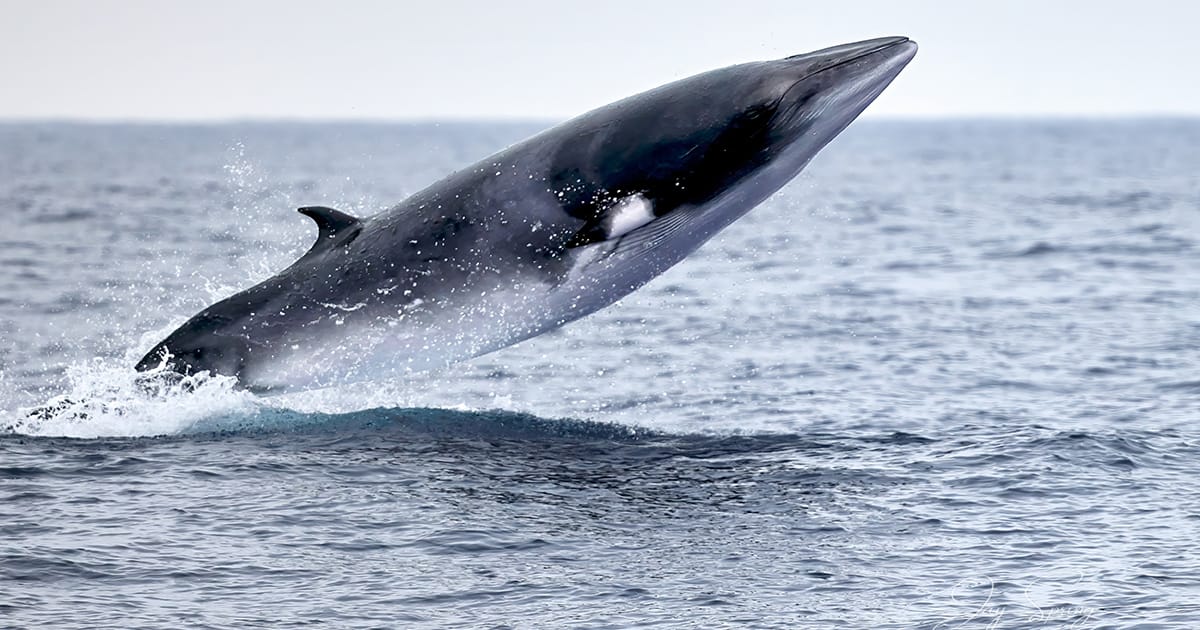
To better understand how ocean noise impacts baleen whales, Dorian Houser and colleagues developed a novel catch-and-release method to temporally hold adolescent minke whales (Balaenoptera acutorostrata) for auditory evoked potential (AEP) tests, which estimate hearing sensitivity by measuring electrical signals produced in the brain in response to sound. Leveraging a natural channel between two islands in Norway and a system of net barriers, the researchers contained two adolescent minke whales making their norward migration. AEPs were recorded noninvasively via gold-plated electrodes temporarily attached to the whales’ skin, and acoustic stimuli were delivered through a nearby underwater sound transducer.
While it has been assumed that baleen whales are exclusively low-frequency hearing specialists, the authors discovered that minke whales can detect frequencies as high as 45 to 90 kHz—a range much higher than previously believed based upon their ear anatomy and the frequencies at which they vocalize.