Sentinel-3C, the third in the series of Copernicus Sentinel-3 satellites, was launched on September 15. The European Space Agency is, therefore, still in the early stages of commissioning this new satellite for service.
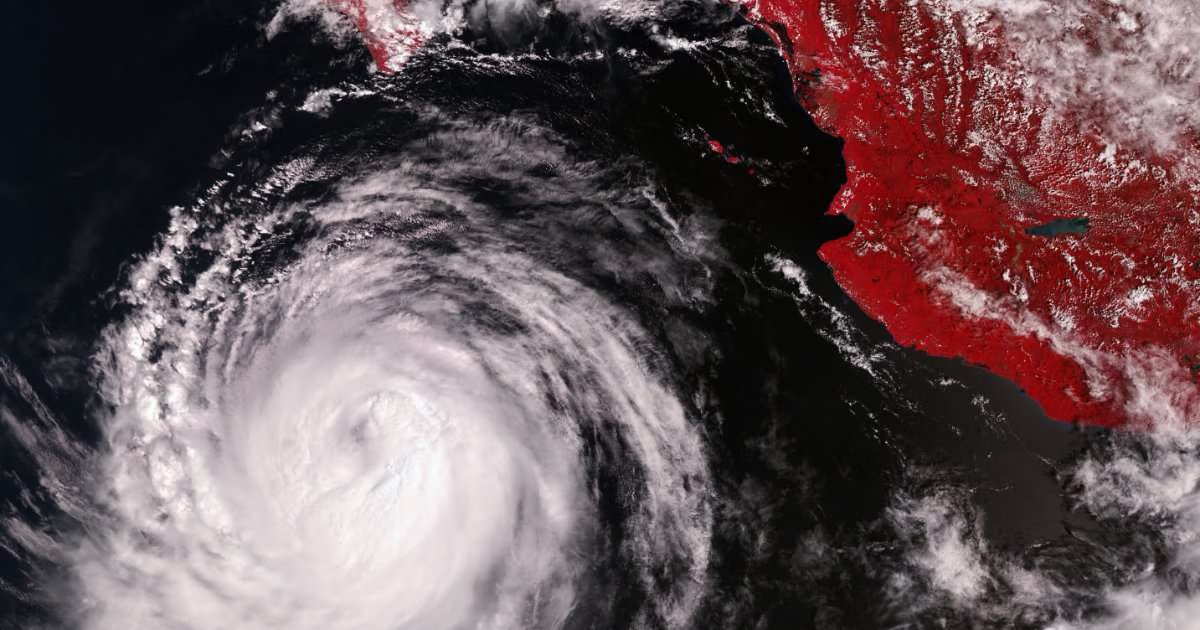
Identical to its older siblings, Sentinel-3C carries a suite of instruments to systematically measure Earth’s oceans, land, cryosphere, and atmosphere. The satellite’s ocean and land color instrument and its synthetic aperture radar altimeter have already returned their first images. Now, as this image of Hurricane Rachel shows, its sea and land surface temperature radiometer is also offering a glimpse of what’s in store.
The instrument observes Earth across nine spectral bands spanning the visible, shortwave infrared, and thermal infrared parts of the electromagnetic spectrum, as well as two dedicated channels for fire detection. Its primary role is to measure sea- and land-surface temperatures using its thermal infrared channels.
The visible channels support this process by detecting clouds to prevent contamination of temperature measurements. They also support aerosol retrieval and atmospheric correction, contributing to the quality and accuracy of the instrument’s data products. Since this is a false-color image, vegetation on land appears red.
This image offers a first glimpse from the instrument’s visible channels only—images using its thermal channels are still to come—stay tuned.