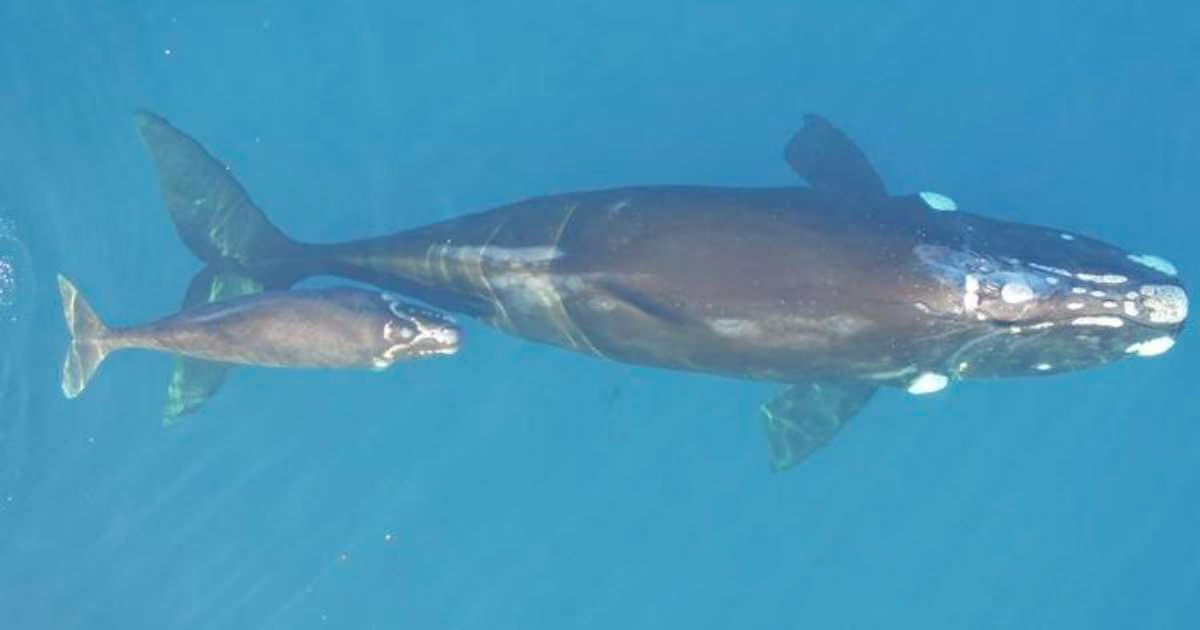
Scientists from the University of Auckland and international partners tracked 21 southern right whales or tohorā from their winter home in New Zealand’s subantarctic Auckland Islands/Maungahuka to feeding grounds south of Australia.
This video tells the story.
About half the whales took a direct route westward. The others headed much farther south before turning north again, creating a giant L-shaped journey across the ocean.
Despite these different travel styles, both groups reached their feeding grounds at roughly the same time. The whales taking the longer route left about a month earlier and traveled more slowly, while the late starters took the shorter path and moved a little faster.
The mean was 64 days for the long trip, 42 days for the short one.
Lead author Leena Riekkola says the findings suggest whales may be balancing different priorities, much as people do on a road trip. Some may be conserving energy, while others appear to be making up for lost time.
The whales also show flexibility in their behavior. One year, a female might delay migration to allow her calf to grow bigger, taking the shorter route, but the next year, when traveling alone, take the longer route.
The study also hints that whales may navigate using a mix of natural signposts. Their movements lined up with major ocean currents, underwater features, and even subtle variations in Earth’s magnetic field. Rather than relying on a single cue, the giant mammals seem to use several clues to find their way across thousands of kilometers of open ocean.
The researchers say flexibility could be good news for this recovering population as the climate changes. “A population that can adapt its behavior has a better chance of coping with changing seas,” says Associate Professor Emma Carroll.
The scientists acknowledged the Kaitiaki Roopū o Murihiku and funders and supporters including Royal Society Te Apārangi, Live Ocean Foundation, the University of Auckland, the International Whaling Commission – Southern Ocean Research Partnership, and the Antarctic and Southern Ocean Coalition.
The study was published in the journal Proceedings B.