The new theory, just published in the Journal of Marine Systems, helps explain obscure events in which suspended sediment particles mysteriously move upward, not downward, on the slope of submarine canyons of the deep sea. While this activity seems to contradict the laws of gravity, Flinders University physical oceanographer Associate Professor Jochen Kaempf has found an answer, devising the first scientific explanation of the observed upslope sediment transport.
“To put it simply, the vehicle of this transport are currents that, while carrying sediments around and keeping them in suspension, leave the ambient seawater and its dissolved properties almost unchanged,” he explains after studying the phenomena for two years.
“Such current, that I call ghost currents, adhere to the laws of physics and can move sediment particles over vast distances relative to the ambient seawater, also in directions opposite to the buoyancy force.”
Associate Professor Kaempf believes that this astonishing new finding constitutes a breakthrough in the understanding of biogeochemical cycles at continental margins.
Suspended sediment particles in oceans are up to three times heavier than seawater of the same volume.
Hence, due to Archimedes law of buoyancy, which is an extension of Newton’s law of gravity, sediment particles generally sink downward in the oceans, he says.
However, on continental margins, sediment particles can also form turbidity currents, which are rapid downslope flows of sediment-water mixtures on continental margins.
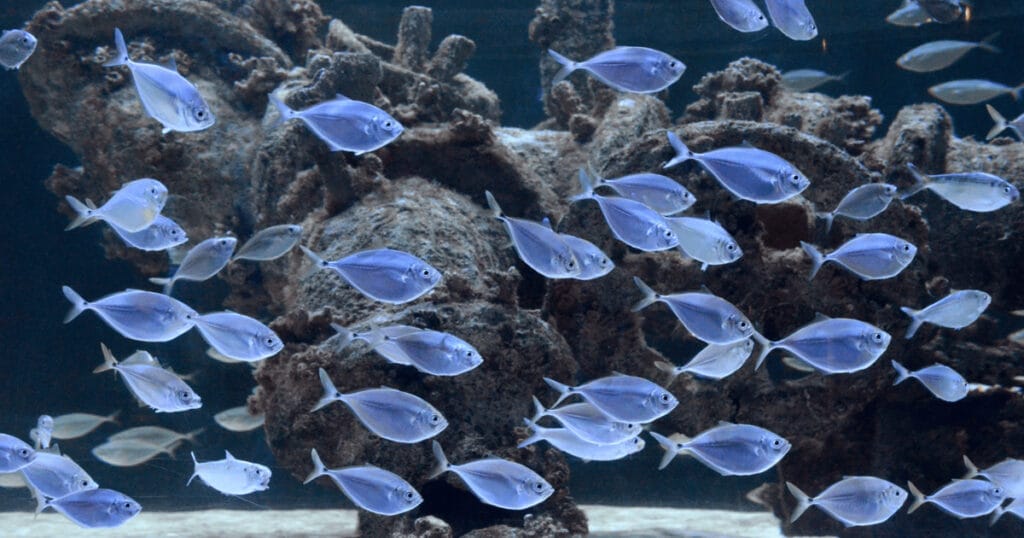
“My study may also help to better understand the feeding behavior of suspension feeders including baleen whales and krill that often feed on particulate organic matter near the head of submarine canyons.”
By Flinders University
Journal Reference:
J. Kämpf. On the upslope sediment transport at continental margins. Journal of Marine Systems, 2021; 219: 103546 DOI: 10.1016/j.jmarsys.2021.103546