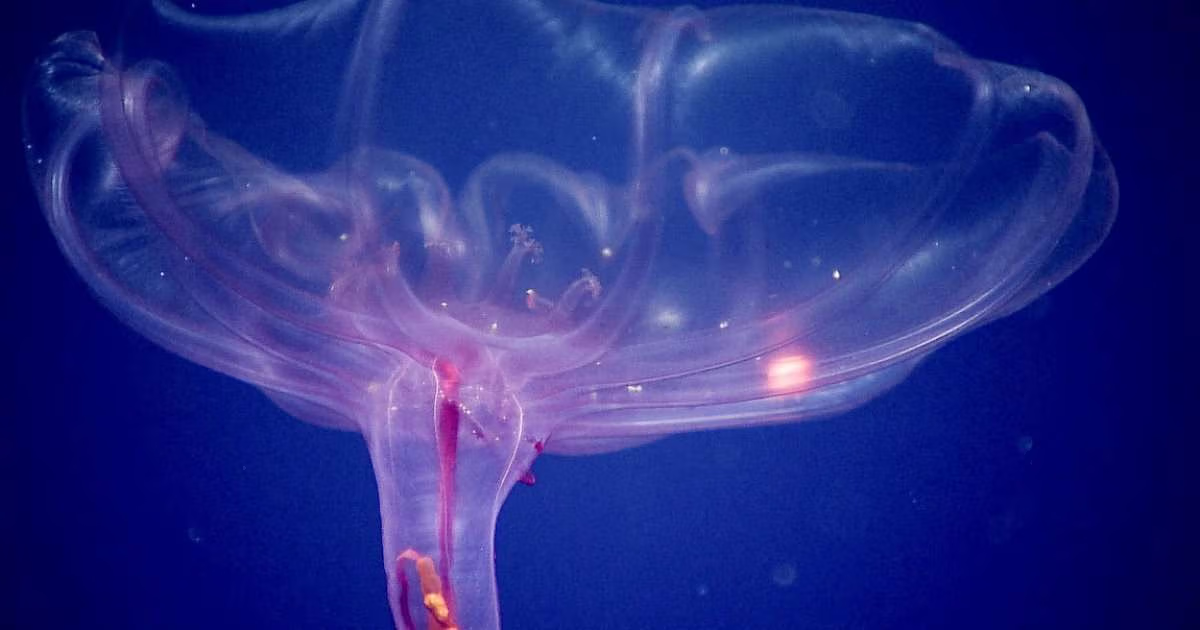
Of more than 1,700 species of sea cucumbers, Pelagothuria natatrix is the only one known to live in the water column instead of in close association with the seafloor. Specialized tube feet have evolved into a webbed veil that aids in feeding and swimming. The evolution of a pelagic lifestyle affords access to nutrient-dense marine snow in the water column. Pelagothuria are typically oriented with their veil open like a funnel toward the surface to collect sinking bits of organic material.
Marine life plays an important role in cycling carbon. Tiny plankton at the ocean’s surface convert carbon dioxide into organic material. This carbon enters ocean food webs, transformed by animals in the midwater and eventually locked away by scavengers and microbes on the deep seafloor.
Robison’s analysis of observations from 23 submersible dives in the Galápagos Islands found that Pelagothuria is abundant at depths of 250 to 650 meters (approximately 820 to 2,100 feet). Most sea cucumbers scavenge on organic material at the end of its long journey to the seafloor, but Pelagothuria catches carbon as it sinks through the midwater. Observations of Pelagothuria at relatively high densities in the midwater indicate that this species may have an important role in ocean carbon cycles in tropical waters.
This research was made possible by the David and Lucile Packard Foundation through its longtime support of MBARI’s work.
Research Publication:
Robison, B.H. 2026. Pelagic sea cucumbers in the Galapagos: Midwater grazers that short-circuit deep-sea carbon flux. Ecology, 107(9): e70536. https://doi.org/10.1002/ecy.70536