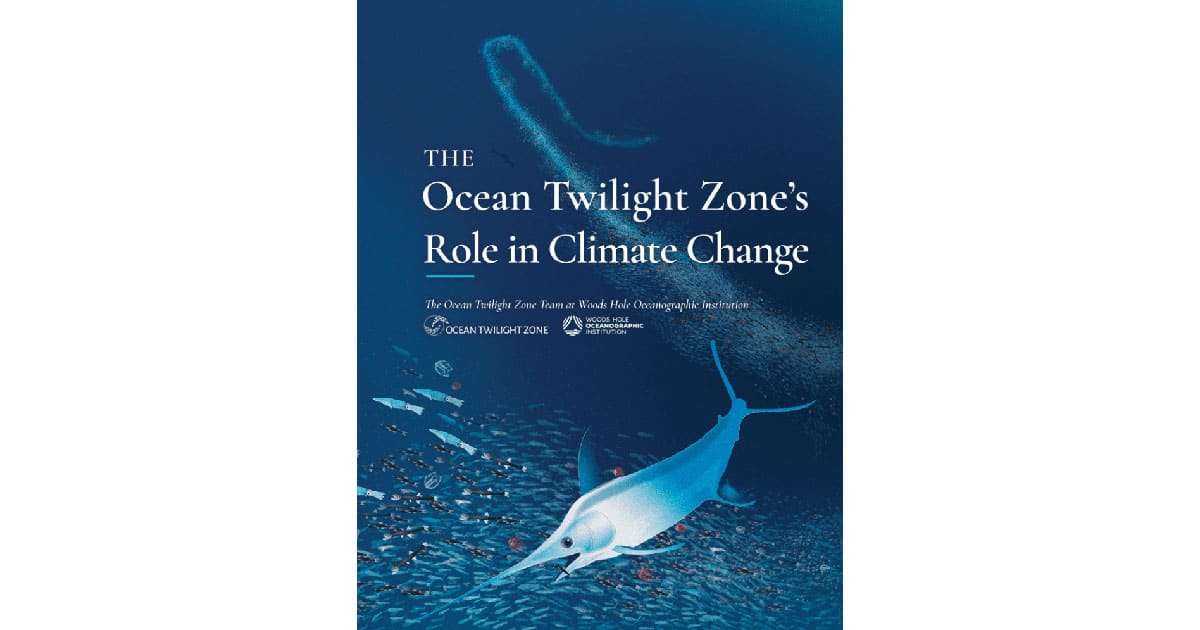
A new report from the Woods Hole Oceanographic Institution Ocean Twilight Zone (OTZ) project team offers a detailed look at the climate-altering processes that take place within the zone, in particular those that are driven by animals that migrate between the twilight zone and the surface each night to feed. This phenomenon is likely the biggest migration on Earth—yet it remains incredibly vulnerable to human exploitation.
The report describes scientific knowledge that has been gained, highlights major questions that remain about the twilight zone’s role in carbon sequestration, and suggests new considerations and tools for decision makers that can shape future marine policy. This mid-ocean realm encompasses about 20% of the global ocean volume and holds up to 95% of all fish in the ocean by weight. The twilight zone’s immense biomass and biodiversity plays a critical role in oceanic food webs and helps to regulate Earth’s climate by sequestering carbon in the deep ocean.
Life in the ocean twilight zone helps to transport gigatons of carbon annually from the upper ocean into the deep sea, due in part to processes known as the biological carbon pump. However, the same natural resources that support climate stabilization services are exploitable. When resource demand drives profit, commercial harvesting of the vast biomass resources in deeper waters could become widespread. WHOI’s OTZ project aims to produce the science needed for effective policy formulation.
The OTZ mission is to:
- Greatly expand scientific understanding of the twilight zone,
- Develop new low-cost, pervasive technologies to advance twilight zone exploration and understanding,
- Inform policymaking for the high seas, and
- Vastly raise public awareness of the ocean twilight zone.