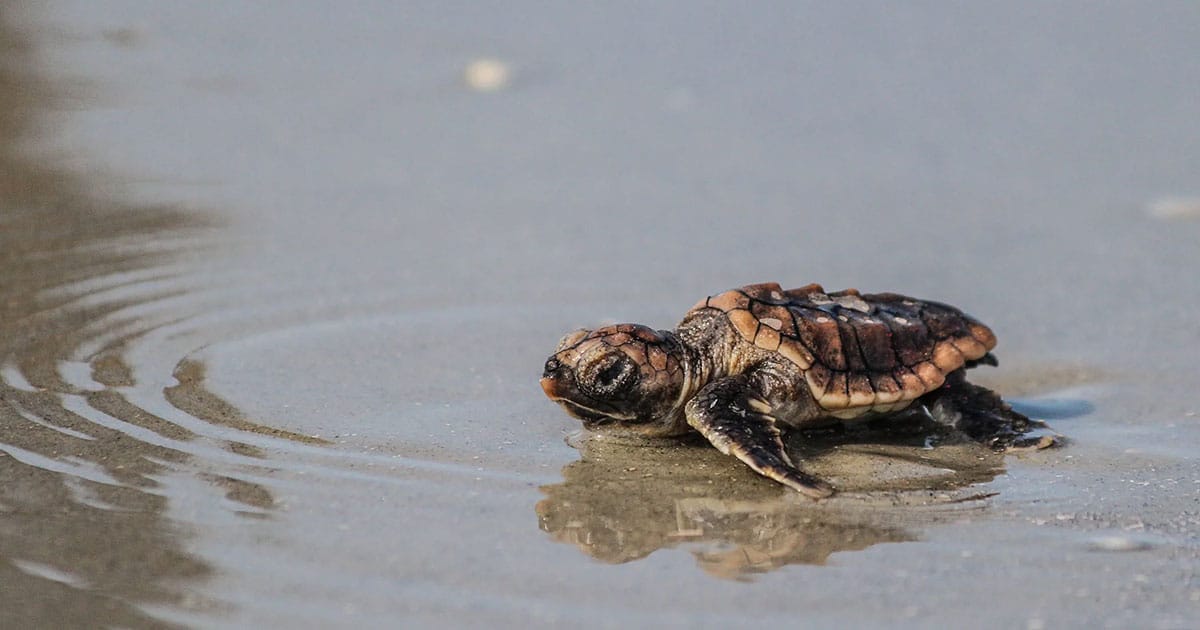
UGA researchers have developed an easier, more cost-effective way to learn more about male marine turtles, a traditionally elusive creature in the world’s oceans. As male turtles rarely return to land after they hatch, they are difficult to track and observe.
Previously, researchers like Shamblin have relied on satellite tracking or sampling multiple hatchlings and mothers to identify father turtles and to figure out how many males exist. Both of those methods present unique challenges in terms of invasiveness, time, and logistics.
The process allows researchers to determine genetic information about breeding male turtles from a single egg. As male turtle populations are on the decline, this new technique will enable biologists and other researchers to create an official database of male turtles to better assist in biodiversity and species preservation.
“You could have the collapse of the largest green turtle population in the world because of this lack of male production. Fewer males breeding means less genetic diversity in the next generation of turtles,” said Brian Shamblin, lead author of the study and a senior research scientist in the UGA Warnell School of Forestry and Natural Resources. “We want to try to maintain as much genetic diversity as we can. Genetic diversity gives the populations more resiliency. It’s kind of an insurance policy for them.”