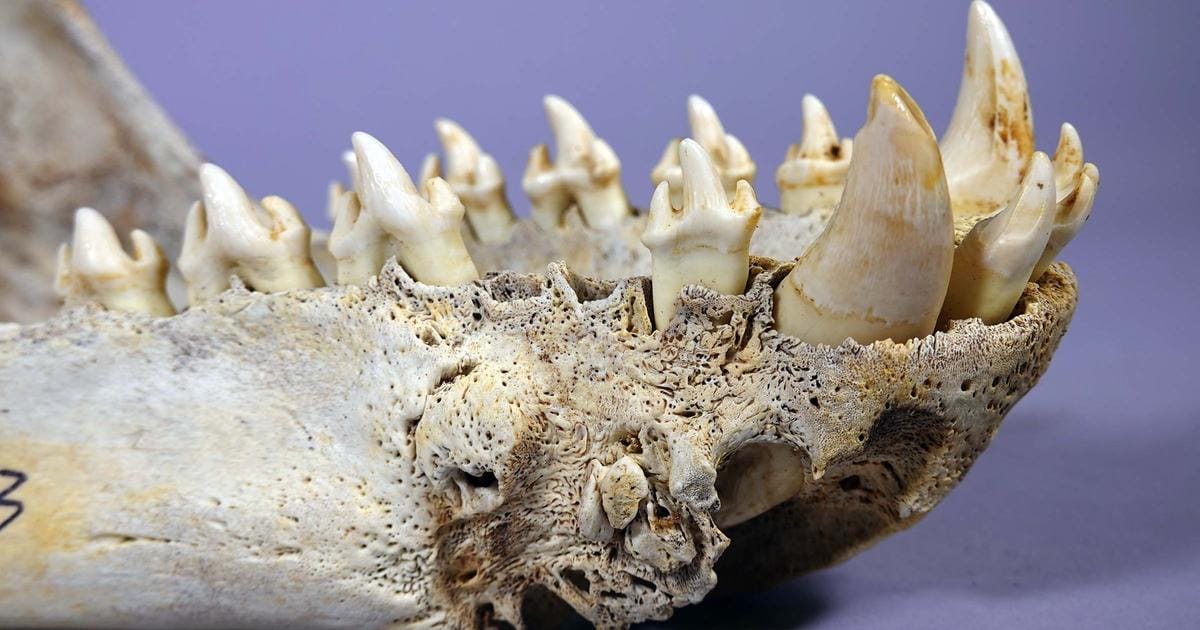
The skulls have been sitting on museum shelves for more than a century. Many still carry handwritten tags and notes from the scientists and explorers who collected them in the late 1800s and early 1900s. These specimens preserve clues within their bones and teeth about the animals they came from—including their sex, age at death, and diet. Now, University of Rhode Island (URI) researchers are using those clues to address longstanding questions about leopard seal biology.
This summer, Emily Sperou, Ph.D., a postdoctoral researcher in URI’s Comparative Ecophysiology of Animals Lab (CEAL), and Sarah Kienle, Ph.D., assistant professor of wildlife biology and director of the CEAL lab, traveled to four museums across Australia, photographing, scanning, and collecting samples from about 100 leopard seal skulls.
The work is part of a larger international project aimed at filling critical knowledge gaps about one of Antarctica’s top predators: the leopard seal.
A Lab Inside a Museum
The CEAL team identified museums around the world with some of the largest leopard seal collections and contacted each institution to secure permission to collect small samples from the skulls—a process that took years. “Almost all of the museums we have reached out to have been very generous and want to work with us to support the leopard seal project,” Sperou said.
Their Australian itinerary included visiting the Queen Victoria Museum in Launceston, the Tasmanian Museum and Art Gallery in Hobart, the Melbourne Museum (part of Museums Victoria) in Melbourne, and the Australian Museum in Sydney.
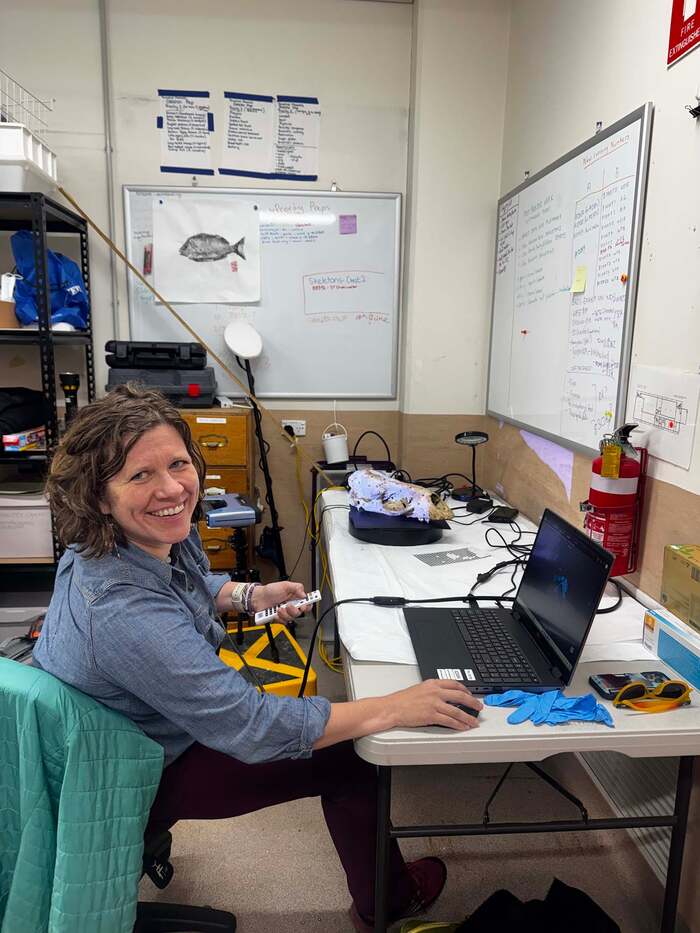
At each stop, the researchers transformed behind-the-scenes museum workspaces into temporary laboratories. “We bring a suitcase worth of gear,” Kienle said. “Dental tools, drill bits, vials for samples, 3D scanners, and accessories.”
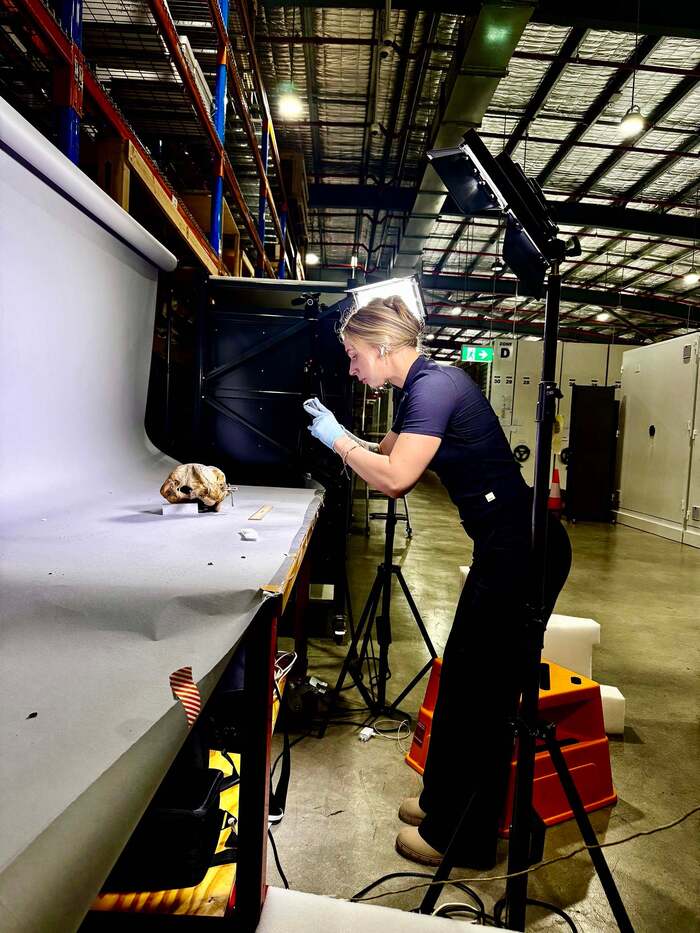
They followed a meticulous process with every skull. First came high-resolution photographs for measurements. Next, they spent up to 90 minutes creating a detailed 3D scan. Then they drilled into the occipital condyle to collect a gram of bone powder through a hole no larger than a pencil eraser, before carefully extracting a single canine tooth.
Each sample reveals a different piece of the animal’s life history. The 3D scans reveal differences in skull shape and size; the teeth provide clues about age, lifespan, sexual maturity, dietary specialization, and changes in hormones through time; and bone samples help determine sex and lifetime dietary patterns.
Together, those data will help answer surprisingly basic questions still unknown about leopard seals, such as how many pups they have in their lifetime and what age they reach sexual maturity.
A time capsule for conservation
Beyond the scientific data, the century-old specimens tell stories of their own.
“I think one of the best surprises is seeing some of the very historical samples and the notes left about the specimen from the original collector,” Sperou said. “Some of these skulls are from the 1800s and had different species names during that time.”
Kienle shares that fascination. “I love looking at the tags on the animals to see people’s handwriting, the scientific names that were used, and seeing names I’ve read about in old papers,” she said. “I am always surprised by the injuries that animals clearly survived—like a broken jaw or extremely worn teeth. It makes me wish I could go back in time and see the animal in action.”
The project will benefit the museums, too. Many historical specimens lack basic information such as the animal’s age or sex. By analyzing the samples, the URI researchers will be able to provide that missing information so museum records can be updated.
“Museum collections are invaluable,” Kienle said. “They are an irreplaceable time capsule of data on species—both living and extinct—that can help us understand how species survived in the past, inform our understanding of the present, and help us make predictions about their survival in the future.”
Sperou agrees that museum collections make it possible to answer questions that fieldwork alone never could. “Without museum collections, many of these questions could never be answered using only live animals,” she said. “They are an invaluable resource for understanding how species have changed over time.”
Ultimately, the team hopes these findings will provide the biological foundation needed to understand how leopard seals may respond as climate change reshapes their environment.
This story was written by Anna Gray in URI’s College of the Environment and Life Sciences.