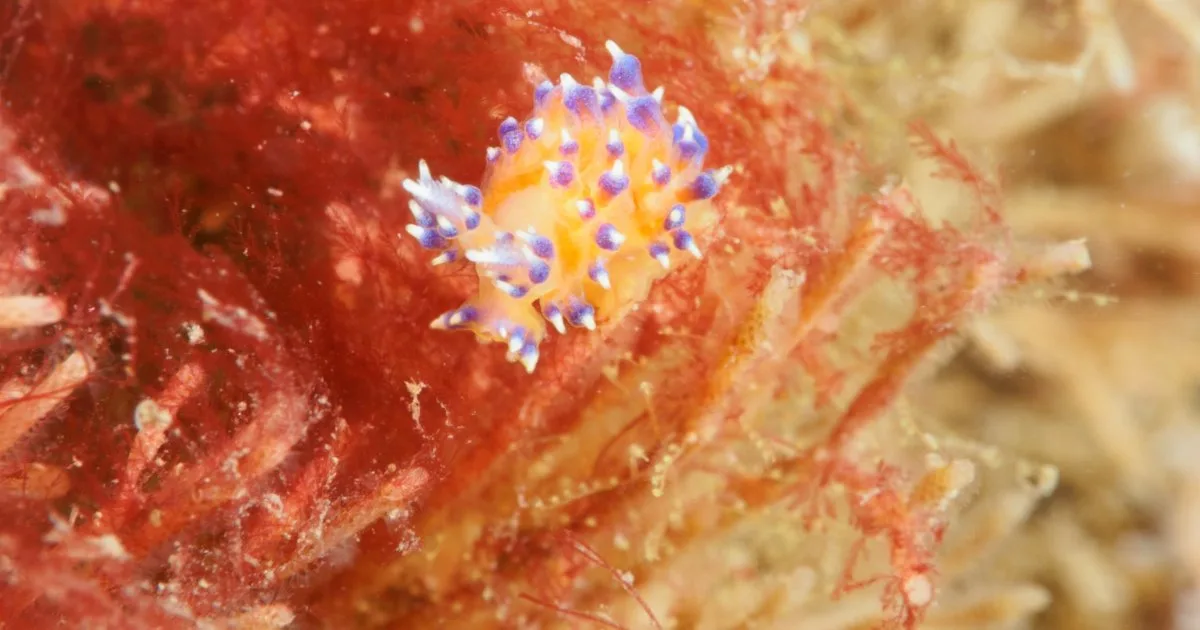
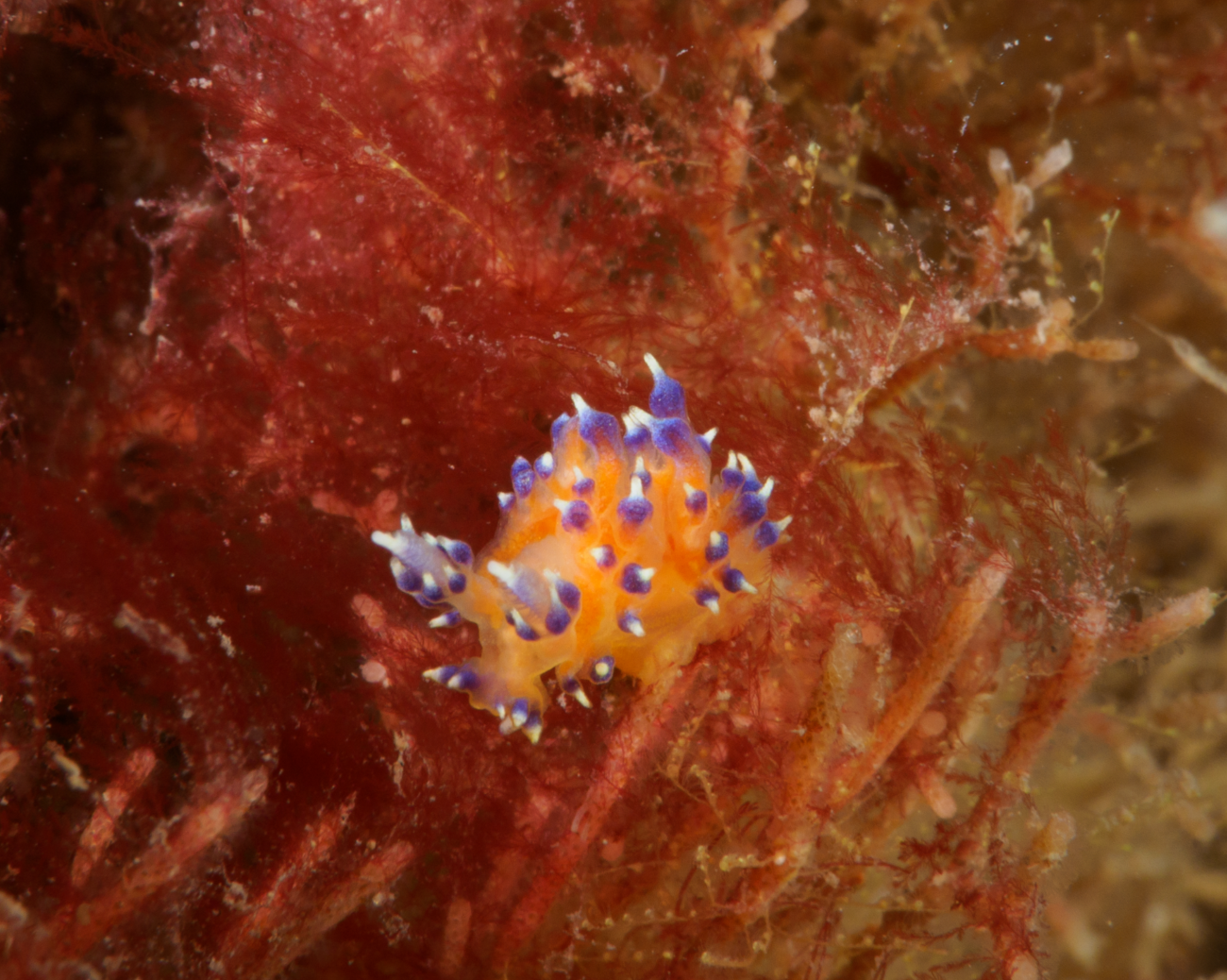
The tiny but striking orange, purple and white nudibranch was photographed by Maggs Ashton while diving with Ilfracombe and North Devon Sub-Aqua Club at around 20 meters depth. Measuring just 15 mm long, the minuscule creature could have been overlooked—but eagle-eyed Maggs caught the flash of color and took a closer look: “Tiny but unmissable, the vibrant colors of this beautiful nudibranch stood out against the red weed,” said Maggs.
Bernard Picton, renowned marine naturalist and co-author of Nudibranchs of Britain, Ireland and Northwest Europe (2023), said: “I think it is likely to be an undescribed Lomanotus species.” In scientific terms, this is significant—an ‘undescribed species’ is one that has never been formally identified, named and documented in the scientific literature.
Divers, rock poolers, sailors, and fishers are being asked to keep watch and record anything similar around our shores.
Experts from The UK Archive for Marine Species and Habitats Data (DASSH) hosted by the Marine Biological Association (MBA) say the closest match to this nudibranch is Antiopella cristata—previously known as Janolus cristatus. This appears in DASSH archives and has been found in Lundy and around the UK.
The discovery is another reminder that the marine life around Britain is ever-changing. In November 2025, a rare depilatory sea hare, Aplysia depilans, was discovered by young rock poolers taking part in a Rock Pool Project monthly BioBlitz Battle on a Plymouth beach. The find captured the imagination of the public after something that at first looked like seaweed turned out to be an unusual species of sea hare usually only spotted in the Mediterranean.
This latest unusual sighting shows why it is so important that keen-eyed citizen scientists record their discoveries so that they can be verified by experts. Every photograph and recorded sighting contributes to the annual South-West Marine Ecosystems State of South-West Seas report, which brings together sightings from a wide range of people who know and use the sea – including divers, swimmers, snorkellers, anglers, fishers, sailors, rock poolers, wildlife watchers, researchers and citizen scientists.
These observations provide the data to help scientists to build a clearer picture of how our coasts and seas are changing as our seas warm, from unusual visitors and shifting species ranges to the familiar wildlife people see every day.
Anyone who spots this mystery sea slug, or any other marine and coastal wildlife of interest, is encouraged to photograph it, note the location and depth if possible, and report their sighting to DASSH, the Marine Biological Association’s data experts, through the iNaturalist app, so specialists can compare records and, hopefully, solve the mystery of this (currently) nameless nudibranch.