In a new study, a team of researchers led by University of South Florida integrative biologist Lucas Griffin combined five years of electronic tracking data and chemical signatures preserved in fish tissues to identify the key feeding areas that sustain tarpon during their annual migrations.
The study, published in Movement Ecology, found that tarpon do not feed randomly across their range. Instead, they rely on distinct “foraging landscapes” that act as fueling stations during migration.
The researchers identified three especially important feeding regions:
- South Florida
- The northern Gulf of Mexico
- The Mid-Atlantic coast
South Florida emerged as the only region consistently used by tarpon from multiple migratory groups, underscoring its importance to the species.
“These fish connect coastlines that look completely separate on a map—from the mangroves of the Florida Keys to the marshes of Louisiana and the Carolinas,” Griffin said. “The tarpon someone catches in the Keys might have spent the previous summer feeding in the northern Gulf. So fisheries across the Southeast depend on habitats hundreds of miles away—damage one place, and anglers feel it up and down the coast.”
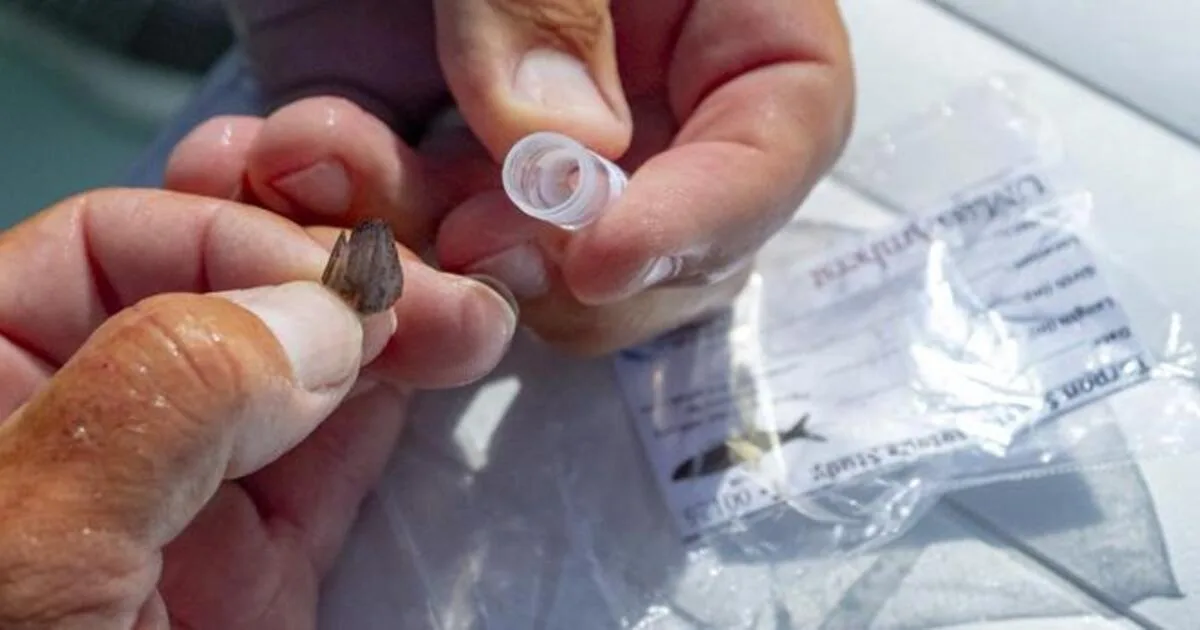
The team analyzed tissue samples from 417 tarpon and linked those data with 85 acoustically tagged fish, whose movements, behaviors, and migration patterns were tracked using sound waves. By combining the two datasets, they could estimate not only where fish traveled, but also where they had most likely been feeding.
The findings revealed that tarpon often obtain much of their food hundreds of kilometers from where they were captured and sampled, with the most probable foraging areas averaging about 300 kilometers (185 miles) away. Shorter-term blood samples reflected more recent, localized feeding, while longer-term fin-clip tissues captured broader feeding patterns over several months.
The findings also have important conservation implications. Because tarpon depend on a limited number of productive feeding areas, threats from coastal development, altered freshwater flows, habitat loss, or climate don’t just harm one region—they could weaken the fishery across the entire range.
Beyond tarpon, the researchers say their approach offers a new framework for studying other migratory marine species whose feeding habitats have been difficult to identify. By pinpointing the places that provide the energy needed for migration, scientists and resource managers can better protect the ecosystems that support healthy fish populations and sustainable recreational fisheries.
“The next step is sorting out exactly what tarpon are eating in each of these hotspots,” Griffin said. “Once we know what type of prey they depend on across the regions—menhaden, mullet, anchovies, crabs—we can make sure these populations are managed with predators like tarpon in mind, not just as isolated fisheries.”
Co-authors of the study include Oliver N. Shipley (Stony Brook University), Aaron J. Adams (Bonefish & Tarpon Trust), Jacob W. Brownscombe (Great Lakes Laboratory for Fisheries and Aquatic Sciences), Simona A. Ceriani (Florida Fish and Wildlife Conservation Commission), Steven J. Cooke (Carleton University), Joseph J. Dello Russo (University of Maine), Seth D. Newsome (University of New Mexico), Michael Power (University of Waterloo), JoEllen K. Wilson (Bonefish & Tarpon Trust), and Andy Danylchuk (University of Massachusetts Amherst).