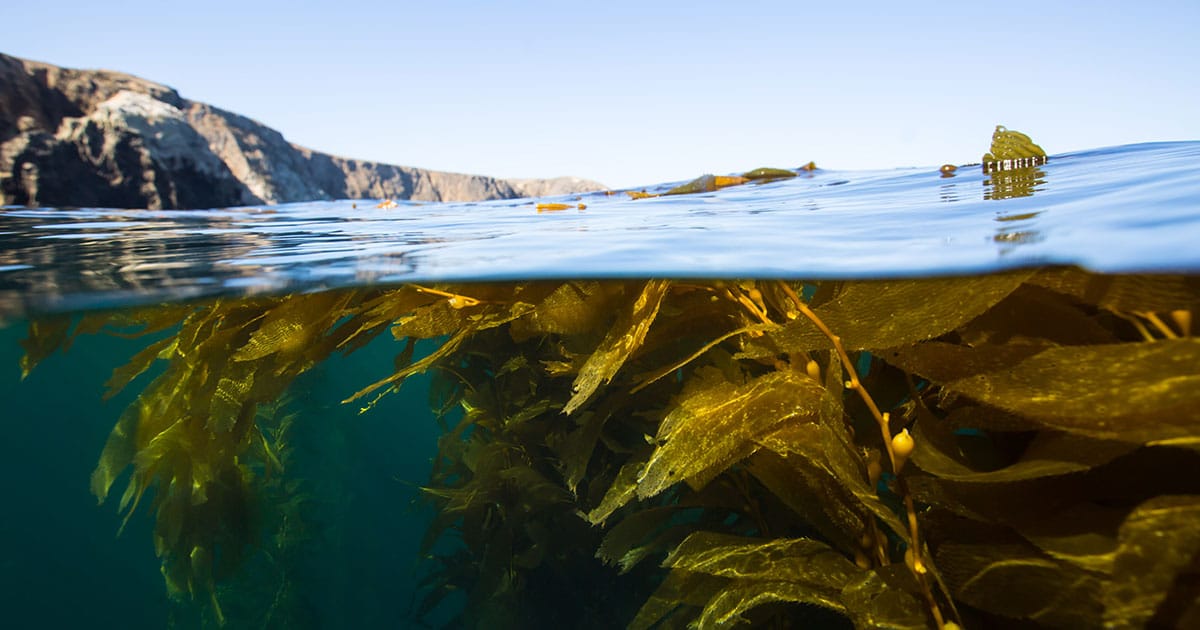
The study, published in Nature Communications, mapped one of the tiny antenna-like structures kelp uses for photosynthesis.
Their unique architecture may hold the key to why kelp are the most efficient ocean organisms at catching light and removing carbon dioxide from the atmosphere.
While land plants and many marine organisms are well-studied, the inner workings of kelp’s photosynthesis machinery have remained mysterious.
This research shows the molecular arrangement of kelp cellular machinery for the first time.
Lead researcher Dr. Maria Maldonado recently joined Monash University as a Senior Lecturer and Lab Head in the Monash Biomedicine Discovery Institute (BDI) and led the team conducting the research as an Assistant Professor at the University of California, Davis, in the United States.
“By visualizing the structure of giant kelp’s photosynthetic supercomplex, we can finally see how these organisms have adapted the architecture of their antenna to thrive in coastal regions,” Dr. Maldonado said.
This discovery is important because kelp ecosystems act like underwater forests that soak up as much carbon dioxide as the Amazon.
Dr. Maldonado said by understanding how kelp capture energy so well, scientists might be able to design new ways to boost crop growth or create better technology for capturing carbon dioxide from the atmosphere.
“What’s really exciting is that the methods we’ve developed will open the door to understanding a whole range of kelp molecular and cellular biology,” Dr. Maldonado said.
“These molecular insights are crucial as we look for new ways to enhance carbon capture, to regenerate ocean ecosystems and to develop sustainable food sources in a warming world.
“It is a major step forward in our quest to harness the natural efficiency of marine photosynthesis for global environmental solutions.”
Read the research paper: https://doi.org/10.1038/s41467-026-73499-x