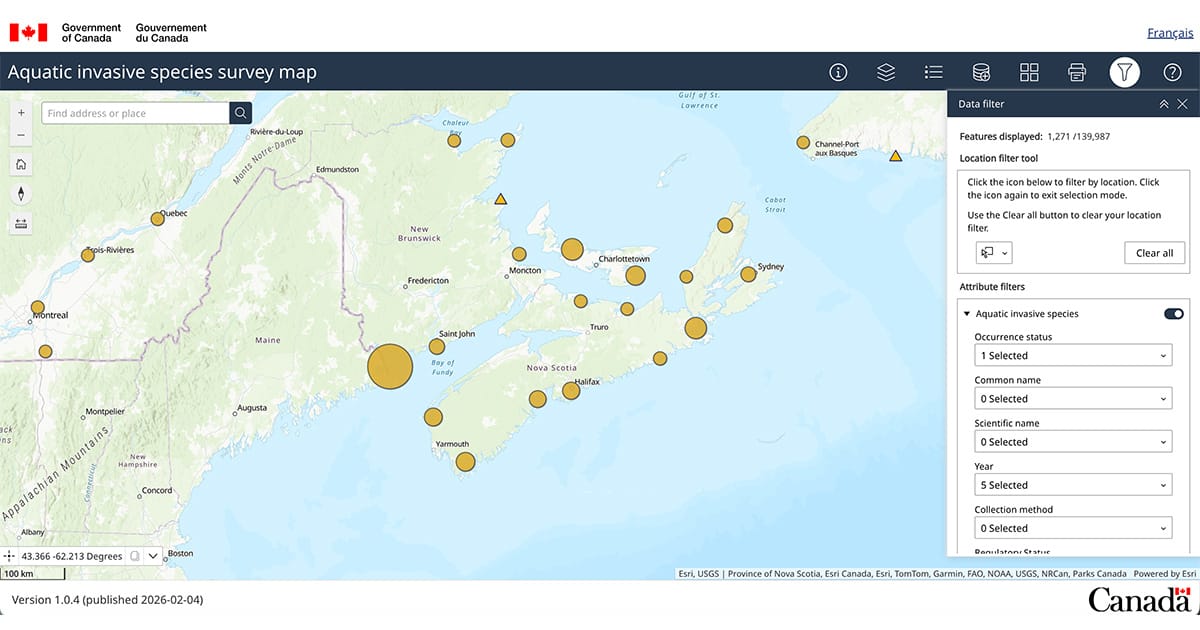
The Honorable Joanne Thompson, Minister of Fisheries, launched the new aquatic invasive species survey map. This new, interactive online tool provides an overview of aquatic invasive species detections across the country. The map will allow partners, academia, and the public to stay informed about where these species are found across Canada.
Additionally, Minister Thompson announced $1 million in funding under the Aquatic Invasive Species Prevention Fund (AISPF) for eight projects across the country. These projects will help strengthen partnerships, facilitate on-the-ground, preventative actions against aquatic invasive species as well as promote education, outreach, detection, and response activities.
The announcement took place at the 2026 Invasive Species Forum, hosted by the Invasive Species Centre who have previously received support from the AISPF. The forum’s theme, progress through partnerships, is an important reminder that the management of aquatic invasive species is a shared responsibility. Collaboration with all levels of government, Indigenous partners, stakeholders, and the general public, can help protect Canadian waterways from the negative impacts of aquatic invasive species.
“I am so pleased to announce our new survey map and the new funded projects at the 2026 Invasive Species Forum. Prevention is key in our fight against aquatic invasive species. These important tools and projects will help Canadians stay informed about what they can do to help prevent the spread of these invaders. By working together, we form a strong and united front in the fight against aquatic invasive species, protecting our waterways, nature, and identify as Canadians,” said the Honorable Joanne Thompson, Minister of Fisheries.
“Protecting Canada’s nature and biodiversity is more important than ever. By fostering partnerships through the Invasive Species Forum, funding critical action across the country, and using innovative tools like the new survey map, we are keeping Canada’s waterways safe from destructive aquatic invasive species,” said Ernie Klassen, Parliamentary Secretary to the Minister of Fisheries.
Quick Facts
- Aquatic invasive species are freshwater or marine plants, animals, algae, and micro-organisms introduced outside their natural or past habitats. They have significant negative impacts on the environment, economy, society, and, sometimes, human health.
- Fisheries and Oceans Canada collaborates with provinces, territories, and other partners across Canada to prevent their introduction, establishment and spread in waterways.
- Under the federal Aquatic Invasive Species Regulations, it is illegal to introduce an aquatic species into a body of water where it is not native, unless authorized by federal, provincial or territorial law.
- To help prevent the spread of aquatic invasive species, Canadians are encouraged to follow clean, drain, dry and don’t let it loose practices.
- Watercraft and equipment should always be cleaned, drained and dried after leaving a body of water.
- Do not let loose any aquatic pets or plants, live food, bait, or sportfish into ponds, rivers, streams, lakes, sewers, or the ocean.