Beavers are famous for their construction skills, building domed lodges and damming rivers with logs. The ponds that their dams create can provide important habitat for plants, birds, and fish, and their ability to alter ecosystems has given them the title of ‘ecosystem engineers’. Beavers can also be found in estuaries, where the twice-daily ebb of the tides causes water fluctuations and brings in saltwater from the ocean. However, little is known about beaver ecology and behavior in these tidal habitats.
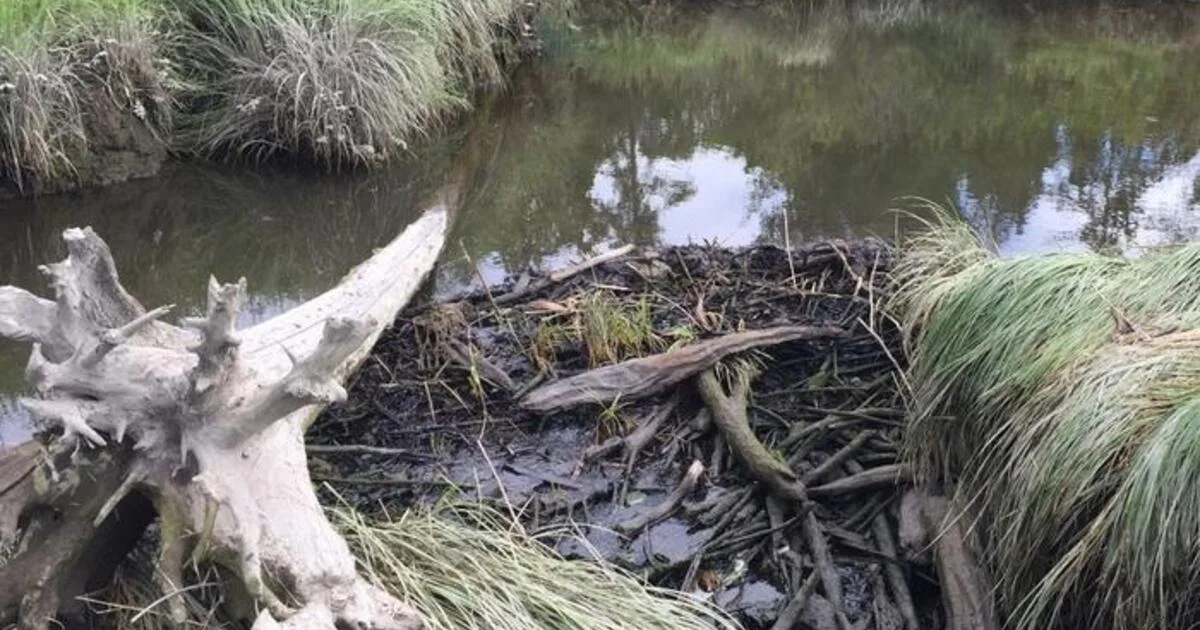
Researchers surveyed North American beaver (Castor canadensis) lodges and dams in tidal wetlands in British Columbia, Washington, and Oregon to understand how beavers use river deltas and estuaries. They found that beavers were widespread in these tidal habitats, with an average of 19 dams and two lodges per kilometer in surveyed channels of the Snohomish and Skagit rivers. This is more than twice the density of beaver dams that has been previously reported for non-tidal river channels. Detailed measurements of beaver structures revealed that dams in tidal habitats tend to be shorter than those in rivers, meaning that they would usually be flooded at high tide. This suggests that their main function is to trap water at low tides, allowing beavers to move freely through the river system. They may also help to block saltwater brought in by the tide. The researchers inspected historic aerial photos on Google Earth dating back to 1990 and found that an estuarine beaver dam can remain in place for at least 35 years, spanning multiple generations of beaver.
The study expands the known habitat distribution of beavers and demonstrates that these charismatic creatures can thrive in river estuaries. The density of dams also suggests that they may have a significant ecological impact in these habitats. By creating deep pools of water at low tide, their dams may provide important habitat for threatened species, such as Chinook and coho salmon. But more research is needed to understand how conservationists can work with beavers to restore river estuaries in the Pacific Northwest, the authors say.
The author added: “The conventional view of beaver is that they live exclusively in rivers and lakes. My work shows that beaver are much more adaptable than this. They are also broadly distributed and resident in tidal marshes and swamps of the Pacific Northwest, from at least British Columbia to southern Oregon. So, it would not be surprising if beaver were found in tidal habitats in other regions of North America or Eurasia.”
“Now that we know that beaver can be commonly found in tidal wetlands, we also know that there are new questions to ask about beaver ecology in these systems. We have a lot to learn about tidal beaver ecology and how it compares to more conventional river and lake beaver.”
“Knowing that beaver are commonly found in tidal marshes and swamps leads to the realization that we need to account for the ecosystem effects of beaver in these systems. Beaver are ecosystem engineers in rivers and lakes, i.e., their dam-building activities have broad effects on other flora and fauna in those ecosystems. So, they are likely to also be ecosystem engineers in tidal ecosystems. Without accounting for beaver in tidal ecosystems our understanding and management of these systems is likely to be incomplete and flawed.”