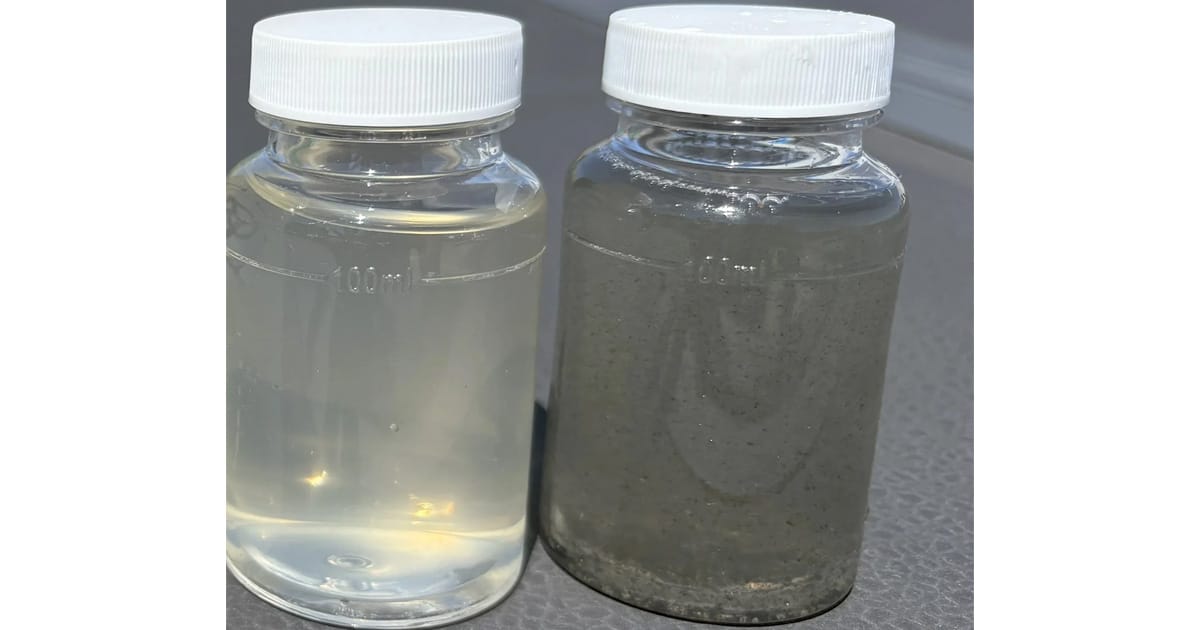
Greenwater Services, a water technology company specializing in environmentally safe water treatment and purification technologies, announced that its five-week pilot project on the Tijuana River achieved an average 91.5% reduction in total coliform bacteria on treatment days, significantly exceeding the project’s initial 15 to 20% performance objectives.
Greenwater deployed four units of its patented Nano Bubble Ozone Technology (NBOT) during the pilot. The system is designed to reduce harmful bacteria and pathogens in water without releasing ozone into the atmosphere or harming marine ecosystems.
“We demonstrated that even in one of the most complex and heavily impacted waterways on the US-Mexico border, our technology can deliver measurable and meaningful results,” said Al George, CEO of Greenwater Services. “We observed a 91.5% reduction in total coliform bacteria during treatment periods, which proves the technology can have a measurable impact.”
NBOT infuses water with nano-sized ozone bubbles that attack bacteria and dissolved contaminants while keeping ozone contained within the water column. According to Peter Moeller, Ph.D., a research chemist with the National Oceanic and Atmospheric Administration (NOAA) who has consulted on the technology, the process leaves treated water more oxygenated after disinfection.
The technology has been tested and validated in collaboration with research institutions, most notably Ohio State University.
During the pilot, significant volumes of plastic and debris in the river required limiting operations primarily to daylight hours when flow was lower to reduce clogging risk. Even with this constrained operating window, the system substantially outperformed expectations. Border Patrol agents stationed near the treatment area also reported a noticeable reduction in foul odors during active treatment days.
While bacteria levels remained above standards for direct human contact, the pilot was designed to validate performance in a defined section of the river, not to remediate the entire watershed. Based on river flow volumes, Greenwater estimates that approximately 40 NBOT units, combined with integrated filtration systems and continuous 24/7 operation, would be required to achieve compliance-level improvements at scale.
Following the pilot, Greenwater submitted a comprehensive report to the IBWC outlining recommendations for expanded deployment, including additional units, debris pre-filtration, and continuous treatment capability.
Expanded National Water Restoration Efforts
Building on the success of the Tijuana River pilot, Greenwater Services is advancing additional public water restoration initiatives across the United States.
The company is scheduled to soon collaborate with NOAA and the Florida Department of Environmental Protection on a project sponsored by Martin County. Additional Florida-based projects are underway, including a Lake Okeechobee project in partnership with the University of Florida and Ohio State University, funded by the US Army Corps of Engineers to reduce algae and nutrients.
“We want to offer governments and communities a viable and safe solution for improving water quality that benefits public health, the environment, and local economies,” George said. “This pilot demonstrates that meaningful progress is possible even in waterways long considered too challenging to remediate, and we are now moving into the next phase of broader national deployment.”