Research Associate Justin Geldard, Professors Ryan Lowe, Marco Ghisalberti, and Steve Swearer, from The University of Western Australia, were co-authors of the study published in Proceedings of the National Academy of Sciences, which examined modular reef concepts designed and tested at UWA’s Coastal and Offshore Research Laboratory (CORL).
The work included using the UWA Shenton Park Field Station-based CORL to develop and test modular reef structures to reduce wave energy.
“Using the wave flume facilities at CORL, we verified the reef’s performance under extreme wave conditions relevant to coastal protection and examined how that performance changed as oysters colonized the structure over time,” Mr. Geldard said.
“Designing these systems requires an interdisciplinary approach that integrates ecology, biology, and coastal engineering to understand both ecological performance and impacts on waves, currents, and sediment transport.”
Researchers used the US defense advanced research projects agency (DARPA) Reefense program as a case study to show how interdisciplinary teams could address three core design priorities: shoreline protection, structural durability, and cost-effectiveness.
The design supported oyster colonization and assessed how performance evolved as the oysters grew, creating reefs with broader habitat mosaics.
“Our findings provided a critical engineering foundation, helping inform the design of a large-scale field trial and the monitoring program used to assess performance in the real world,” Mr. Geldard said.
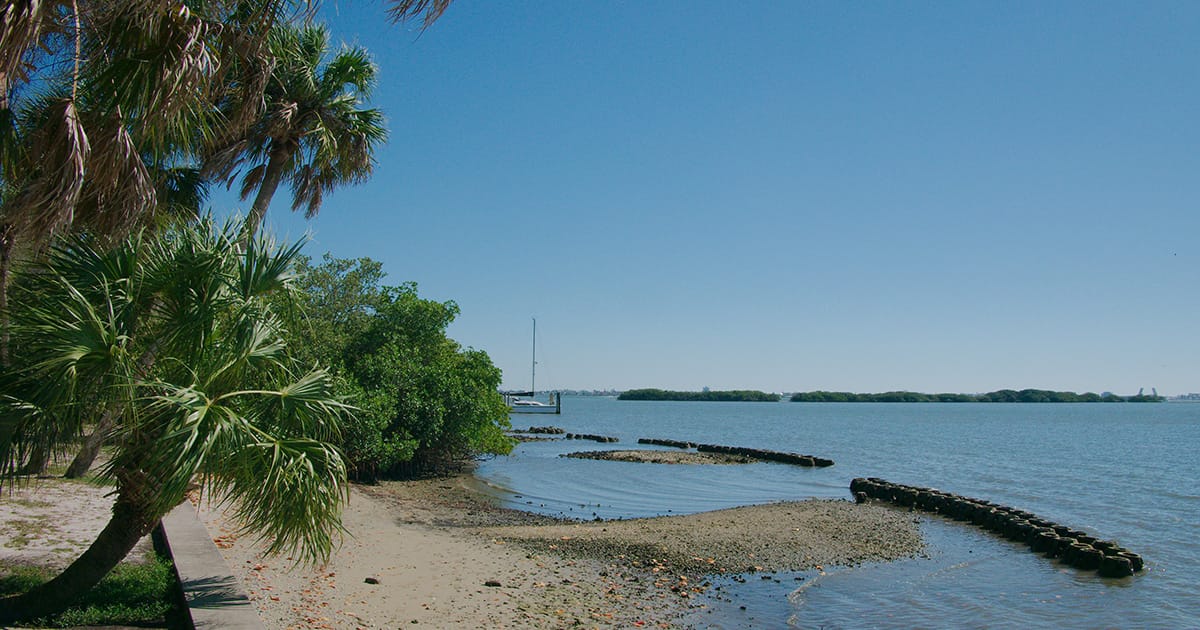
The Reefense concept was then delivered as a living shoreline installation at Baker Point on Tyndall Air Force Base in Florida, US, between October 2024 and March 2025.
The research has improved understanding of nearshore hydrodynamics, showing how reef-based living shorelines can influence waves, currents, water levels, and sediment transport, which are all critical to long-term shoreline protection.