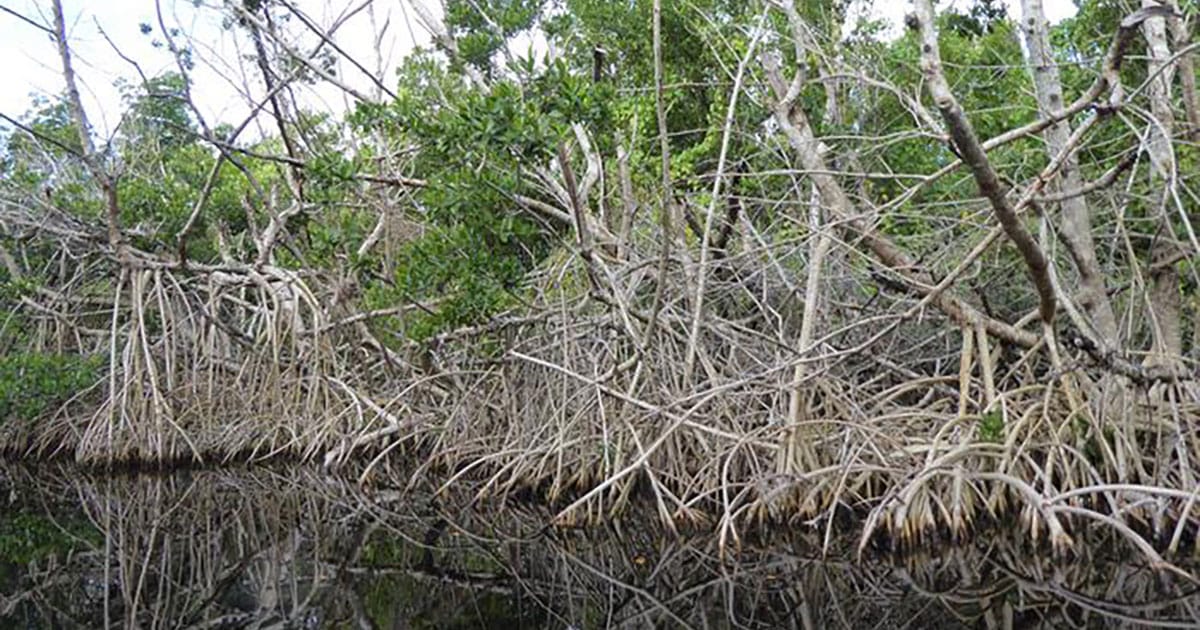
Mangrove waters change constantly with the tides. At low tide, oxygen levels drop while carbon dioxide builds up, making it harder for fish and other marine species to breathe. Only species adapted to mangroves can tolerate these conditions. When the tide rises, fresh seawater brings more oxygen and lowers carbon dioxide levels. These periods allow more sensitive species, including commercially important fish, to enter the mangroves to feed or seek shelter.
Extreme Conditions
To understand how often these tidal changes create stressful conditions for marine life, researchers at the University of Gothenburg measured oxygen and carbon dioxide levels in 23 mangrove areas. For the first time, oxygen and carbon dioxide were measured together across mangroves worldwide, revealing global patterns in environmental stress.
“I was surprised to see that many mangrove systems already experience very extreme conditions,” said Gloria Reithmaier, marine chemist at the University of Gothenburg and lead author of the study. “Especially in warm tropical regions, there are long periods when oxygen is low and carbon dioxide high, leaving little time for sensitive fish to enter the mangroves.”
Global warming is raising the temperature of the world’s oceans. Using different climate projections, the researchers explored how mangrove waters may change in a warming ocean with rising carbon dioxide levels. Across all scenarios, stressful conditions became more severe and lasted longer, reducing the time fish and other marine species can use mangroves as refuge. In some cases, conditions may reach levels where many fish would simply struggle to breathe.
Highly Diverse Habitats
“In the Amazon and India, carbon dioxide levels are already very high. Compared to mangroves further from the equator, tropical systems already operate close to their limits,” said Gloria Reithmaier. “These highly diverse habitats may be the first to lose sensitive species as ocean temperatures rise and carbon dioxide levels increase.”
Increasing environmental stress may gradually reduce biodiversity in mangrove ecosystems, favoring only the most tolerant species. These impacts are expected to hit tropical developing countries the hardest, where fisheries and coastal livelihoods rely heavily on mangroves.
“It is likely that the fish people are most interested in are the ones that are hardest hit,” said Gloria Reithmaier.