Scientists found that grazing by small marine herbivores was associated with a 29% increase in the prevalence of the disease.
Scientists have long studied how terrestrial invertebrate herbivores such as insects (aphids, beetles) and gastropods (snails, slugs) frequently act as vectors, transmitting plant diseases through their feeding activities and often creating wounds on plants’ surfaces that make it easier for pathogens to enter. But how this works, and how pernicious the problem is, has been harder to study underwater in the ocean.
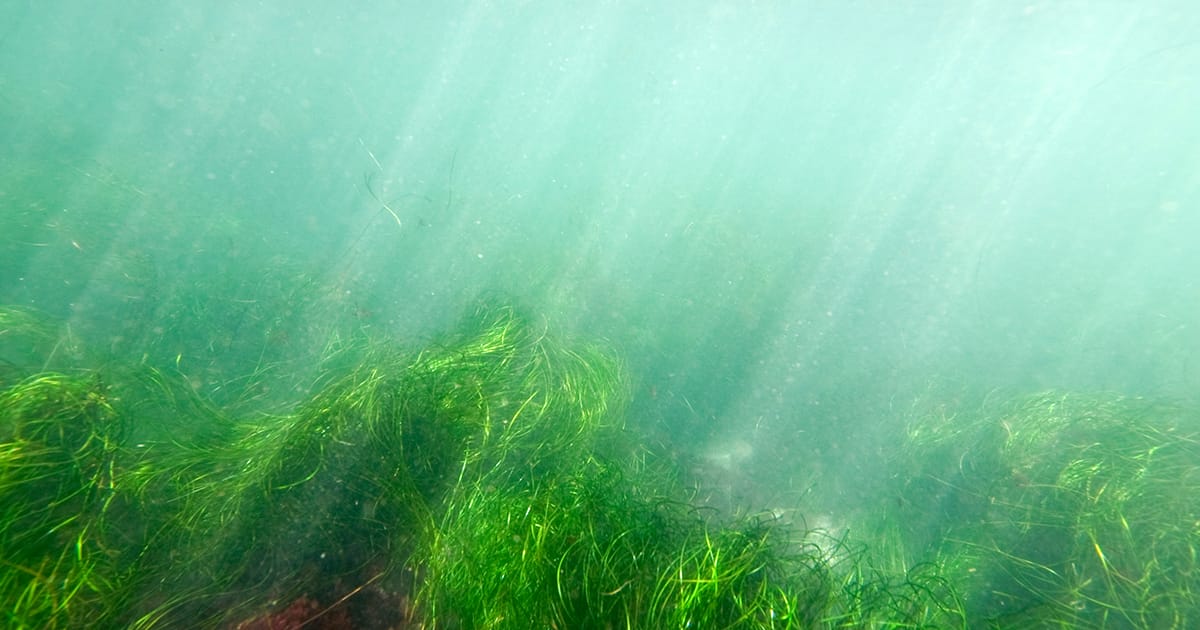
Eelgrass, a type of flowering seagrass found in temperate zones around the world, provides habitat for many species, protects coastlines, improves water quality, sequesters carbon, and supports fishing economies. The foundation of a highly productive marine food web, eelgrass’s health, is paramount but mysterious.
The researchers show that isopods and snails create open wounds on eelgrass when they graze; lab experiments verify increased disease in the wounded plants. The researchers also showed that sea creatures can be picky eaters: Crustaceans called amphipods selectively consumed diseased eelgrass, while the isopods and snails prefer to nosh on pristine leaves, meaning different herbivores have contrasting impacts on seagrass health.
The computer scientists on the team accelerated the effort to identify and quantify the problem via the Eelgrass Lesion Image Segmentation Application (EeLISA, pronounced eel-EYE-zah), an AI system they have developed that, when properly trained, can quickly analyze thousands of images of seagrass leaves and distinguish diseased from healthy tissue, thus allowing continental scale studies.
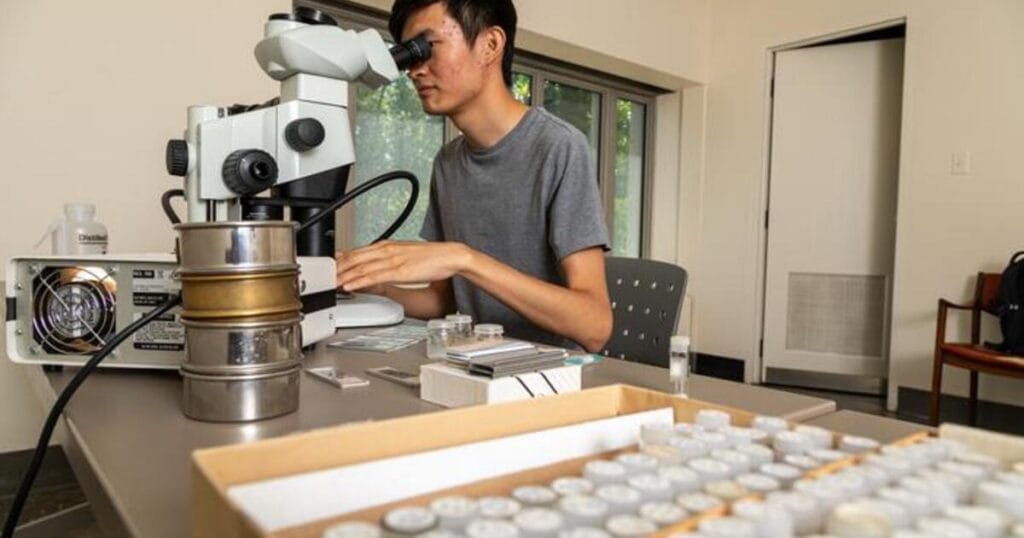
Researchers collected thousands of eelgrass leaves at 36 sites along the Pacific Coast from Southern California to Alaska, uploading high-resolution images of each plant. They used algorithms and machine learning to train a computer using state-of-the-art image segmentation to recognize necrotic dark spots on eelgrass blades and correctly identify them, separating disease-caused lesions from other kinds of leaf damage.
“Invertebrate Herbivores Influence Seagrass Wasting Disease Dynamics,” published in the December 2024 issue of Ecology, and “Seagrass Wasting Disease Prevalence and Lesion Area Increase with Invertebrate Grazing Across the Northeastern Pacific,” published in the January 2025 issue.
This research was supported by grants from the National Science Foundation; the Schmidt Family Foundation; the US Department of Agriculture’s National Institute of Food and Agriculture; the Air Force Office of Scientific Research; and the Andrew W. Mellon Foundation.