“Eelgrass helps keep our coastal communities strong and better protected from stronger storms, flooding, and erosion,” said Energy and Environment Secretary Rebecca Tepper. “These grants are an investment in restoring and protecting a natural resource that supports our environment, our economy, and the communities that rely on healthy coastlines.”
“We know eelgrass is one of our most important carbon sinks—but more research is needed to quantify that impact and better understand how these ecosystems function in both natural and restored states,” said MassDEP Commissioner Bonnie Heiple. “This information will help us prioritize conservation and restoration of our most valuable resources.”
“In Massachusetts, our eelgrass meadows are one of the most important habitats for marine fisheries. By restoring these critical habitats, we can boost productivity of our sustainable fisheries and build coastal resilience, even amid climate shifts,” said DFG Commissioner Tom O’Shea. “We are grateful to our partners at MassDEP and the Marine Biological Laboratory for piloting innovative blue carbon research that will drive investment in restoration of these critical ecosystems and progress towards our nation-leading biodiversity and climate goals.”
“Eelgrass may be underwater, but its impact is felt throughout Massachusetts’ coastline,” said DCR Commissioner Nicole LaChapelle. “These meadows help protect our coastal communities, support wildlife, improve water quality, and strengthen resilience in the face of a changing climate. When we invest in understanding and restoring these ecosystems, we’re investing in the health, safety, and quality of life of the people who depend on them, while helping ensure our coastlines remain strong and vibrant for generations to come.”
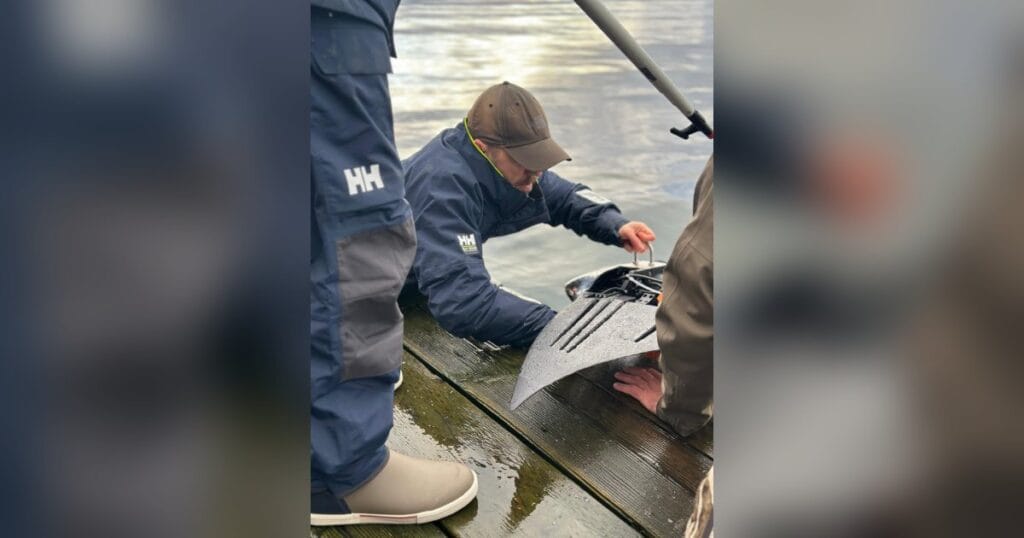
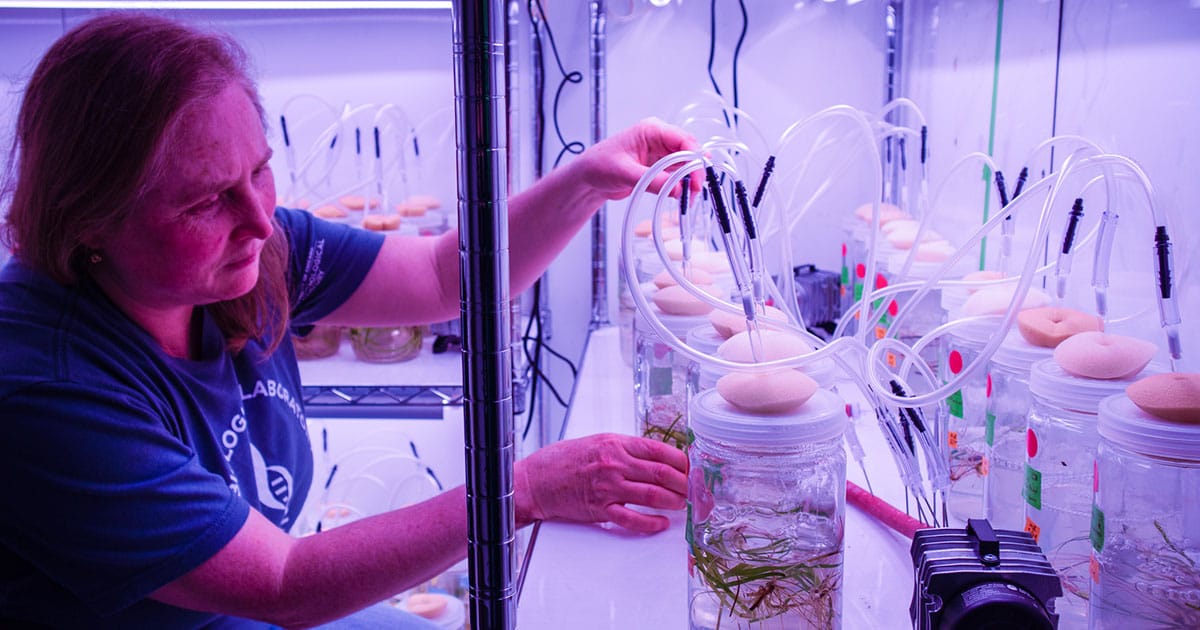
The two-year study will collect deep sediment cores and measure the movement rate of greenhouse gas (GHG) flux in restored and natural eelgrass meadows along the coast of Massachusetts. Using novel field-deployed sensors, sediment cores, and lab experiments, the project will focus on sites with different characteristics and experiencing different stressors, including locations in Buzzards Bay, Nantucket and Vineyard Sounds, and Broad Sound, Winthrop.
“The MBL is honored to be part of this collaborative effort to measure how eelgrass recovery and restoration influence carbon storage and coastal resilience, while advancing our understanding of the vital role these ecosystems play in climate mitigation,” said Mirta Teichberg, Associate Scientist and Director, Semester in Environmental Science at the MBL. “We believe science is most impactful when it informs real-world environmental solutions, and this project will provide important data to help protect and restore Massachusetts coastal habitats for future generations.”
“Eelgrass meadows are doing important work just beneath the ocean surface—trapping carbon, cycling gases, and responding to coastal restoration in ways we’re only beginning to quantify,” said Matt Long, an associate scientist at WHOI and co-principal investigator on the project. “WHOI is bringing novel autonomous instrumentation directly into these meadows to measure greenhouse gas fluxes in real time, under real field conditions. This grant gives us the opportunity to generate the kind of rigorous, place-based data that Massachusetts needs to make informed decisions about coastal restoration and climate policy.”
This research supports progress towards the Massachusetts Biodiversity Goals, which set ambitious targets for restoration of critical marine habitats like eelgrass, and the Massachusetts Department of Fish & Game’s Blue Carbon Program. Additionally, this builds on work by the Massachusetts Division of Marine Fisheries and partners to restore eelgrass habitats coastwide.