The campaign aims to bring these overlooked climate allies into the global spotlight, highlighting their crucial role in regulating the planet’s carbon balance, producing oxygen, and sustaining the ocean ecosystems that underpin all life.
A Delicate Balance Under Threat
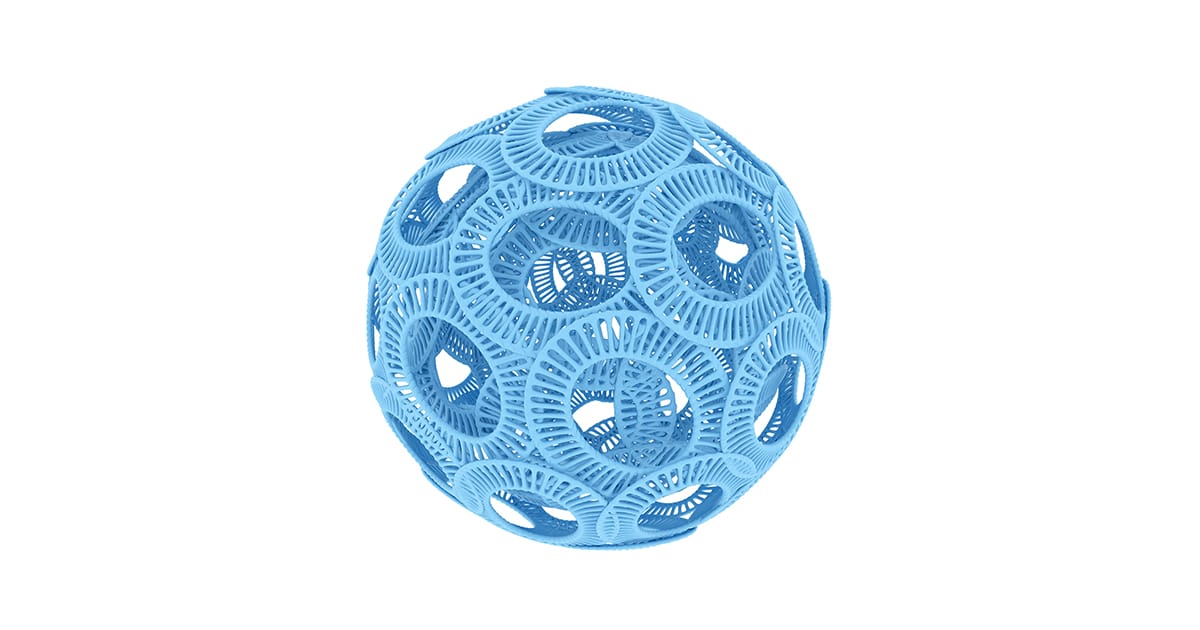
Most people have never heard of coccolithophores, yet without them, Earth’s climate and oceans would be profoundly different. These single-celled, chlorophyll-containing organisms drift in the sunlit surface waters, adorned with calcium carbonate plates called coccoliths.
Despite their microscopic size, coccolithophores are among the planet’s most powerful carbon processors. Each year, they produce more than 1.5 billion tonnes of calcium carbonate, removing carbon dioxide from the atmosphere and helping to store carbon in deep-sea sediments. They also produce oxygen, support marine food webs, and influence global climate by helping to regulate our planet’s greenhouse effect.
Coccolithophores thrive and often dominate vast areas of the ocean. But climate change is altering water temperature, pH chemistry, and nutrient flows, threatening their survival and the ecosystems they support.
Why Cocco?
Coccolithophores are unique among plankton due to both their role in regulating the global carbon cycle and the ability to track their long-term impact. “Unlike other groups, they build intricate calcium carbonate plates that not only help draw down carbon dioxide from the atmosphere, but also transport it into deep ocean sediments, where it can be locked away for millennia. This biomineralization leaves behind an exceptional geological record, allowing us to study how they’ve responded to past climate shifts and better predict their future role. In short, their dual role as carbon pumps and climate archives makes them irreplaceable in understanding and tackling climate change,” said Professor Alex Poulton of the Lyell Centre.
“They are the ocean’s invisible architects,” said Dr. Jelena Godrijan, a leading coccolithophore researcher at the Ruđer Bošković Institute. “By studying how they respond to changes in the ocean, we can better understand how marine ecosystems function and how we might use natural processes to help tackle climate change.”
Cutting-Edge Science: From Plankton to Planetary Processes
The launch of International Coccolithophore Day also highlights exciting new research that’s helping scientists understand how these tiny organisms impact our planet’s climate. At the Lyell Centre in Scotland, scientists from the OceanCANDY team, led by Professor Alex Poulton, are investigating how coccolithophores act as natural “carbon managers” (CHALKY project). By capturing carbon dioxide from the atmosphere and storing it in the ocean, they play a vital role in helping to stabilize the Earth’s climate. Researchers are also examining how global warming and ocean acidification may alter this process (OceanICU project), while using advanced computer models to predict how different species contribute to carbon storage now and in the future.
In Norway, scientists at NORCE Research, Dr. Kyle Mayers and his team, are studying the full scope of coccolithophores, how they grow, what consumes them, how viruses affect them, and how these complex interactions influence the movement of carbon through the ocean (CHALKY project). By analyzing ancient DNA preserved in seafloor sediments, they are also uncovering how marine ecosystems responded to past climate changes over thousands of years.
“Understanding how coccolithophores interact with other life in the ocean, from the viruses that infect them to the zooplankton that feed on them, is essential,” said Dr. Kyle Mayers of NORCE. “These interactions shape marine ecosystems and play a key role in how carbon is stored and cycled in the ocean.”
In Croatia, scientists at the Ruđer Bošković Institute are connecting tiny marine organisms to big climate solutions. They are investigating how coccolithophores and their microbial partners influence the ocean’s carbon cycle—from the breakdown of coccolithophore organic matter (Future Ocean project) to the bacterial interactions that shape seawater chemistry and CO2 uptake (Cocco-Channel project). Croatia is also hosting one of the world’s most ambitious ocean climate intervention experiments. As part of the international OAEPIIP project, Dr. Jelena Godrijan and her team are testing Ocean Alkalinity Enhancement. This technique mimics natural rock weathering to boost the ocean’s capacity to absorb carbon dioxide.
“Adding alkaline substances to the ocean is the next big idea for tackling climate change,” said Dr. Godrijan. “But before considering large-scale use, we must understand how it impacts the microscopic organisms that support the entire marine food web.”
These combined efforts reveal how the smallest organisms can guide both our understanding of natural carbon storage and the design of future climate-mitigation strategies.
Why October 10 Matters
Designating a day for Coccolithophores may seem like a small gesture, but its advocates argue it could have a big impact. “This could contribute to changing the way we see the ocean. “We often talk about whales, coral reefs, and ice caps, but coccolithophores are a vital part of the planet’s climate system. They remind us that the smallest organisms can have the biggest impact, and that microscopic life plays a crucial role in shaping our planet’s future,” said Dr. Sarah Cryer from the CHALKY project and OceanCANDY team.
The campaign to establish October 10 as International Coccolithophore Day is a call to action. By highlighting the profound, yet often overlooked, role of coccolithophores, scientists hope to inspire a new wave of ocean literacy, policy focus, and public engagement.
At the Lyell Centre: Tracking the Carbon Highway
The OceanCANDY research group at the Lyell Centre is involved in several major projects that investigate how coccolithophores shape the ocean’s carbon cycle.
- CHALKY explores how the alkalinity associated with coccolithophore growth and death in their large-scale blooms affects the exchange of carbon dioxide between the ocean and the atmosphere. Led by OceanCANDY and funded under the UK’s BIO-Carbon strategic research program, CHALKY unites scientists from across the UK, Europe (including NORCE), the US, and Canada to better understand how biology controls the ocean’s ability to absorb and store CO2.
- OceanICU takes this work further, examining the ocean’s role in the carbon cycle on regional and global scales. The OceanCANDY team co-leads efforts to assess how climate “multistressors”—such as warming, acidification, and nutrient shifts—influence the biological carbon pump. Their work also includes mapping the scale and distribution of the carbonate pump, driven by organisms like coccolithophores, foraminifera, and pteropods.
- CoccoTrait zooms in even further, studying how species-level differences in coccolithophores affect their climate impact. The project has built global databases on species distribution and carbon content, and is now using machine learning to model species-specific calcite production—critical data for future climate models.
At NORCE: Life, Death, and the Ocean’s Memory
Scientists at NORCE are uncovering the ecological forces that shape their lives, and their afterlives.
- The AEGIS project investigates the mortality of coccolithophores such as Gephyrocapsa huxleyi, exploring the complex predator-prey and virus-host dynamics that determine bloom cycles and the fate of carbon in the ocean.
- AGENSI/ARCHIE looks deep into the past, using ancient DNA preserved in marine sediments to reconstruct historic plankton communities. Here, G. huxleyi serves as a marker of ice-free conditions in the Arctic and Antarctic, offering a powerful tool for understanding how marine ecosystems have responded to climate shifts over millennia.
In Croatia: Testing Ocean Solutions in Real Time
Meanwhile, hundreds of kilometers to the south, scientists from the Ruđer Bošković Institute are working on several projects that have coccolithophores in their focus:
- The Future Ocean project investigates the fate of organic matter produced by coccolithophores. In large-scale microcosm experiments, scientists are cultivating CEST coccolithophore biomass under conditions that simulate future ocean scenarios to unravel how their organic matter decomposes and transforms over time.
- The Cocco-Channel project is uncovering the hidden relationships between coccolithophores and the bacteria that live around them. Scientists are exploring how closely these bacteria stay connected to their hosts, how they interact with each other, and how these microscopic partnerships can affect the chemistry of seawater—including how much carbon dioxide the ocean can absorb.
- OAEPIIP – the Ocean Alkalinity Enhancement Pelagic Impact Intercomparison Project is testing how a process called Ocean Alkalinity Enhancement—which increases the ocean’s natural ability to absorb carbon dioxide—affects marine life. Working with large 55-litre seawater tanks at the Martinska field site on Croatia’s coast, the team is tracking how local marine communities respond to these changes.
“Adding alkaline substances to the ocean is one of the next big ideas for tackling climate change,” explained Dr. Jelena Godrijan. “The method imitates natural rock weathering and boosts the ocean’s capacity to absorb carbon dioxide. But before considering large-scale use, we must first understand how it impacts the microscopic organisms that support the entire marine food web.