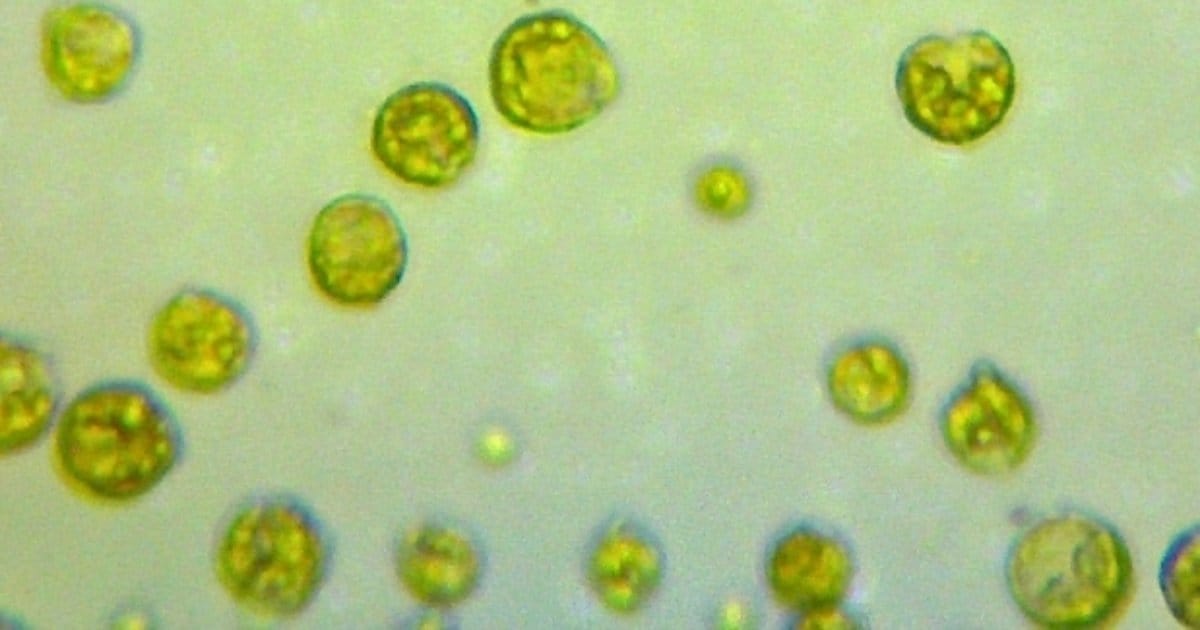
In the earliest stages of commercial shellfish production, larval and juvenile shellfish, such as clams, oysters, and scallops, consume microalgae grown in indoor hatcheries. Most farmed microalgae species are autotrophic, meaning they absorb light via cell structures called chloroplasts in order to grow. But this comes with a catch: once the algae reach a certain density, the cells shade each other, light stops passing through their tanks—and their growth hits a limit. Once this happens, the only way to produce more algae is to expand the area devoted to growing them, which can be costly. Ward wants to shift the paradigm.
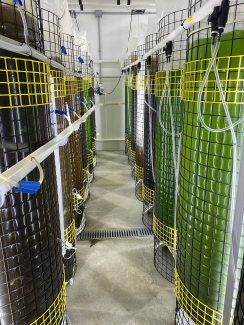
Through his Whitman Fellowship, he is researching whether a shift to heterotrophic algae species is possible. Since these species require carbon instead of light to grow, their cultures can reach much higher densities within the same footprint. According to Ward, this production capability “would allow for lower costs and greater sustainability for all producers.”
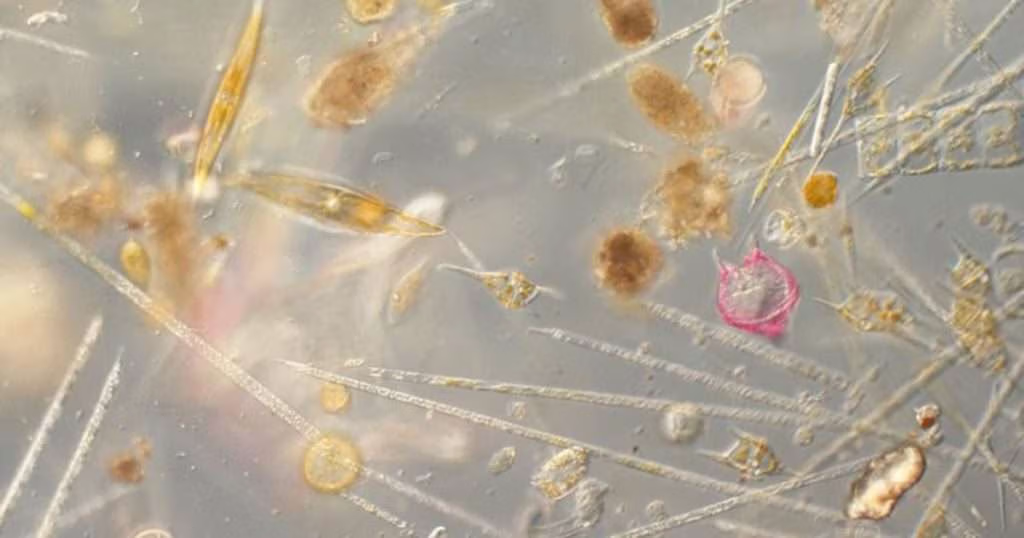
Ward is evaluating whether three heterotrophic algae species are suitable alternatives for shellfish feed: Schizochytrium sp., Crypthecodinium cohnii, and Cyclotella cryptica.
Since nutrients are “the real deciding factor,” Ward is determining which growing conditions foster the strongest nutrient profiles in the algae. Across varied culturing conditions, he’s tracking their macronutrient makeups and which fatty acids they produce. In general, he says the three species are promising, as they provide critical omega-3s, silica for shell production, and more.
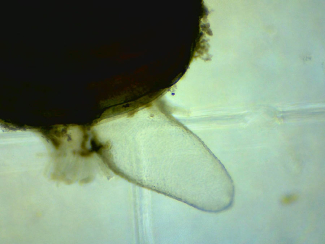
Algae cell size is also a big factor. Larvae and adults cannot effectively filter, or consume, the same size particles—just as human infants can’t eat the same food adults do, said Ward. So, as Ward feeds the shellfish heterotrophic algae, he’s monitoring their filtration rates and experimenting with imaging techniques to get a closer look. So far, he’s found that some heterotrophic algae cells vary in size during production, potentially making them suitable for shellfish at different stages of development.
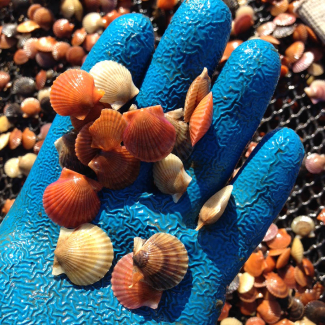
Since a large part of his work focuses on cost reduction, Ward is also researching whether shellfish can get a balanced diet from fewer heterotrophic species. Hatcheries normally produce five to 10 autotrophic varieties to cover all dietary needs, but since heterotrophic algae have a “relatively diverse nutritional composition,” shellfish may do fine with only a few kinds. If Ward can figure out a simpler “recipe” that works, hatcheries may be able to reduce their production costs.
While heterotrophic algae could be a game-changer for the aquaculture industry, cutting costs for farmers, the shift would require changes in current hatchery infrastructure. One difference is that since these species need a carbon source, such as glucose, and grow in a warm environment, bacterial contamination is a concern. Ward keeps production sterile with bioreactors, which he acknowledges are pricey.
However, he believes the initial investment pays off: “Say you have an algae room in your hatchery that’s 50 feet by 50 feet, and it produces ‘X’ amount of algae per day. If you can grow these new species that produce 100 times or 1,000 times that amount—which some of these do—it changes the math.” Being able to produce cheaper algae may also allow farms to grow different types of shellfish, increasing their economic viability.
Ward expects that his lab will be “much more productive” this summer, thanks to the MBL’s “excellent” microscopy facilities, lab supply rooms, and more. As he searches for a more innovative algae feed, he hopes to expand “the ability of farmers and people who work at farms to have sustainable, meaningful livelihoods and employment.”