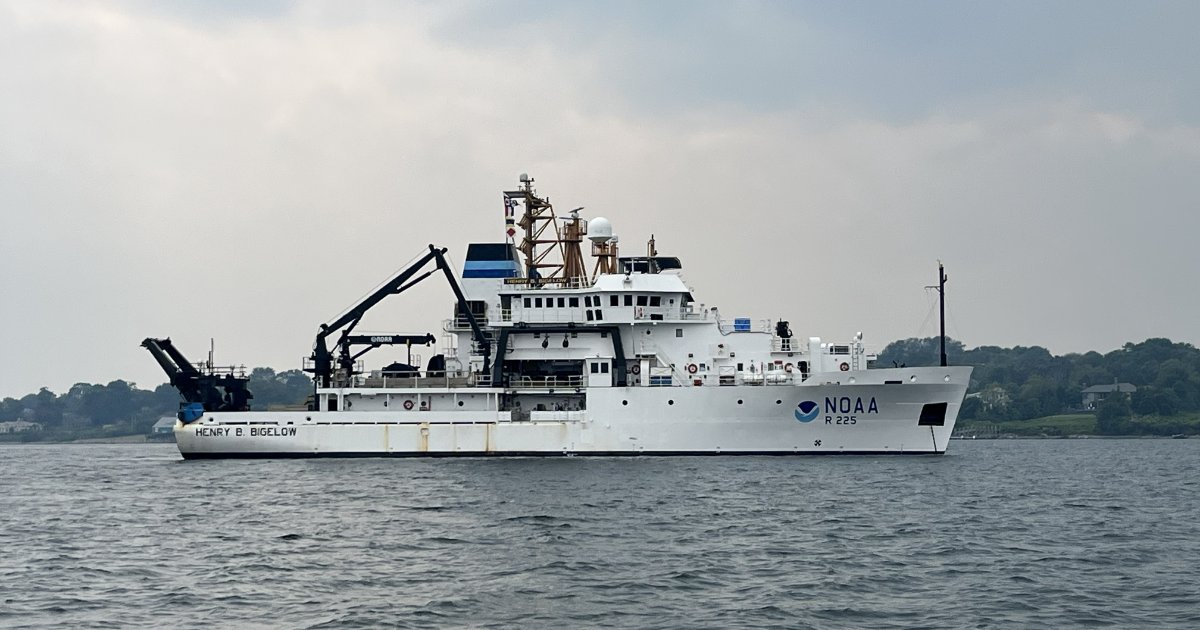
The Bigelow is one of NOAA’s 15 research vessels and studies a wide range of marine life and ocean conditions along the US East Coast, with a primary mission to study and monitor fish stocks.
“NOAA Ship Henry B. Bigelow is a vital part of NOAA’s fleet,” said NOAA Administrator Neil Jacobs, Ph.D. “These critical improvements to the Bigelow will allow NOAA to meet our mission, improve our surveys, and continue to ensure responsible, science-based management of our nation’s world-class fisheries.”
NOAA is working to maximize the service life of each of its vessels through long-term maintenance planning and tracking. The goal of this forward-looking maintenance is to provide up-to-date, dependable vessels for use by NOAA scientists and science partners.
“Modernizing the shipboard technology will improve the Bigelow‘s efficiency and operational safety, while ensuring that future research performed by the ship continues to be cutting edge,” said Rear Adm. Chad M. Cary, NOAA Corps Director and NOAA Marine and Aviation Operations assistant administrator. “By investing in these upgrades, we are investing in the future of NOAA’s science missions along the US East Coast.”
Replacing the propulsion system with variable speed Tier 4 generators, lighter and more efficient motors, and cutting-edge technology will equip the Bigelow to continue supporting NOAA science missions. The comprehensive maintenance will also replace pumps, fans, cranes, fire detection system and radars, and will increase the number of single-person staterooms. The agency anticipates that the Bigelow will be available for service in time for the 2029 field season.
NOAA has begun modifying other ships in its fleet to perform Bigelow‘s mission while it undergoes maintenance. NOAA Ship Pisces was recently modified to conduct bottom trawling operations typically conducted by the Bigelow. These adjustments will ensure that the science and data collection the Bigelow performs along the East Coast will continue seamlessly.