The marine wildlife in Kosterhavet National Park has changed rapidly in recent years. The introduction of trawling restrictions in the area of the national park during the last 25 years brought about a change in the living conditions for the animals that live on the seabed.
“Animals that capture nutrients through filtration, such as mussels, anemones, and soft corals, do not thrive when bottom trawls stir up sediment from the seabed. Several of these species have recovered significantly,” said Matthias Obst, researcher on marine ecosystems at the University of Gothenburg and research leader in the project.
Loss at shallow depths
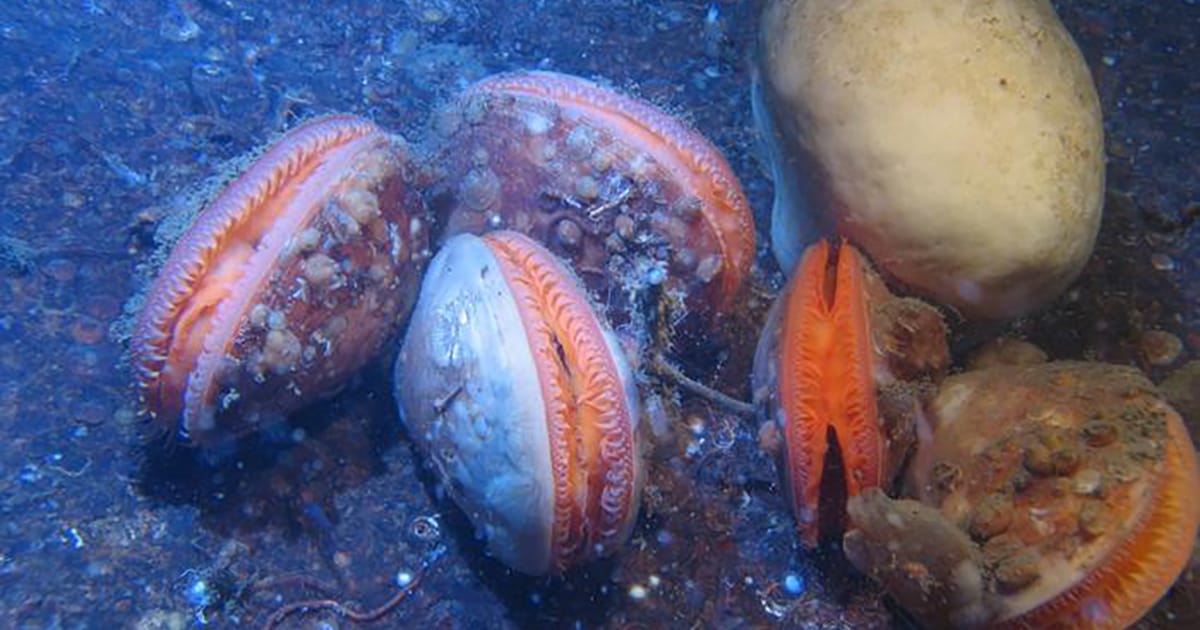
At the same time, the study shows that large and heat-sensitive species are declining at shallow depths in the Koster Fjord or are disappearing completely from the area. The most dramatic decline has been in the football sponge (Geodia barretti), while the excavated fileclam (Acesta excavate) also declined steadily. Both animals are important components of the Koster Sea ecosystems as they build habitats for many other organisms.
The study was made possible thanks to a large treasure of underwater videos taken at a rock wall in the Koster Sea. The wall has been filmed with an underwater robot during various study visits, teaching sessions, and projects at the Tjärnö Marine Laboratory from 1997 onwards.
Machine Learning
“The videos were stored on a number of thick hard drives that were kept on a shelf. We are lucky that the underwater photographers at the Tjärnö Marine Laboratory chose to keep this data until now, when we can use machines to go through it,” said Matthias Obst.
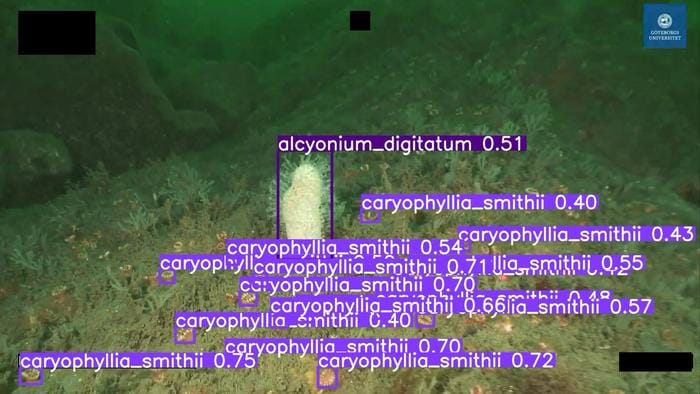
Without machine learning, it would have been impossible to analyze such a large number of underwater videos with varying quality and count the abundance of 17 different species over 26 years, from 1997 to 2023. Master’s student Christian Nilsson reviewed selected parts of the material and taught an AI object detection model to recognize characteristic features of each species.
Good Timeline
In the end, the AI model had become so good that the results could be trusted. It took the model only a few hours to analyze 4.4 million images from the selected videos. The National Academic Infrastructure for Supercomputers in Sweden, NAISS, was used for this purpose.
“We now have a good timeline showing how the 17 species have increased and decreased over the 26 years covered by the data, but also how they have responded to increasingly warmer water temperatures. We see that heat-sensitive species are losing their living environment in shallow waters due to the warm temperatures there,” said Matthias Obst.
Driven by Climate Change
The study is part of the EU-funded program Digital Twin of the Ocean (DTO), which combines marine research with modern technology development for the sustainable management of our marine ecosystems. It shows that the protective measures implemented in the Kosterhavet National Park have been effective and are helping to bring balance to the ecosystem.
“But there are some organisms that may not be saved by the protective measures in the national park. Rising temperatures in the Koster Sea are driven by climate change, which is difficult to stop. For these species, it may be appropriate to find new areas with deeper water where these species can find refuge,” said Matthias Obst.