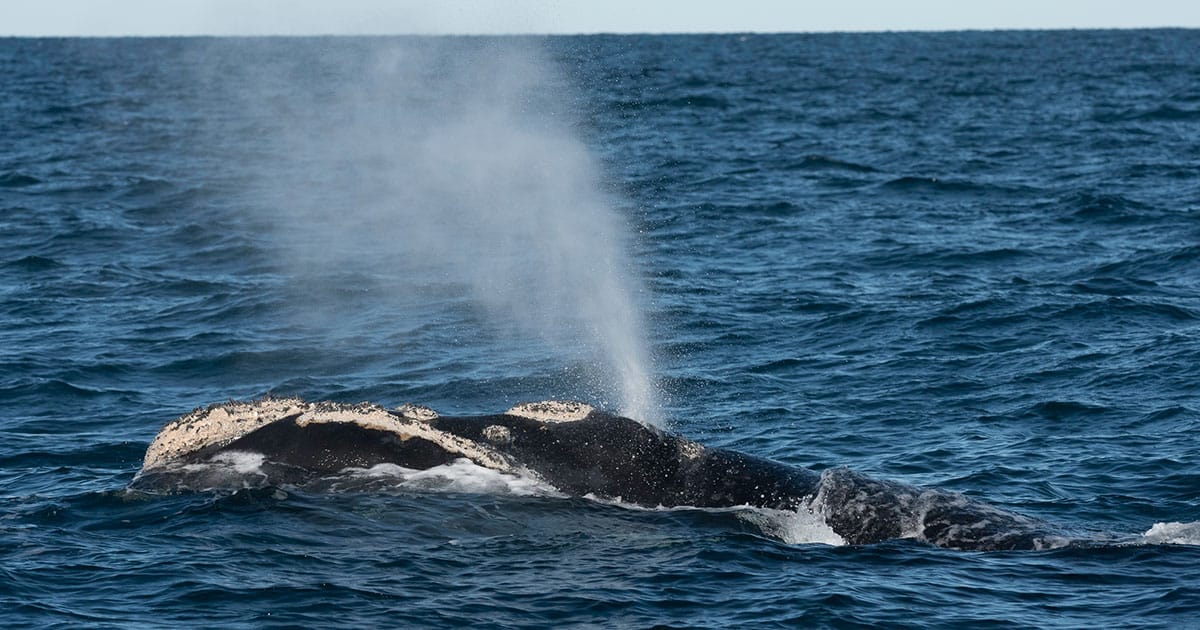
The Whale CHARTS Act is backed by a notable coalition of recreational fishing, boating, and conservation organizations aligned behind a shared goal: protect whales from vessel collisions using better data and tools, while ensuring mariners can keep doing their jobs safely and other ocean users can continue to enjoy recreation opportunities.
“For too long, whale protection has been treated like a zero-sum fight. This bill is about choosing a better way,” said Congresswoman Matsui. “With clearer whale maps and near real-time detection tools, we can help captains avoid whales before a collision happens, protect endangered species, and keep fishermen on the water doing the work they love. That kind of progress only happens when people who care deeply about the ocean, from maritime workers to conservation advocates, come together to advance practical solutions.”
“Current predictive maps don’t give us a good picture of where whales are feeding and calving. That puts both these magnificent animals and boaters at risk of dangerous collisions,” said Congresswoman Malliotakis. “This legislation directs NOAA to conduct more research and mapping so we can protect our whales and keep our mariners and everyone who loves our waters safe.”
“Knowing where whales are in our waters is key to protecting whales and boaters alike,” said Congresswoman Dexter. “The Whale CHARTS Act will deploy the best available technology to improve whale tracking, helping prevent deadly collisions and protect these species for generations to come. This is a win-win policy for whales as well as for the people who work and recreate in marine waters.”
“With a thriving global maritime industry, it’s critical that vessels can travel alongside whale populations without risking dangerous collisions,” said Congressman Buchanan. “The Whale CHARTS Act strengthens NOAA’s ability to map baleen and sperm whale habitats using better data and modern technology, protecting marine wildlife while keeping recreational and commercial boaters safe. As Co-Chair of the Animal Protection Caucus, I will always fight for solutions that safeguard animals without disrupting mariners and the public who rely on and enjoy our oceans.”
“Having dedicated a majority of my career to preserving the Chesapeake Bay, I know firsthand how crucial accurate data is to ensuring our work reflects a thoughtful balance between recreation and conservation,” said Congresswoman Elfreth. “I’m proud to co-sponsor the bipartisan Whale CHARTS Act to not only support conservation efforts for our critical marine mammals but make our waters safer for our wildlife and our watermen.”
“The Whale CHARTS Act will protect whales and boaters alike by deploying cutting-edge technologies to better track and monitor migratory whales,” said Congressman Carter. “I am proud to co-lead this bipartisan effort to prevent vessel strikes and better understand America’s marine wildlife.”
The Whale CHARTS Act directs NOAA, in consultation with the Marine Mammal Commission and non-federal stakeholders, to develop high-resolution maps showing where migratory whales are located today and where they may be in the future, as well as conduct surveys for understudied whale populations. It encourages NOAA to use modern data sources, including passive acoustic monitoring and satellite-based detection, to improve map accuracy. NOAA must make these maps readily available in formats commercial and recreational mariners can use onboard to help reduce collisions.
The bill also establishes a grant program to fund tools to improve near-real-time detection of migratory whales, reducing deadly collisions and other harmful interactions between ocean users and these iconic species. Finally, NOAA is required to publicly report on its mapping and surveying efforts, and on the effectiveness of the projects funded by the grant program.
Congresswoman Matsui is co-chair of the Sustainable Energy and Environment Coalition (SEEC), and co-chairs the SEEC Lands, Waters, and Nature Task Force. She previously led efforts to improve whale habitat mapping through NOAA’s annual budget.
Full legislative text can be found here.