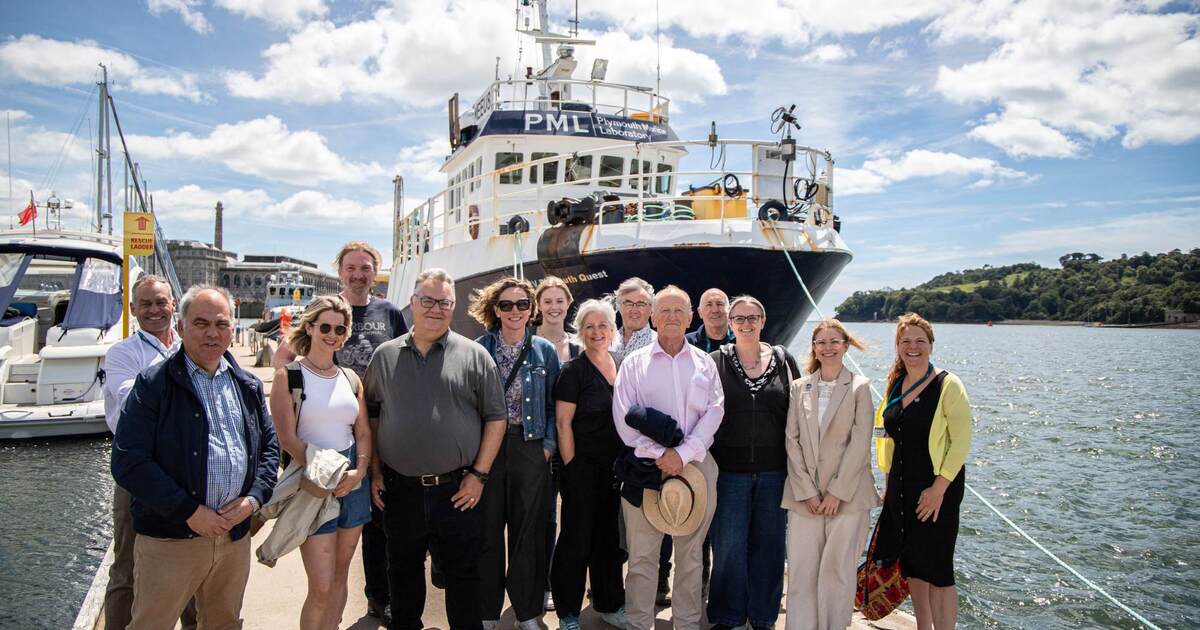
The visit was organized with the Parliamentary Knowledge Foundation (PKF)—a new, independent, apolitical, and non-profit organization launched by CEO Jamie Anderson and in its first year of delivery.
The Foundation aims to give MPs and Peers insight into complex policy areas through real-world, experience-based learning, moving beyond traditional briefings by providing opportunities to see research, innovation, and expertise in action.
Jamie Anderson, CEO of PKF, explained: “Knowledge comes from experiences. Inspired by my work in conflict zones, global disaster areas, and across multiple polar expeditions, I’ve seen how profoundly direct experience shapes our understanding.”
“Policymakers are no different. Those who have seen, heard, and directly engaged with the environments, challenges, and organizations they work on behalf of are far better placed to make informed, empathetic, and effective decisions.”
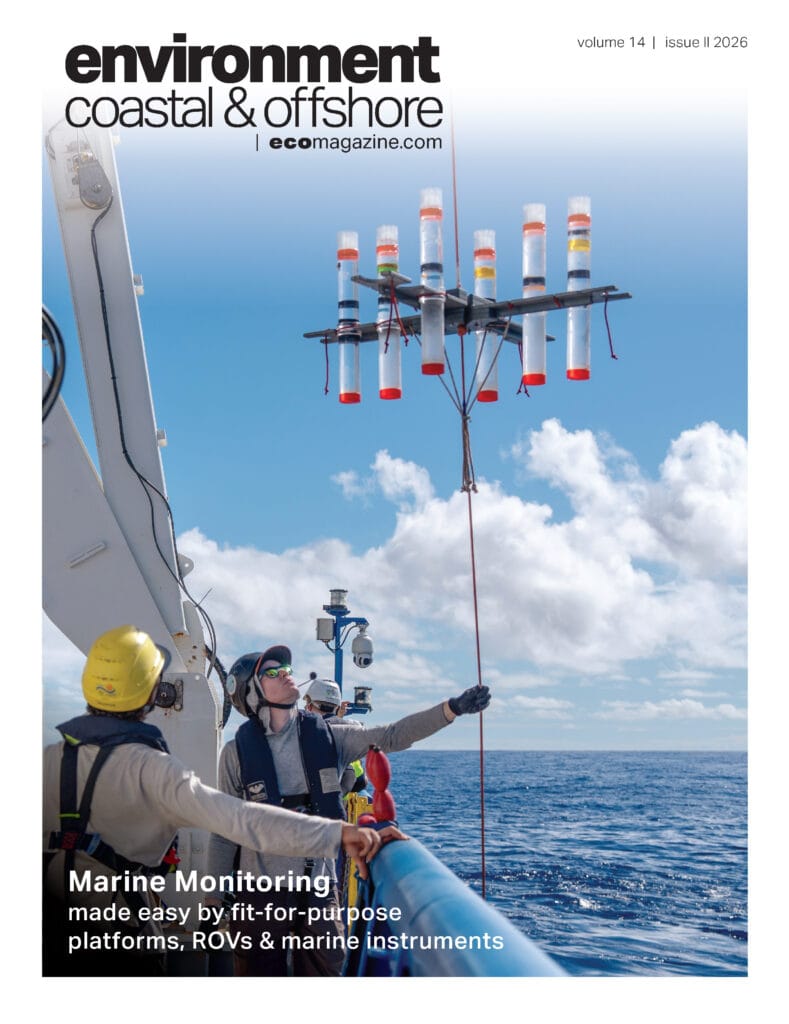
Upon their arrival in Plymouth, the parliamentarians—consisting of six Members of Parliament and a Member of the House of Lords—were welcomed by PML’s Chief Executive Icarus Allen aboard RV Plymouth Quest, before setting out to sea with PML scientists and technical staff.
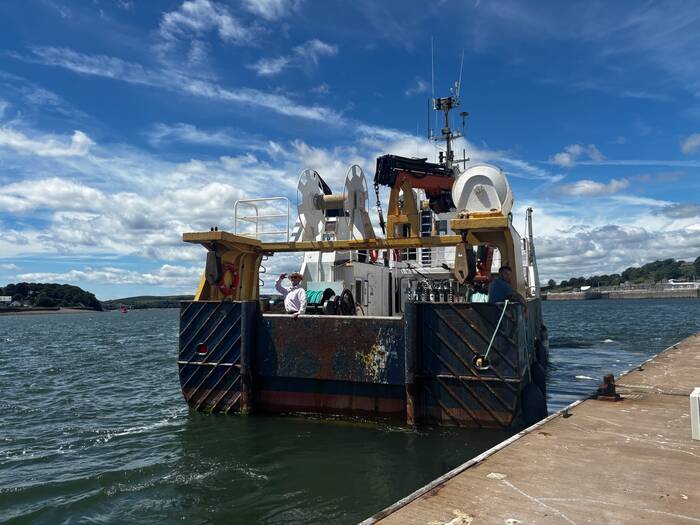
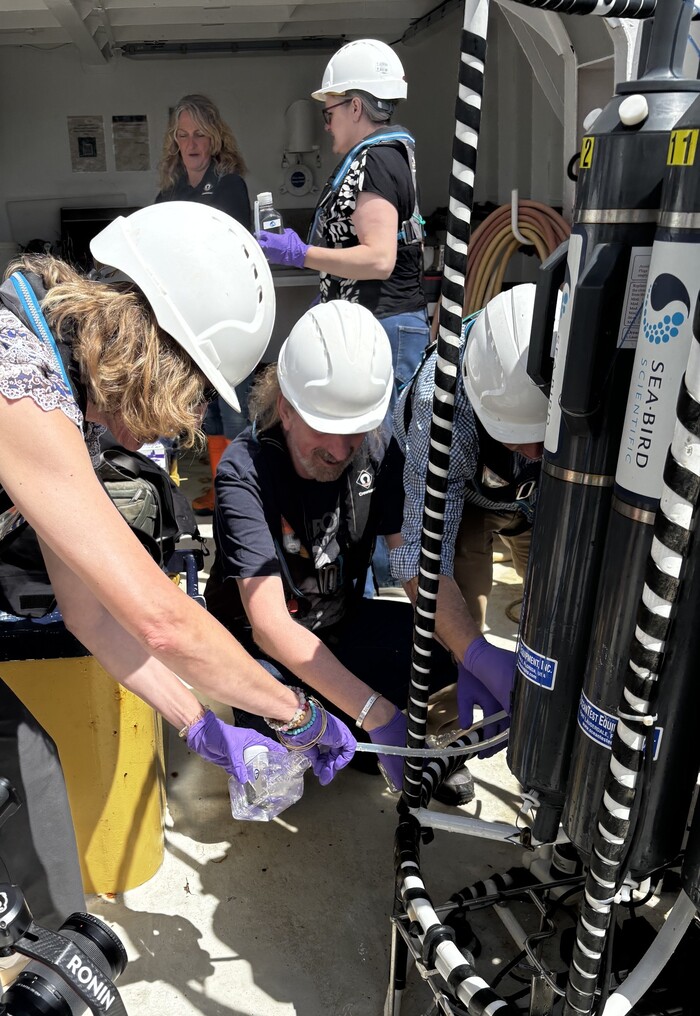
Once onboard, they gained hands-on experience of marine research, including collecting seawater and plankton samples. This routine sampling forms part of the Western Channel Observatory—the world’s longest near-continuous marine dataset, with records dating back to 1903.
In situ measurements are undertaken weekly at coastal station L4 and fortnightly at open shelf station E1 using research vessels operated by Plymouth Marine Laboratory and the Marine Biological Association.
Without such long-term datasets, it would be hard to comprehend the changes that are happening in the ocean, highlighted in a new study co-authored by PML scientists that used 60 years of data to demonstrate that vast swathes of plankton are in decline across the North East Atlantic. This is an alarming trend for species that form the base of the marine food web and an important issue to bring to policymakers’ attention.
Returning to land, parliamentarians took their water samples back to the laboratory to see first-hand how they are analyzed to assess the health of the ocean.
They joined Zooplankton Analyst Amanda Beesley and Phytoplankton Apprentice Bryony Squires in the Microscope Lab to explore the hidden world of plankton, discovering just how much microscopic life exists within a single drop of seawater.
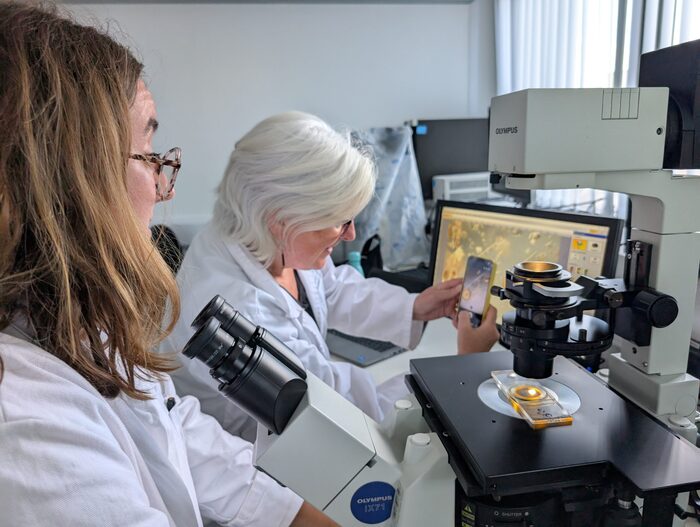
They also learned how monitoring these tiny organisms, often described as ‘sentinels of change,’ provides vital insights into how our ocean is changing.
PML’s Zooplankton expert Amanda Beesley said: “A single drop of seawater can contain hundreds to millions of plankton, depending on the location and conditions. These tiny organisms play an enormous role in marine ecosystems, and by monitoring changes in their abundance and composition over time, we can better understand the health of our ocean.”
“We’ve been collecting and recording plankton samples here at the laboratory on a weekly basis—whenever it is safe for us to get out on the boat—with zooplankton sampling since 1988 and phytoplankton sampling since 1992.”
Chris Law MP (Scottish National Party (SNP), Dundee Central) said of the visit: “Today has been both enlightening and educational. The experience at Plymouth Marine Laboratory has gone beyond our expectations and aspirations, giving us a much deeper understanding of the science, technology, and expertise that underpin our knowledge of the marine environment. We are very grateful to PML for hosting us and for sharing such valuable insight, which we will take back with us into our roles in Parliament.”
Beyond plankton monitoring, the parliamentarians also explored how PML scientists measure the many interconnected processes that influence ocean health.
They joined PML’s Dr. Tom Jordan and Dr. Liz Atwood to discover how scientists combine measurements taken at sea with satellite observations from space to monitor coastal and ocean health.
Using above-water radiometry—measuring how light interacts with the ocean—Tom and Liz demonstrated how optical monitoring of water quality can improve our understanding of changing marine environments.
A particular focus during the visit was the ‘catchment-to-coast’ approach—recognizing that what happens on land does not stop at the shoreline.
In the Carbon Lab, they joined Professor Helen Findlay, a leading global expert in the consequences of carbon dioxide emissions—from global warming to ocean acidification.
Taking their seawater samples from the RV Plymouth Quest earlier that day, the parliamentarians processed the water through the equipment in the Carbon Lab to measure levels of carbon.
Professor Findlay spoke about the effects of carbon emissions and ocean acidification on the UK specifically, and referenced her study showing the North Atlantic Ocean—bordering the west of the United Kingdom and Ireland—contains more anthropogenic CO2 than any other ocean basin globally, threatening key marine species and entire food webs.
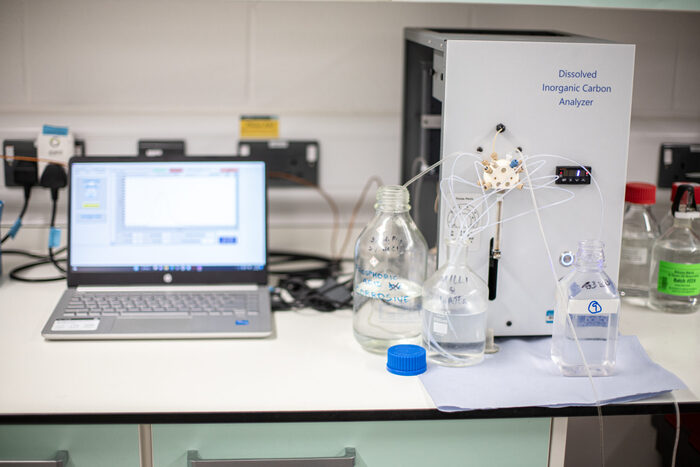
She also explained how ocean acidification is generally worse and progressing faster in coastal areas, driven by factors such as natural upwelling and mixing, and nutrient pollution and runoff from land, rivers, and estuaries—and how that could affect the UK.
Meanwhile, in the Nutrient Lab, Professor Andy Rees, PML’s Ocean Challenge Lead for Marine Pollution, dived a little deeper into the issue of nutrient pollution, and the other effects that are felt in estuarine and coastal waters.
Excess nutrients from runoff, agriculture, and wastewater treatment can cause over-enrichment in both freshwater bodies (rivers, lakes, ponds), estuaries, and in the ocean—which might cause blooms of algae and bacteria during a process known as eutrophication. This uses up the oxygen in the water, causing deoxygenation, and makes it difficult for other species, including fish and other important microorganisms, to survive.
Excess phosphorus, in particular, is the leading cause of freshwater quality failure in England, driving severe eutrophication (harmful algal blooms) in UK rivers.
Lucinda Derbyshire, PML’s nutrient analyst, then demonstrated the use of the laboratory analyzer to measure levels of nutrients in the seawater samples that were collected earlier by the parliamentarians.
Andy’s research on pollution has taken him across the globe, but closer to the laboratory, he is the Principal Investigator of the AgZero+ project, a major five-year $13.8 million research program focused on investigating solutions to pollution. The program brings together a community of researchers and farmers to test innovative farming systems—to balance the need to produce nutritious food with reducing greenhouse gas emissions and pollution, while at the same time enhancing biodiversity and soil health. Andy said:
“AgZero+ aims to support the UK’s transition towards home-grown food production that is sustainable, carbon-neutral, and has a positive effect on nature. Some agricultural practices have become a problem for our environment—but it doesn’t have to be that way. And AgZero+ aims to demonstrate that whilst offering solutions to reduce contamination of our waterways.”
“Source-to-sea management recognizes that activities far inland—from agriculture, cities, and industries—have far-reaching consequences downstream in rivers, estuaries, and coastal waters, affecting fisheries, tourism, and coastal communities. Equally, changes in coastal and marine areas can impact upstream businesses and communities.”
The visit concluded with a tour of PML’s Smart Sound Plymouth facilities, where discussions focused on the latest developments in marine technology and autonomy.
The tour was led by Professor James Fishwick, Head of Innovation at Smart Sound Plymouth, who showcased how cutting-edge autonomous technologies are enabling the collection of more environmental data than ever before possible—and how this information can support evidence-based decision-making.
“What we can do now compared to 5–10 years ago is significant. We’re using new sensors and new ways of monitoring the marine environment, with data available 24/7—something we’ve never had before. Even during storms, when it’s unsafe to be at sea, autonomous systems can continue collecting data, allowing us to understand and monitor the ocean in ways that simply weren’t possible before.”
After a busy day, scientists and parliamentarians came together for refreshments and an informal Q&A session, providing further opportunity to exchange questions and insights. The discussions highlighted future capability needs and opportunities for marine science to address key environmental challenges, including climate change, biodiversity loss, and pollution.
PML’s Head of Impact, Jennifer Lockett, who has led PML’s endorsement and engagement with the Parliamentary Knowledge Foundation, commented: “It has been a brilliant day hosting parliamentarians at the laboratory and showcasing the breadth of PML’s science and technology in action. I’m delighted to have led PML’s involvement with the Parliamentary Knowledge Foundation, which has provided an invaluable opportunity to demonstrate how marine observations, technology, and research can be translated into knowledge that supports real environmental action, benefiting the UK and beyond. As a member of the PKF Advisory Board for the Energy and Environment Scheme, I’ve also been pleased to help shape next year’s program, and we look forward to welcoming more MPs to PML.”
PML has been an early endorser of the Foundation, becoming a delivery partner and supporting its ‘Energy and Environment’ module alongside partners across industry, academia, and policy. The initiative forms part of a wider effort to strengthen understanding between policymakers and experts working on complex environmental challenges.
PML’s Chief Executive Icarus Allen said: “The challenges facing our ocean are complex, interconnected, and constantly evolving. By bringing policymakers closer to the science, we can help build a shared understanding of how evidence, monitoring, and innovation support effective decisions for the future of our marine environment.”
“We would like to thank the Parliamentary Knowledge Foundation for this opportunity, and thank the Parliamentarians who took the time to join us, spend time with our scientists, and learn more about our research.”
The Parliamentarians in the group included Catherine Fookes MP (Labour, Monmouthshire); Chris Law MP (SNP, Dundee Central); Elizabeth “Lizzi” Collinge MP (Labour, Morecambe and Lunesdale); Caroline Voaden MP (Liberal Democrat, South Devon); Bambos Charalambous MP (Labour, Southgate and Wood Green); Graham Leadbitter MP (SNP, Moray West, Nairn and Strathspey); and Lord Godfrey Cromwell (Crossbench, House of Lords).
The visit also included Jamie Anderson, CEO of the Parliamentary Knowledge Foundation (PKF), alongside PKF staff Beverly Ann Donald and Hattie Turner, with videographer Josh Tarr documenting the visit.