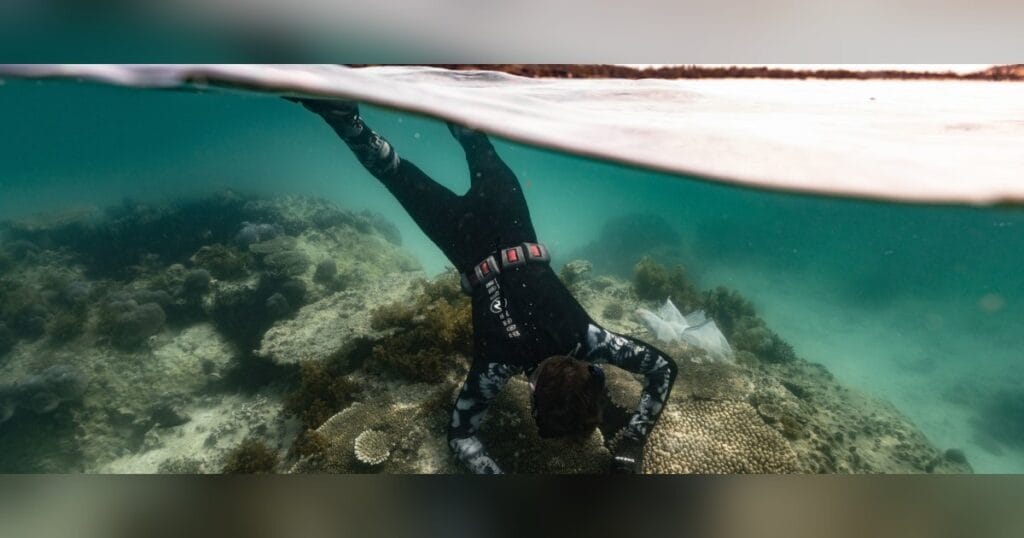
But sometimes even powerhouses struggle.
There are five reef-building coral species listed as threatened under the Endangered Species Act in US waters in the Pacific Islands:
- Acropora globiceps
- A. retusa
- A. speciosa
- Fimbriahyllia paradivisa (formerly known as Euphyllia paradivisa)
- Isopora crateriformis
NOAA Fisheries is designating critical habitat for these natural treasures to conserve them for generations to come.
The final critical habitat designations cover approximately 92 square miles in 18 areas across the US Pacific Islands. These areas contain the right conditions for corals to reproduce, spread, settle, and mature—conditions that are essential for their survival and long-term recovery. They include:
- American Samoa: Ofu-Olosega, Swains Island*, Tutuila*, Ta`u*, and Rose Atoll*
- Commonwealth of the Northern Mariana Islands: Rota, Aguijan, Tinian, Saipan, Alamagan, Pagan, Asuncion*, Maug Islands*, and Uracas*
- Guam
- Northwestern Hawaiian Islands: Lalo (French Frigate Shoals)*
- Pacific Remote Islands Area: Palmyra and Johnston atolls*
*Areas are located in an existing marine national monument and/or sanctuary.
Demystifying Critical Habitat

The coral critical habitat designations do not create marine reserves or closed areas. And they do not include harbors, navigation channels, other managed areas (like boat ramps), or artificial substrates (like seawalls).
“We encourage fishermen, divers, swimmers, and other area users to continue to enjoy these areas responsibly,” said Dawn Golden, Assistant Regional Administrator for NOAA Fisheries Pacific Islands Regional Office. “And we look forward to collaborating with federal agencies on their relevant actions.”
Under the Endangered Species Act, federal agencies must ensure that actions they authorize, fund, or carry out are not likely to destroy or adversely modify designated critical habitat. Federal agencies are already required to consult with NOAA Fisheries on actions that may affect the listed corals.
Right-Sized Protections
Critical habitat designations can be large or small depending on the species. Our goal is to designate critical habitat through smart assessments incorporating the best available science and public input.
“Our local communities and agency partners have tremendous knowledge of area resources. Thanks to their input and provided information, we decreased the net critical habitat designations by approximately 6 square miles,” Golden said.