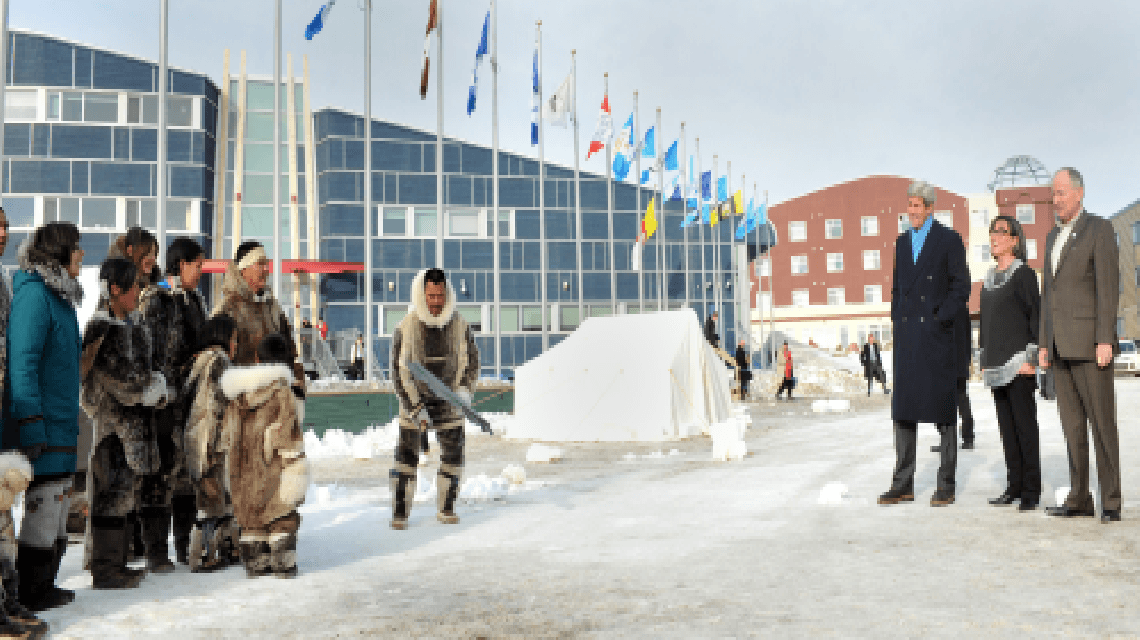
At the meeting, Ministers signed the Iqaluit Declaration 2015, which highlights the accomplishments of the Arctic Council during Canada’s Chairmanship (2013-2015) and guides the work of the Council under the Chairmanship of the United States (2015-2017).
U.S. Secretary of State John F. Kerry, the new Chair of the Arctic Council, stated, “There’s only ‘one Arctic’ and all of us – the United States, other nations, indigenous peoples, and Arctic communities – must join together to ensure responsible stewardship of this incredible region.”
The theme of the U.S. Chairmanship is “One Arctic: Shared Opportunities, Challenges and Responsibilities”. During the U.S. Chairmanship, the Arctic Council program will focus on addressing the impacts of climate change; supporting Arctic Ocean safety, security and stewardship; and improving economic and living conditions in Arctic communities. The Council also established two new task forces: the Task Force on Arctic Marine Cooperation and the Task Force on Telecommunications Infrastructure in the Arctic.
Priority deliverables during Canada’s Chairmanship that were approved by Ministers in Iqaluit include:
- A Framework Plan for Cooperation on Prevention of Oil Pollution from Petroleum and Maritime Activities in the Marine Areas of the Arctic;
- A collection of work related to short-lived climate pollutants, including the Framework for Action on Enhanced Black Carbon and Methane Emissions Reductions, that will lead to local health, economic and climate benefits; a report recommending actions to reduce black carbon emissions from residential wood combustion in the Arctic; and two assessments on black carbon and tropospheric ozone and methane;
- To improve mental wellness in Arctic communities, a report, entitled Sharing Hope, that identifies best practices and promising interventions;
- Keeping Our Traditions Alive: Compendium of Best Practices in Promoting the Traditional Ways of Life of Arctic Indigenous Peoples, a collection of examples from across the region showcasing how traditional ways of life can continue to support healthy Arctic communities today and into the future;
- Recommendations on how to better use traditional and local knowledge in the work of the Council to improve decision making and research;
- A Guide to Oil Spill Response in Snow and Ice Conditions in the Arctic;
- The Arctic Adaptation Exchange, an interactive website containing information that will help Arctic residents, researchers and decision-makers adapt to the effects of climate change;
- Arctic Pollution Issues 2015: Summary for Policy-makers, which presents the conclusions and recommendations of three assessments on human health, trends in persistent organic pollutants and radioactivity in the Arctic;
- Arctic Marine Tourism Project Best Practice Guidelines that promote the benefits that tourism can bring to the region while addressing risks associated with increased activity
- Arctic Marine Strategic Plan (2015-2025), which aims to provide a framework to protect Arctic marine and coastal ecosystems and to promote sustainable development in the region;
- Arctic biodiversity work, including an action plan to implement the 17 recommendations from the landmark Arctic Biodiversity Assessment; and a detailed work plan to protect migratory birds along key international flight paths; and
- Creation of the Arctic Economic Council (AEC), an independent forum of business representatives.
For more information, visit www.arctic-council.org.