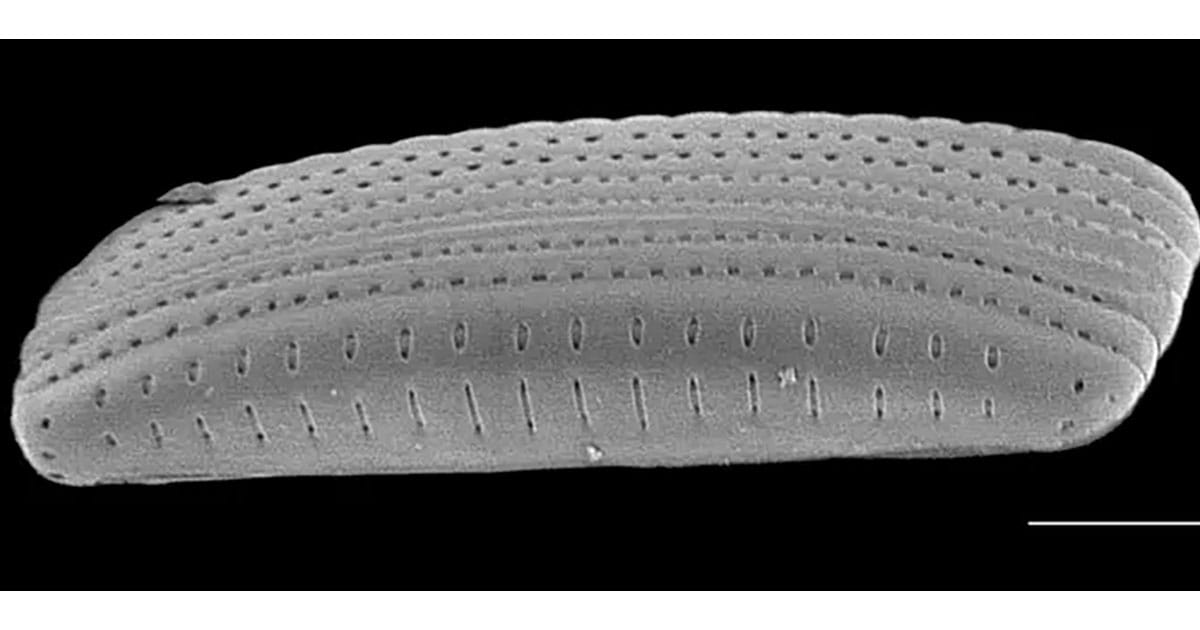
Yet despite their monumental importance, microalgal ecosystems remain largely unexplored and poorly mapped. That is why a recent major scientific undertaking in the Northeast Pacific is so significant.
A First-of-its-Kind Baseline in the Salish Sea
Diatom records of the Salish Sea bioregion have historically been fragmentary, dating back to early inventories in the 1800s, and with only scattered surveys filling the gap across the 20th and 21st centuries. As Andrew Simon, Ph.D. student at the University of Alberta, president of IMERSS, and one of the study’s researchers, puts it: “The Salish Sea has long been studied for its rich marine biodiversity. Yet, until now, the history of research on its primary producers has been fragmented, and we have lacked a consolidated baseline record.”
Now, for the first time, researchers have taken a significant step toward closing that gap. A team of Canadian researchers—Mark Webber (University of Victoria; IMERSS), Elaine Humphrey (UVic; IMERSS), Arjan van Asselt (IMERSS), Alice Chang (UBC), Evan Morian (Hakai Institute; UBC), and Andrew Simon (IMERSS; University of Alberta)—has published a new checklist of 924 diatom taxa alongside a curated dataset of 11,469 records in the open-access journal Biodiversity Data Journal, providing a long-needed foundation for environmental monitoring across this region of the northeast Pacific Ocean.
This dataset also directly answers a key recommendation from the UN Plankton Manifesto, which urges the scientific community to strengthen plankton research and develop comprehensive plankton atlases to biomonitor the health of marine ecosystems.
Why Diatoms? Why Now?
The Salish Sea—the traditional territory of the Coast Salish peoples—is home to roughly nine million people and is experiencing rapid growth in urbanization, industrial activity, and marine shipping. Because diatom populations respond quickly to changes in water quality and environmental conditions, they serve as highly effective early-warning bioindicators for shifts in ecosystem health and pollution levels.
Without a clear picture of what the base of the food web looks like today, it is impossible to understand the impact of tomorrow’s environmental changes.
“We are fortunate to have had a dedicated group of academic researchers and community scientists contribute to this work over many years,” said Mark Webber, IMERSS’ resident diatomist. “Drawing from the literature, microscope analysis, and molecular sequencing, we now have a better picture of the diatoms present in the Salish Sea. Diatoms are vital to the health of countless organisms—from shorebirds and shellfish to fish and mammals. This baseline provides a reference point for understanding changes that could ripple across the entire web of life.”
Local Research for Global Solutions
The UN Plankton Manifesto stresses that understanding and managing plankton communities can unlock “Plankton-Based Solutions” to support fisheries, clean waters, and climate change mitigation.
“Our work demonstrates how sustained collaboration between community scientists and research institutes can bridge these gaps, through partnering community expertise and observation with access to microscopy and molecular technologies,” the team concluded.
The new checklist and dataset will support researchers and policymakers in environmental assessments of the Salish Sea, as the team continues to refine and analyze the data to support ongoing regional research.