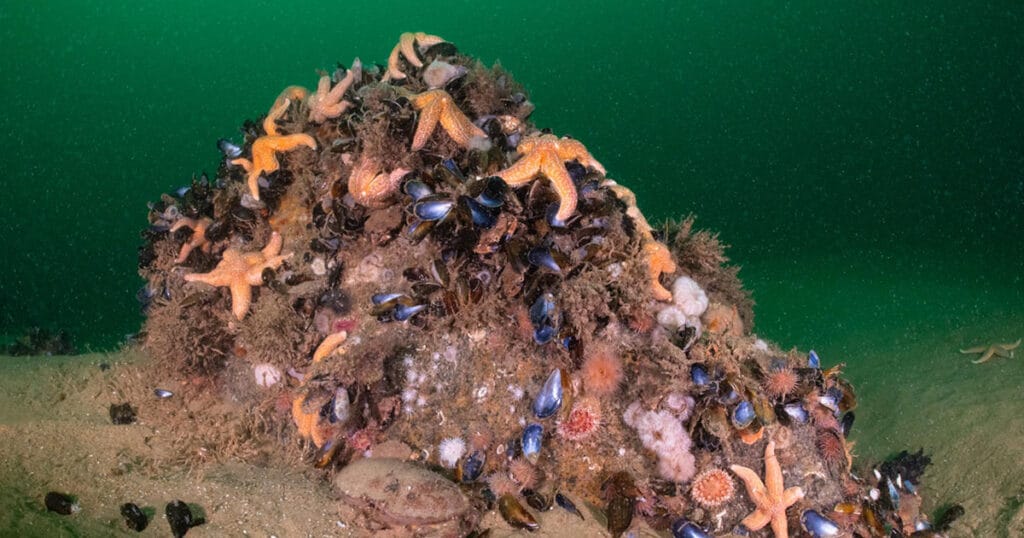
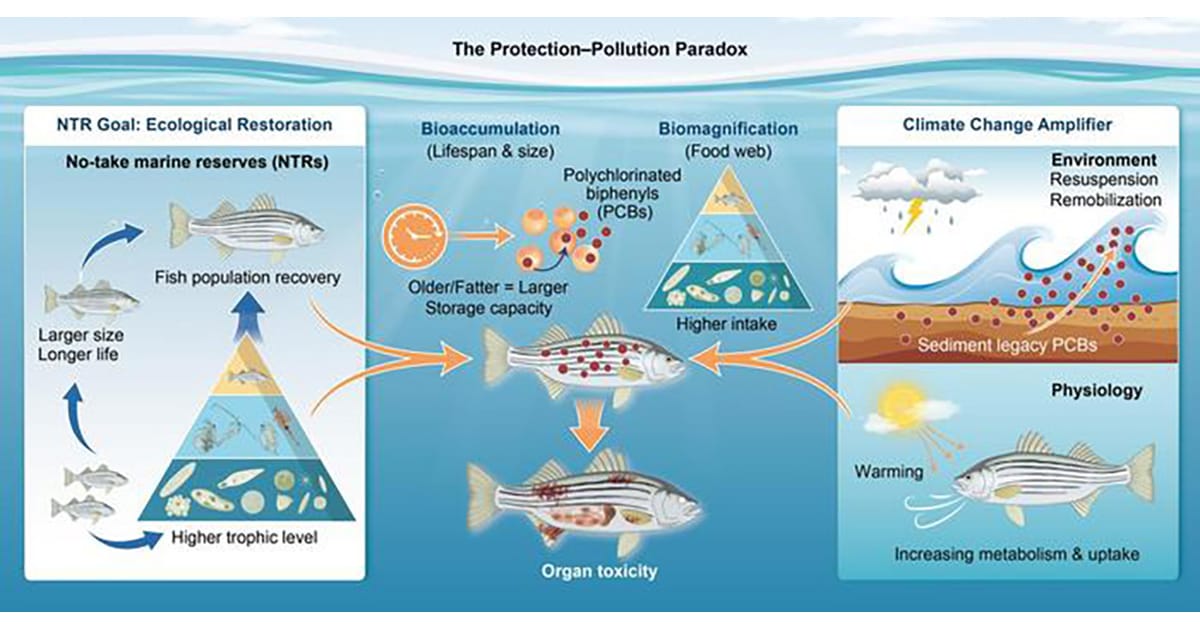
However, in a new perspective article published in Water & Ecology, Huan Zhong from Nanjing University and Chengjun Li from Guangzhou University unveils a critical yet overlooked “protection-pollution paradox”: the very biological traits that signify conservation success—extended lifespans, larger body sizes, and elongated food webs—inadvertently transform protected populations, especially apex predators, into highly efficient sinks for legacy polychlorinated biphenyls (PCBs).
The authors point out that without integrating pollution and climate considerations into marine spatial planning, these sanctuaries risk becoming “toxic traps” that undermine both biodiversity goals and human food security.
The mechanisms driving this paradox are rooted in fundamental ecological principles. Within NTRs, the cessation of fishing allows individuals to live longer and attain larger sizes, which directly increases their capacity for pollutant accumulation. “For every 1-cm increase in fish length, the concentration of PCB-118 in their bodies can increase by 2.3%,” shared Zhong. “Furthermore, the recovery of apex predators elongates food webs, intensifying biomagnification.”
In pelagic systems, PCB-153 concentrations can increase by an average factor of 6.2 per trophic step, meaning that the restored trophic complexity inside reserves inherently amplifies contaminant burdens compared to the truncated food webs outside.
Climate change amplifies this threat through both environmental and physiological pathways. Extreme weather events remobilize legacy PCBs from marine sediments, where approximately 75% of anthropogenic PCBs reside, while ocean warming accelerates the metabolic and respiratory rates of ectotherms, increasing their uptake of dissolved pollutants.
“The ecological dividends of no-take policies inadvertently position these protected species at the intersection of amplified climate stress and heightened PCB toxicity, severely undermining their resilience,” explained Zhong. “This multi-stressor environment—where warming, acidification, and pollution converge—compromises immune function and energy allocation, leaving restored populations uniquely vulnerable.”
To resolve this paradox, the authors proposed an integrated management framework that moves beyond static spatial boundaries. “Key strategies include climate-smart dynamic ocean management to identify ‘toxicological refugia’, advanced biomonitoring using biomarker-based indices to target PCB-responsive pathways, and targeted remediation techniques such as in-situ activated carbon capping to sequester pollutants,” added Zhong.
Ultimately, the authors call for a fundamental shift in conservation metrics: rather than focusing solely on biomass recovery or area coverage, effectiveness evaluations must integrate ecosystem health and pollutant exposure. “Marine protected areas cannot remain static lines drawn on a map—they must function as genuinely healthy sanctuaries that are resilient not only to climate extremes but also to the pervasive PCB threats that accompany them,” Zhong noted.