
The project will test the accuracy of the NRC’s prediction model, called CaMPSim-3D (Canadian MicroPlastics Simulation), which simulates how microplastics move through the marine environment, by comparing its outputs to real-world data gathered using ODI’s microplastics sampling robots. The project aims to standardize microplastic measurements across Canada to guide policy decisions. Both the observed data and modeling results will be made available through COMEX—the Canadian Ocean Microplastic Explorer web application to support open science and evidence-based environmental management.
“Plastic pollution in marine environments is a global challenge,” said Marie-Chantal Ross, Program Director of the NRC’s Ocean program. “Microplastics are an even bigger challenge and a much harder one to solve. We are only starting to understand the environmental and human health impacts these pollutants cause. This project will further our knowledge of how and where microplastics are distributed and settle so researchers, policy makers, and entrepreneurs can determine how best to address this micro-level massive problem.”
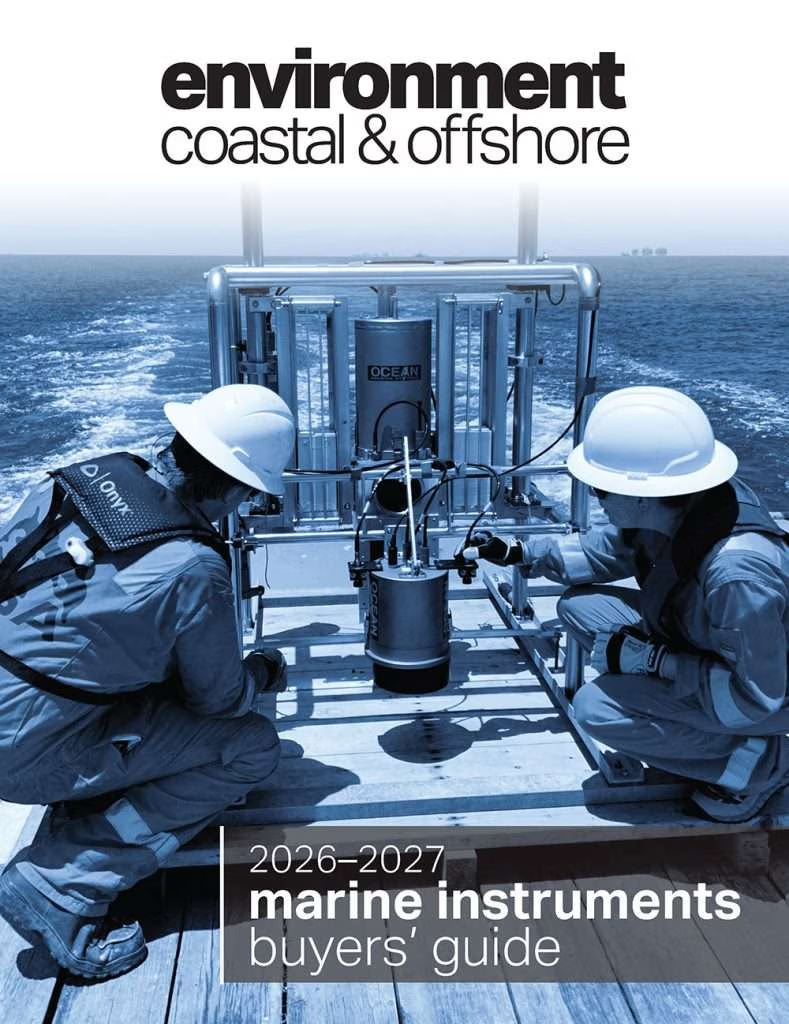
From now until the end of 2026, researchers from four Canadian universities will collect seasonal water samples from five key rivers that empty into the ocean using ODI’s automated depth sampler, Ascension.
The samples will be analyzed at the company’s ISO-5 Clean Microplastics Analysis Laboratory in Vancouver, and the data will be compared to CaMPSim-3D’s predictions. The results and fully validated model are expected to be released in 2027.
“This work is more than just science—it’s a roadmap for action,” said Dr. Johan Foster, researcher at the University of British Columbia. “By understanding how microplastics behave, we can help governments and environmental groups focus their efforts on the most effective solutions before these pollutants reach the open ocean.”
This project came about when the company worked with the NRC to develop an in-situ microplastics sensor to quantify and characterize microplastic particles in the environment in real time. The sensor prototype will be validated alongside standard sampling methods as part of this project.
Vahid Pilechi, Project Lead at the NRC, said, “Conventional sampling methods can be time-consuming, costly, and labor-intensive. This integrated approach accelerates the scientific data needed to inform decision-making, strengthening our ability to protect our oceans through evidence-based policy and targeted environmental action.”