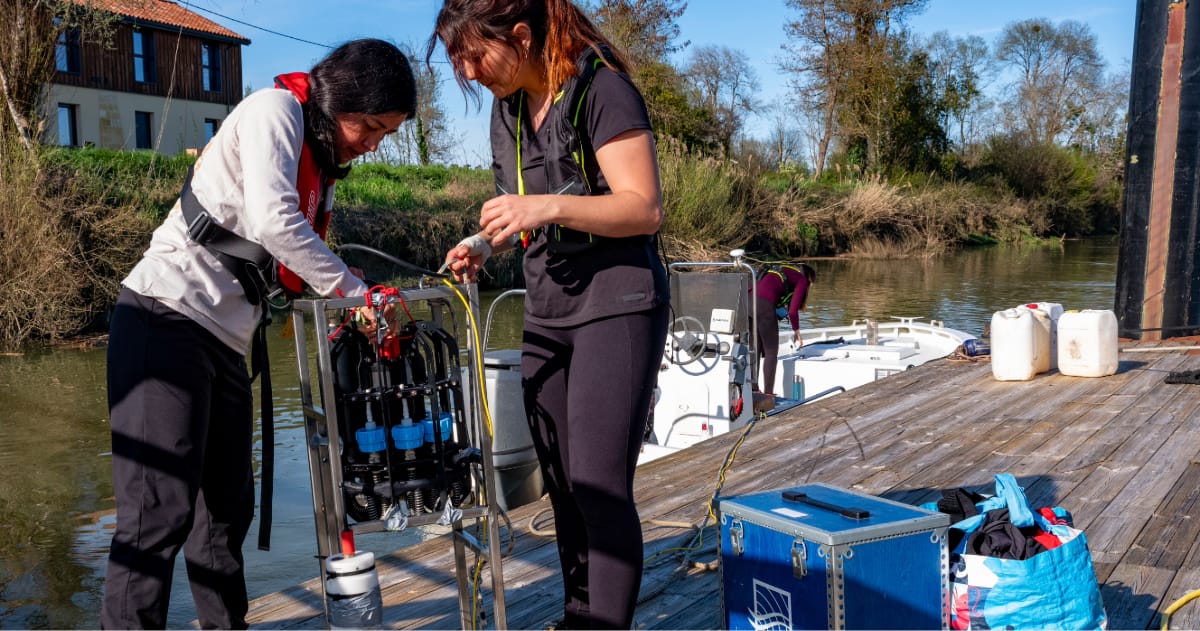
“There are not many studies that show microplastics variability in estuaries. It is quite new. With Ascension, we can easily go into the field and collect the data,” explained Isabel Jalon-Rojas, CNRS research scientist and project lead at the EPOC laboratory (CNRS, University of Bordeaux, Bordeaux INP, EPHE).
Acting as transition zones between rivers and seas, estuaries export land-based plastic pollution into the ocean, but monitoring this pollution is challenging due to their dynamic tides and high turbidity. Traditional microplastic sampling equipment cannot capture more than one sample at a time and requires rigorous and manual filtration processes, limiting the amount of data researchers can access.
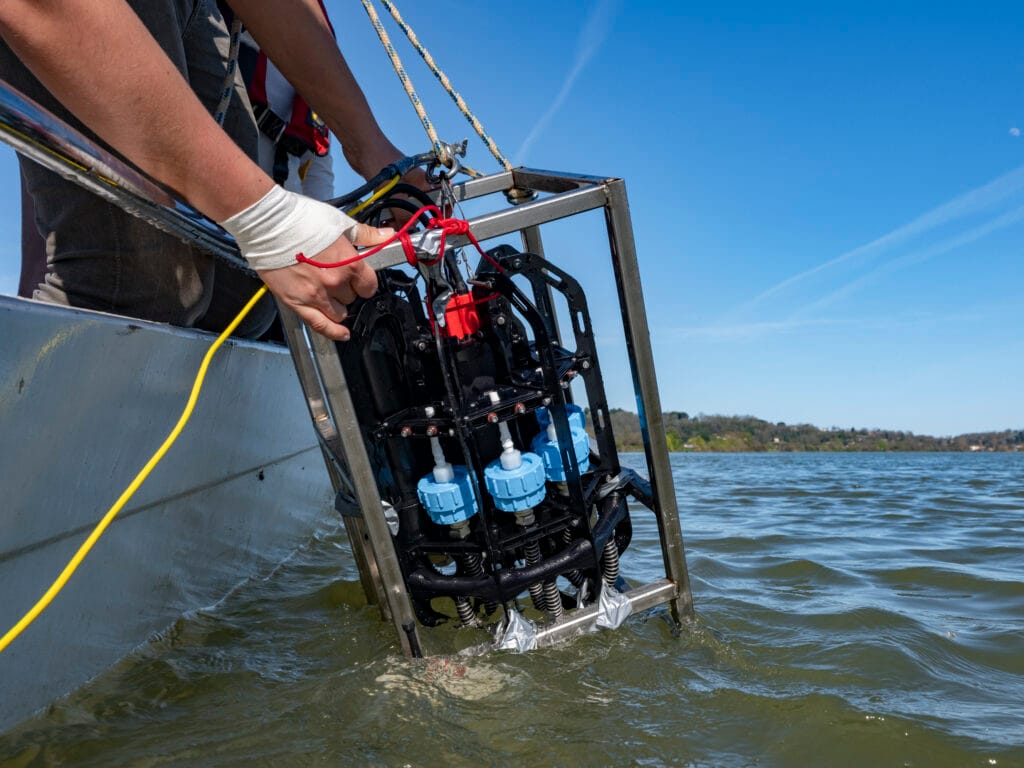
Ascension is a portable depth sampling instrument that collects filtered microplastic samples down to 400 meters from the side of any small boat. Like most instruments, it was originally designed for coastal sampling, where waters are clearer and more predictable.
In collaboration with CNRS, Ocean Diagnostics configured Ascension specifically for turbid conditions, enabling Jalon-Rojas and her team to routinely collect microplastic samples over changing tides, currents, and seasons in the Gironde Estuary in southwestern France.
“Field sampling is a very important part of my work. Ascension is comfortable to prepare, so when we have an opportunity, we can grab it and go see what’s happening,” Jalon-Rojas said.
Funded by the In2novation program, this collaboration has validated the sampling technology and methods for monitoring microplastics in estuarine environments, a key milestone in advancing scientific research to inform decision-making. CNRS is now working with the city to address solutions.