The seamount discovery is one of many from a 28-day expedition to the international waters of the Nazca Ridge led by Schmidt Ocean Institute in partnership with Ocean Census and the Center for Coastal and Ocean Mapping/Joint Hydrographic Center at the University of New Hampshire.
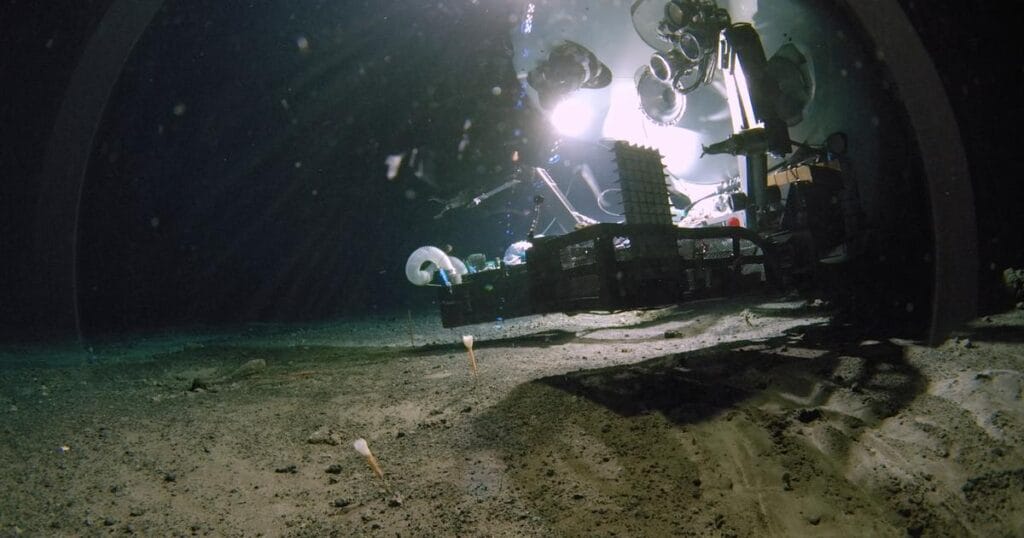
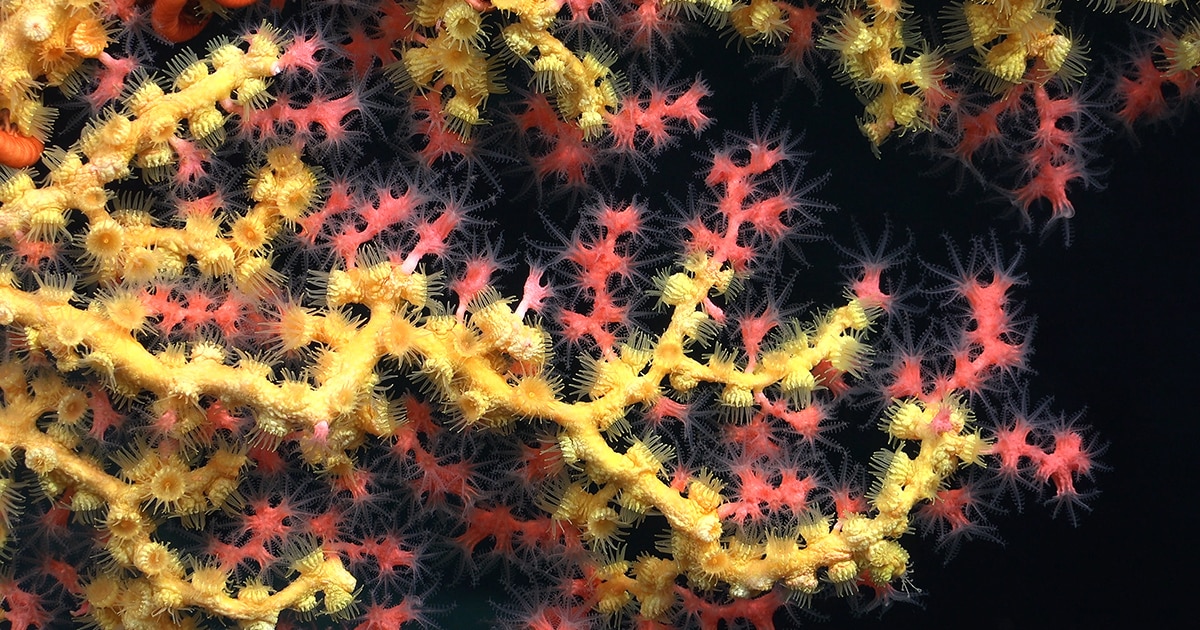
The newly discovered underwater mountain is over 1.9 miles (3,109 meters) tall and supports a thriving deep-sea ecosystem. In addition to mapping the seamount, the team conducted an exploratory dive with an underwater robot on one of the mountain’s ridges, finding sponge gardens and ancient corals.
The team mapped and explored nine additional unprotected features on this Southeast Pacific underwater mountain range. One of the mountains harbors a pristine coral garden consisting of deep-sea corals that provide shelter for an array of organisms such as rockfish, brittle stars, and king crabs. With an area of approximately 800 square meters, this coral garden is about the size of three tennis courts.
Beyond mapping seamounts to high resolution and conducting remotely operated vehicle (ROV) surveys, the team captured the first camera footage of a live Promachoteuthis squid, a genus that is so rare that only three species have been described based on only a few collected specimens, several of which are from the late 1800s. Until now, the squid genus has only been characterized from dead samples found in nets. They also documented a Casper octopus, the first time this species has been seen in the Southern Pacific. Two rare Bathyphasa siphonophores, commonly known as flying spaghetti monsters, were also seen during the expedition.
“Upon concluding our third expedition to the region, we’ve explored around 25 seamounts on the Nazca and Salas y Gómez Ridges,” said Co-Chief Scientist and Schmidt Ocean Institute Marine Technician Tomer Ketter. “Our findings highlight the remarkable diversity of these ecosystems while simultaneously revealing the gaps in our understanding of how the seamount ecosystems are interconnected. We hope the data gathered from these expeditions will help inform future policies, safeguarding these pristine environments for future generations.”
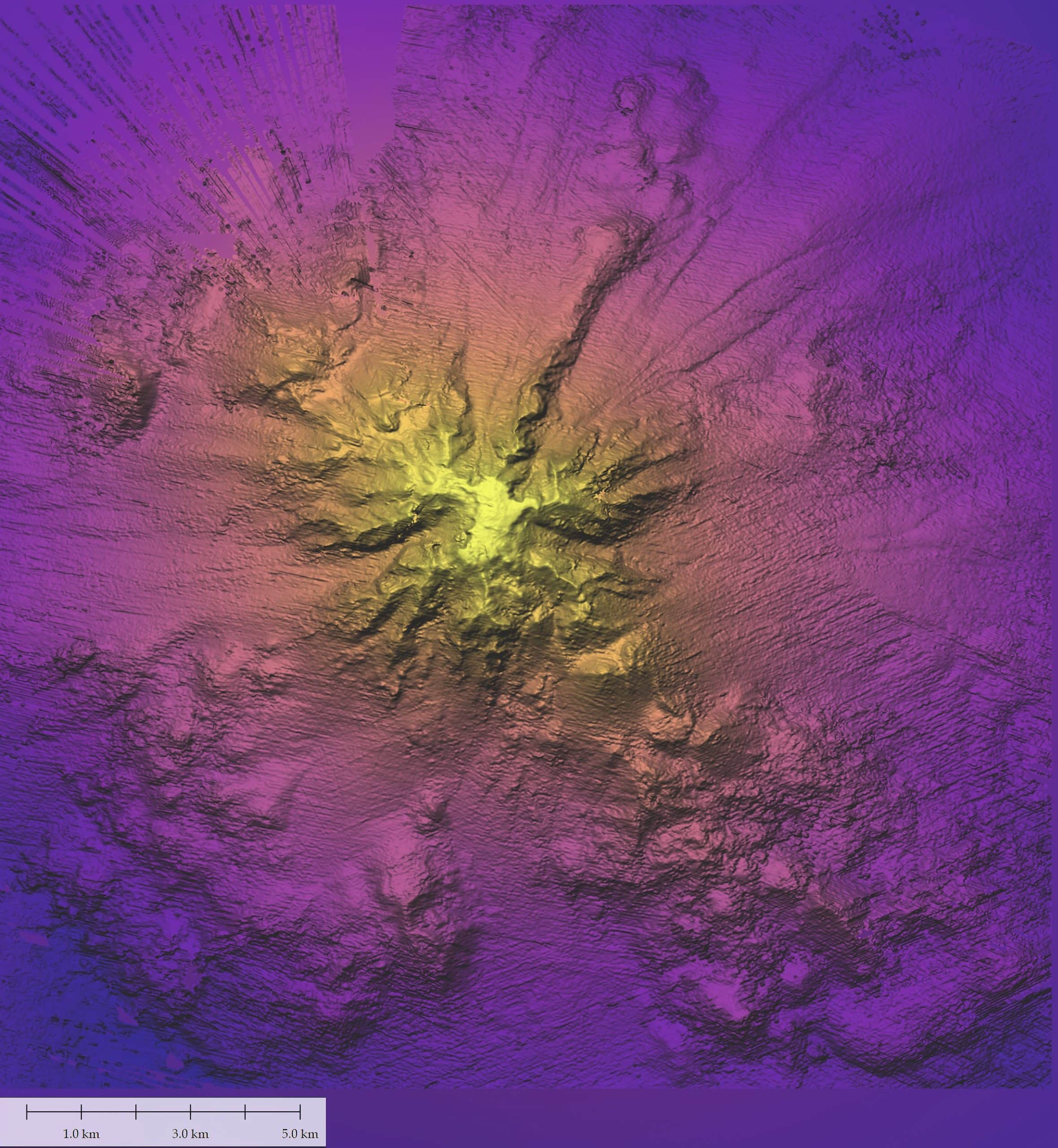
(Image credit: SOI)
The expedition was the third exploration this year of the Salas y Gómez and Nazca Ridges conducted on the Schmidt Ocean Institute’s R/V Falkor (too). Two previous expeditions in January and February documented over 150 previously unknown species and numerous range extensions for animals not previously known to live on the ridge. An additional 20 suspected new species were collected during this expedition.
Prior to Schmidt Ocean Institute’s expeditions this year, 1,019 species were known to live in this portion of the Pacific Ocean. The number now exceeds 1,300 and is growing. The records will be sent to the Ocean Census, an international collaborative alliance led by the Nippon Foundation and Nekton to accelerate the discovery and protection of ocean life.
“The seamounts of the Southeastern Pacific host remarkable biological diversity, with species found nowhere else to date,” said Prof. Alex David Rogers, Science Director of Ocean Census, “The work our taxonomists have conducted aboard Falkor (too), supported by Schmidt Ocean Institute team, will significantly enhance our understanding of the distribution of remarkable life forms on these underwater mountains, including several that have never before been mapped or seen by human eyes.”
High-resolution mapping was conducted by a team of hydrographers who graduated from the Center for Coastal and Ocean Mapping/Joint Hydrographic Center at the University of New Hampshire. The seafloor data will be included in the Nippon Foundation-GEBCO Seabed 2030 Project and will contribute to the international understanding and management of Nazca and Salas y Gómez.