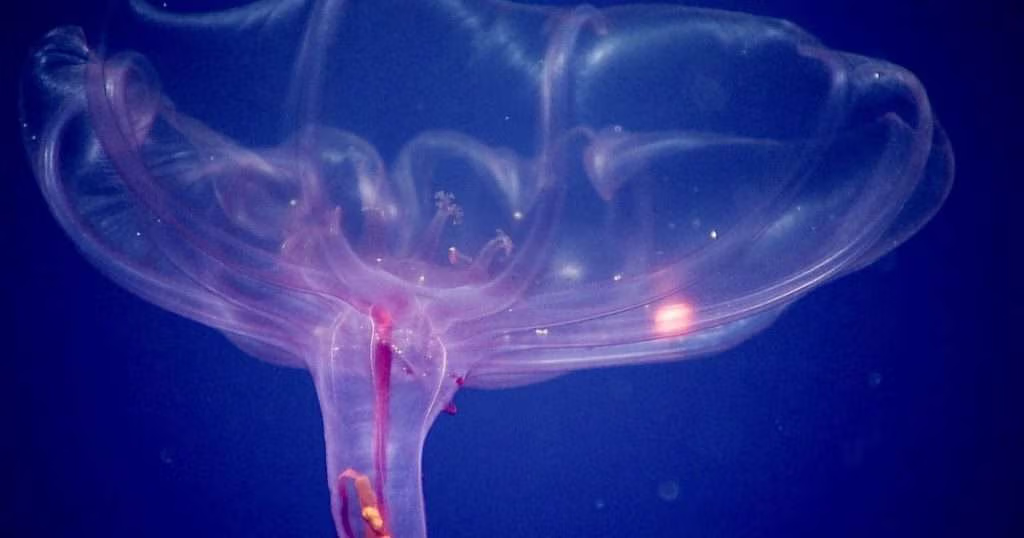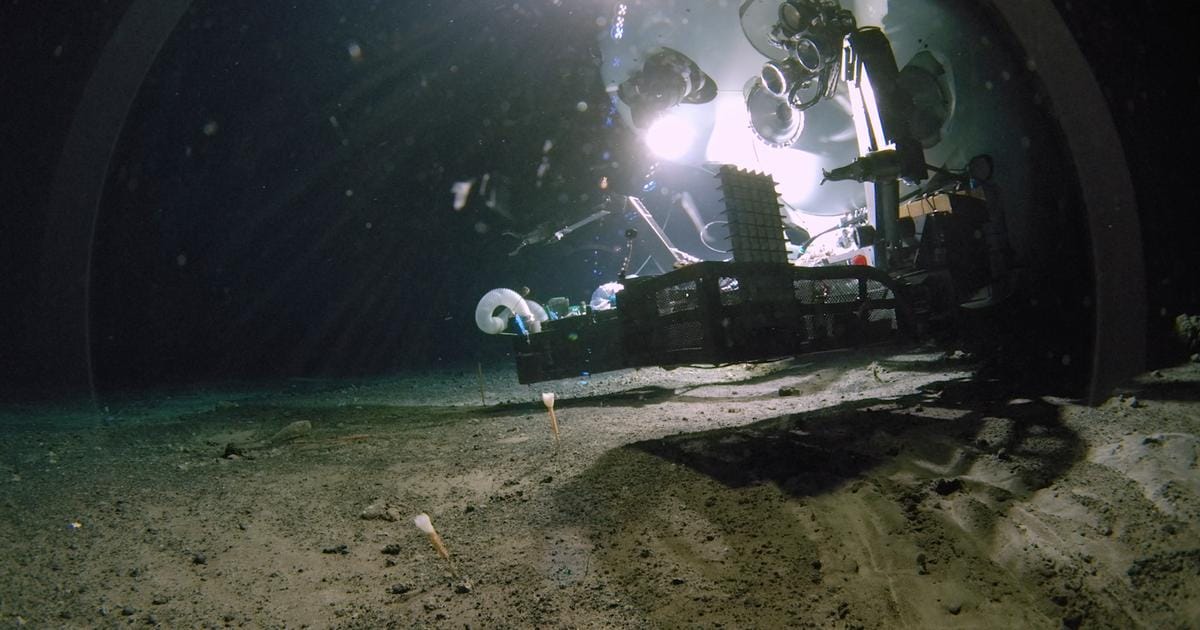
Supported by JAMSTEC’s research vessel Yokosuka and the crewed submersible Shinkai 6500, the expedition carried out ten deep-sea dives across a range of habitats, including volcanic seamounts and methane seep ecosystems.
The results have already transformed our understanding of Japan’s deep-sea biodiversity. Scientists have confirmed 38 new species and identified a further 28 potential new species from two of Japan’s deep-sea regions: the Nankai Trough and the underexplored Shichiyo Seamount Chain.
Following the expedition, taxonomists from Japan and around the world gathered at JAMSTEC headquarters in Yokosuka in October 2025 for a dedicated Species Discovery Workshop. Together, they assessed the collected material, confirmed species identifications, and accelerated the process of formally describing new species for publication.
Among the expedition’s most recent scientific outcomes are a series of studies led by Dr. Chong Chen, Senior Scientist with Tenure at JAMSTEC. Dr. Chen studies biodiversity across multiple scales, from species and ecosystems to genomes and evolutionary processes; his research seeks to answer fundamental questions about how biological diversity and innovations arise and enable life to colonize challenging habitats.
Revealing Hidden Diversity in Deep-Sea Snails
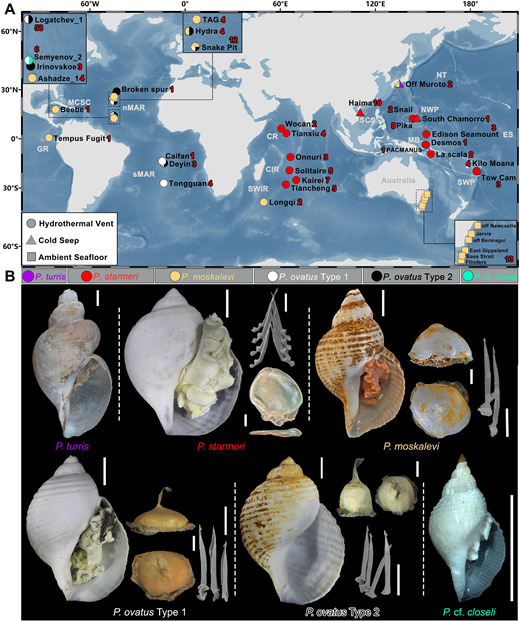
Global barcoding of the deep-sea snail genus Phymorhynchus reveals surprising distribution ranges and genetic diversity.
This specific study focused on the deep-sea snail genus Phymorhynchus, a group of predatory snails commonly associated with hydrothermal vents and cold seeps.
For many years, scientists assumed that populations separated by vast ocean distances represented different species. However, a global genetic study of 180 specimens collected from the Atlantic, Pacific, and Indian Oceans—including specimens collected during the Shinkai expedition—revealed a more complex picture.
Using molecular barcoding and morphological analysis, the research team identified six distinct species and demonstrated that some have much broader geographic distributions than previously recognized. Two species in particular, Phymorhynchus starmeri and Phymorhynchus moskalevi, were found to occur across remarkably large areas, with the latter appearing to have an almost global distribution.
The findings challenge long-held assumptions about species isolation in deep-sea habitats and suggest that some vent and seep organisms may be far more connected across the world’s oceans than previously thought.
A New Deep-Sea Clam from Japanese Cold Seeps
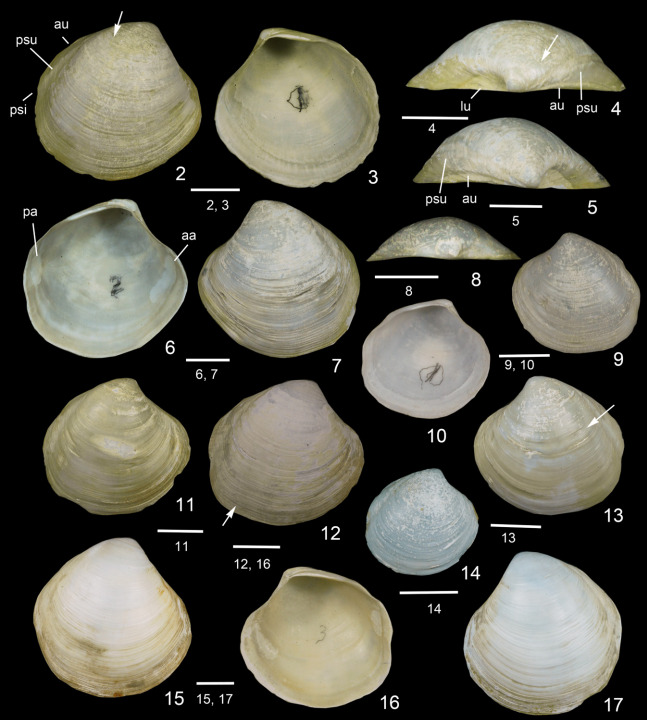
A new deep-sea species of Thyasira Lamarck, 1818 (Bivalvia: Thyasiridae) from cold seeps in Sagami Bay and Nankai Trough, Japan.
The expedition and associated research efforts, by Dr. Chong Chen, also contributed to the description of a new species of deep-sea clam, Thyasira okutanii.
This newly described species was discovered at cold seep sites in both the Nankai Trough and Sagami Bay. Like many members of the family Thyasiridae, the clam hosts chemosynthetic bacteria within its gills, allowing it to thrive in environments where sunlight never reaches and energy is derived from chemical reactions rather than photosynthesis.
Detailed morphological and genetic analyses confirmed that the species is distinct from its relatives, although it shares similarities with Thyasira sarsi, a species found in the North Atlantic and Arctic Oceans. The discovery provides new insights into the evolution and biogeography of chemosymbiotic bivalves inhabiting deep-sea reducing environments.
Accelerating the Discovery-to-Description Pipeline
While discovering new species is an important first step, formally describing and naming them is often a lengthy process that can take years.
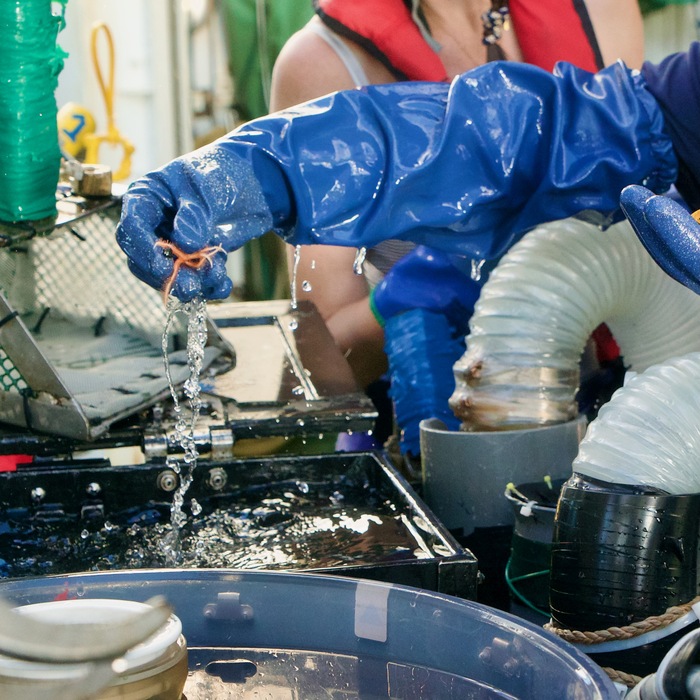
A key objective of the Ocean Census is to accelerate this discovery-to-description pipeline. The October 2025 Species Discovery Workshop at JAMSTEC represented a critical stage in this process. Researchers worked collaboratively to assess specimens collected during the expedition, confirm candidate new species, and coordinate publication efforts.
As the results from the Ocean Census–JAMSTEC expedition continue to be analyzed, many more discoveries are expected to emerge from the specimens collected. Together, they are helping to reveal the extraordinary diversity of life hidden in Japan’s deep ocean.