Previous studies in North America have confirmed exposure of several cetacean species not only to existing POPs, but also to other artificial contaminants and marine natural products with POPs-like physicochemical properties and toxicity. However, the species-specific differences in the accumulation levels and composition patterns of various organohalogen compounds (man-made pollutants, marine natural substances, and substances of unknown origin) in cetaceans remained largely unknown.
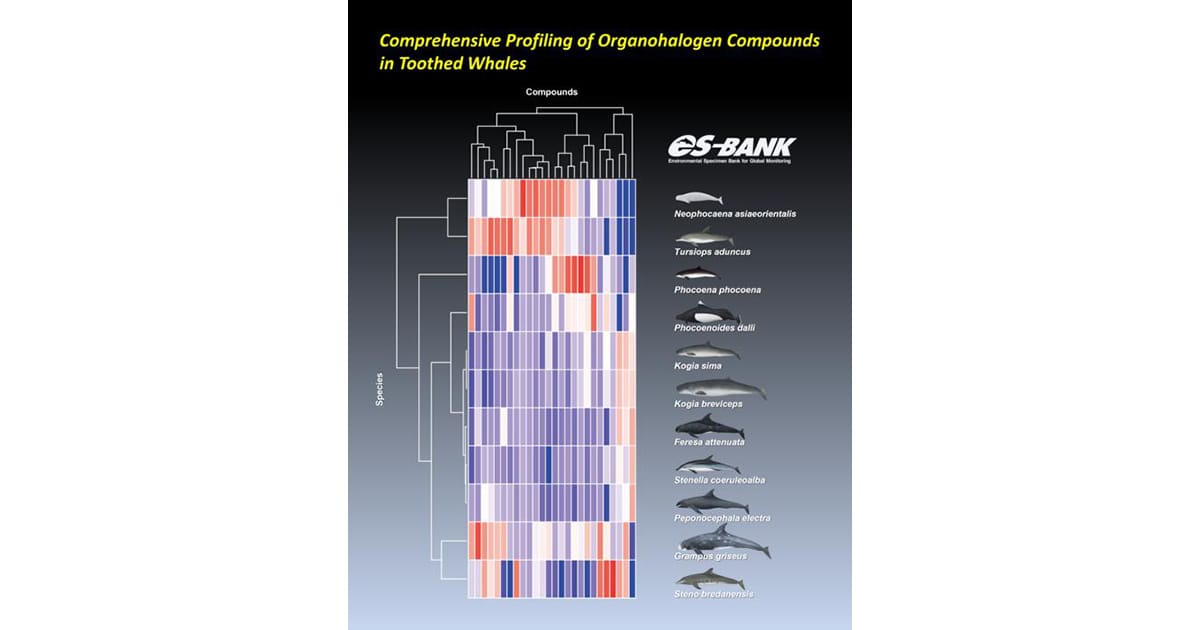
This study, published in the ACS journal Environmental Science & Technology, investigated the species-specific accumulation profiles of organohalogen compounds in blubber samples of 11 species of toothed whales archived in the Ehime University Environmental Specimen Bank (es-BANK) using comprehensive GC/MS analysis and cluster analysis. 313 organohalogen compounds were detected in the blubber samples, and their accumulation levels and composition profiles were found to reflect the differences in habitat, depth, and migration routes of individual whale species. The analytical methods established in this study will be useful for the comprehensive screening of chemical contaminants in marine mammal species as well as for tracing the current and past habitats of these animals.