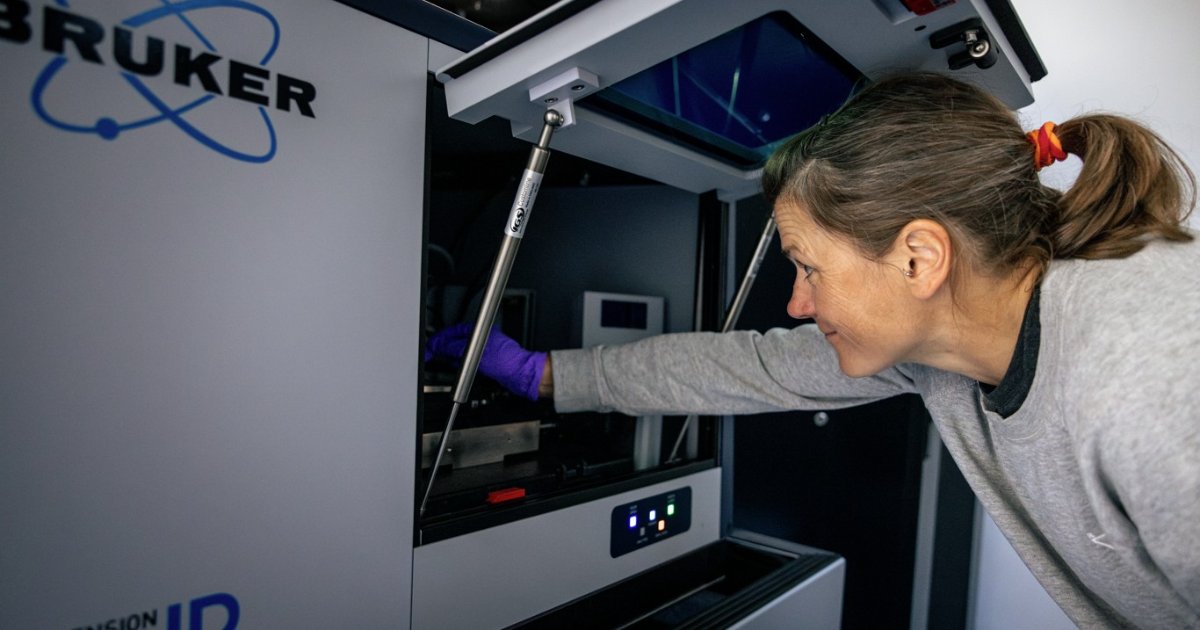
The newly installed system—the Bruker Dimension Icon Atomic Force Microscope integrated with Infrared spectroscopy (AFM-IR)—is an advanced analytical platform, and NOC will be one of the first research institutes in the UK to use this new technology predominantly for marine research.
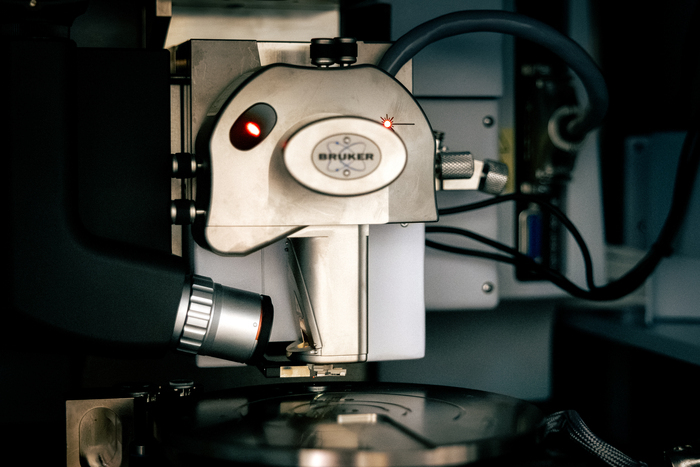
Its arrival at NOC’s Southampton location marks a major advancement in the ability to detect and understand nanoplastics, the smallest, most abundant, and potentially most harmful form of plastic pollution.
Nanoplastics are invisible to the human eye and are about 100 times thinner than a single human hair. Their tiny size makes them extremely hard for scientists to detect and study, because current tools often cannot pick them out from the many natural particles found in the ocean.
The AFM-IR system overcomes this by combining high-speed infrared spectroscopy with multiple modes of atomic force microscopy. Even more important, the technique is non-destructive and can identify the composition and properties of particles both at the surface and internally, meaning it can study complex ocean samples taken from across the globe.
Plastic waste is now found throughout the world’s ocean, raising serious environmental and societal concerns. These nanoplastic particles, created largely through the degradation of larger plastics, are believed to pose significant health risks because they can be pervasive and penetrate biological tissues.
It’s been funded through a UK Research and Innovation (UKRI) Future Leaders Fellowship awarded to Dr. Katsia Pabortsava under the NANOMES project (Grant Agreement UKRl2346).
“Marine nanoplastics remain among the biggest unknowns in ocean science. With this technology, we can finally begin to uncover how these particles are distributed and how they interact with ocean life and function. We are excited to start using it to study the abundance, distribution, and characteristics of nanoplastics in the ocean, their transport pathways, interactions, and fate,” said Dr. Katsia Pabortsava, NOC.
Dr. Pabortsava continued: “The AFM-IR system’s availability at NOC in Southampton provides national capability that accelerates development in these areas and opens avenues for groundbreaking research. We would be interested in exploring how we can work with other research organizations to expand its use.”
Dr. Rhys Jones, UK & Ireland Sales Manager for Bruker’s Nano Surfaces & Metrology Division, added: “We are delighted to be working with Dr. Pabortsava and the National Oceanography Centre on this important project. The analytical strengths of the Bruker Dimension IconIR system are well matched to the demands of this research, enabling detailed characterization of nanoplastics and their interactions with complex biological and environmental samples.
“By combining nanoscale infrared spectroscopy with high-performance atomic force microscopy (AFM), the platform enables correlative analysis of chemical composition, morphology, and local mechanical properties at the nanoscale. It also delivers accurate and repeatable FTIR-correlated spectroscopy, <5 nm chemical resolution, and monolayer sensitivity. With the acquisition of the Bruker Dimension IconIR, Dr. Pabortsava and NOC join a global community of researchers advancing nanoscale materials characterization with photothermal AFM-IR.
“We are proud to support NOC’s leadership in this field and to equip researchers with tools that drive scientific innovation and deeper environmental understanding.”