Based at the Woods Hole Oceanographic Institution (WHOI), C-CoMP brings together researchers and expertise across marine chemistry, microbiology, molecular biology, oceanography, modeling, and informatics to investigate the chemicals that connect marine microorganisms. Microbes produce, exchange, and consume these small molecules as currency, playing a critical role in moving carbon and nutrients through ocean ecosystems and ultimately influencing the exchange of carbon between the ocean and atmosphere.
The renewal builds on the center’s achievements during its initial five years of NSF support and will enable researchers to further investigate how chemical-microbial networks function and how they respond to a changing ocean.
Some of the highlights include:
- A new multi-scale modeling approach represents microbial cellular metabolism at the ocean scale.
- Breakthroughs in chemical measurement methods revealed diverse and previously unknown suites of molecules that are currencies in the ocean’s carbon cycle.
- A first-of-its-kind survey, Mapping Attitudes and Resources in Ocean Science Education (MARINE) Survey, investigated barriers to and positive supports for teaching ocean science in US K–12 classrooms.
- Three Bridge-to-PhD fellow cohorts were trained in oceanography and team science, preparing them for success in graduate programs.
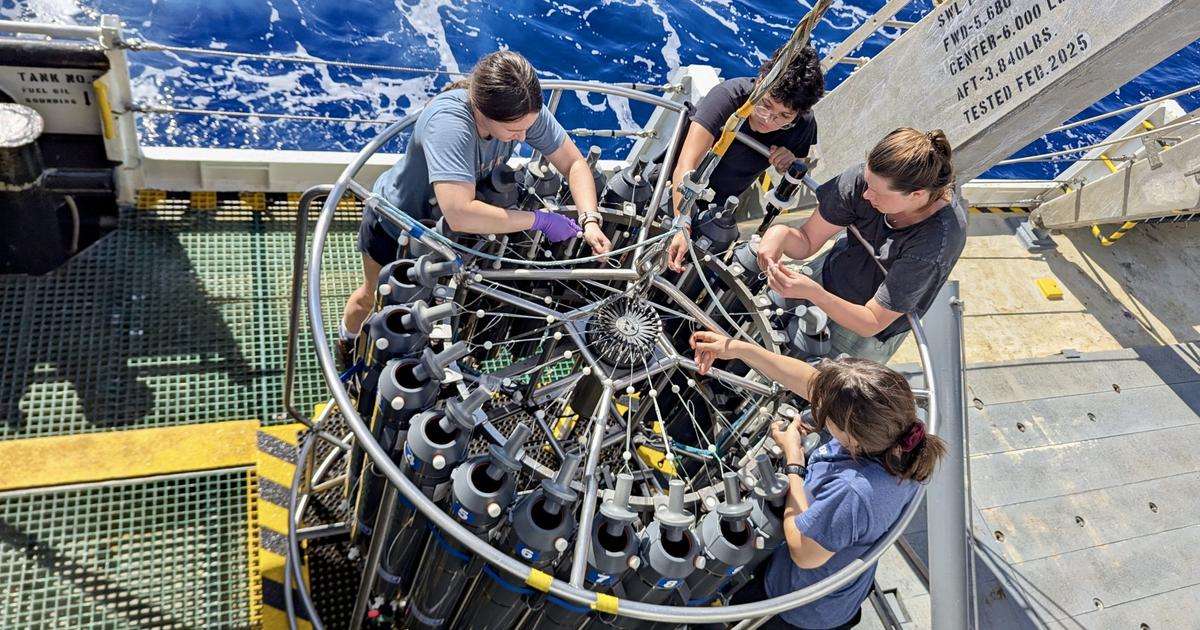
- Two research expeditions to the North Atlantic investigated seasonal patterns in the ocean’s network of chemicals and microbes at high temporal resolution.
- Publicly available data packages and software tools enable team-based integration of microbial and chemical data.
- To date, 73 peer-reviewed publications and 128 publicly available datasets reveal chemicals and microbes of the surface ocean carbon cycle.
“As C-CoMP moves to its second phase, I look forward to seeing how the project advances fundamental understanding of ocean biogeochemistry through its use of state-of-the-art laboratory, oceanographic and modeling technologies, while training a new cohort of scientists in interdisciplinary science,” said Elizabeth Canuel, an NSF Program Director overseeing the project.
C-CoMP was established in 2021 as one of six NSF Science and Technology Centers created to advance transformative research addressing critical societal needs. The center has also been named an Endorsed Ocean Decade Contribution by the United Nations Educational, Scientific and Cultural Organization (UNESCO), recognizing its broad scientific scope and commitment to advancing ocean research and education.
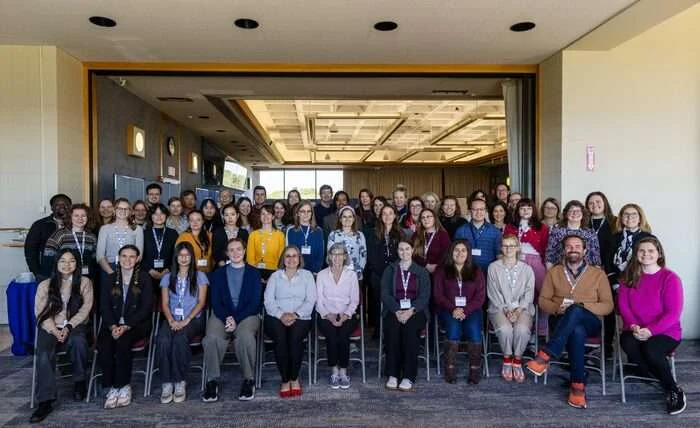
Elizabeth Kujawinski, senior scientist in WHOI’s Marine Chemistry & Geochemistry Department and director of C-CoMP, said, “The questions being addressed by C-CoMP have long proved intractable and require a cohesive, collaborative group of investigators from disparate fields and backgrounds. Our first five years built this team and established new analytical and computational methods for tackling our research mission. With these tools and this team, we are poised to explore the dynamics of the surface ocean microbiome as it responds to the different rhythms of our planet: the day/night cycle, the different seasons, and the long-term changes of planetary evolution.”
Through its renewed five-year program, C-CoMP will continue working toward a more predictive understanding of the ocean’s chemical-microbial network and how that network may change in a warming, acidifying world.
“Small molecules synthesized and processed by marine microbes account for one of the largest fluxes in Earth’s annual carbon cycle,” said Mary Ann Moran, a distinguished professor at the University of Georgia and C-CoMP Co-Director. “By uncovering this nearly invisible microscopic network of molecules and microbes, C-CoMP can better assess its vulnerability to future ocean conditions.”
The center’s work extends beyond research. C-CoMP also supports education, outreach, knowledge transfer, and efforts to expand participation in the ocean sciences. Its goal is not only to answer fundamental questions about how the ocean works, but also to build a more collaborative community equipped to tackle those questions.
“The legacy of C-CoMP will be a new understanding of how the surface ocean regulates the health of planet Earth, and a framework by which cohesive and collaborative teams can successfully tackle seemingly intractable questions,” said Kujawinski.