
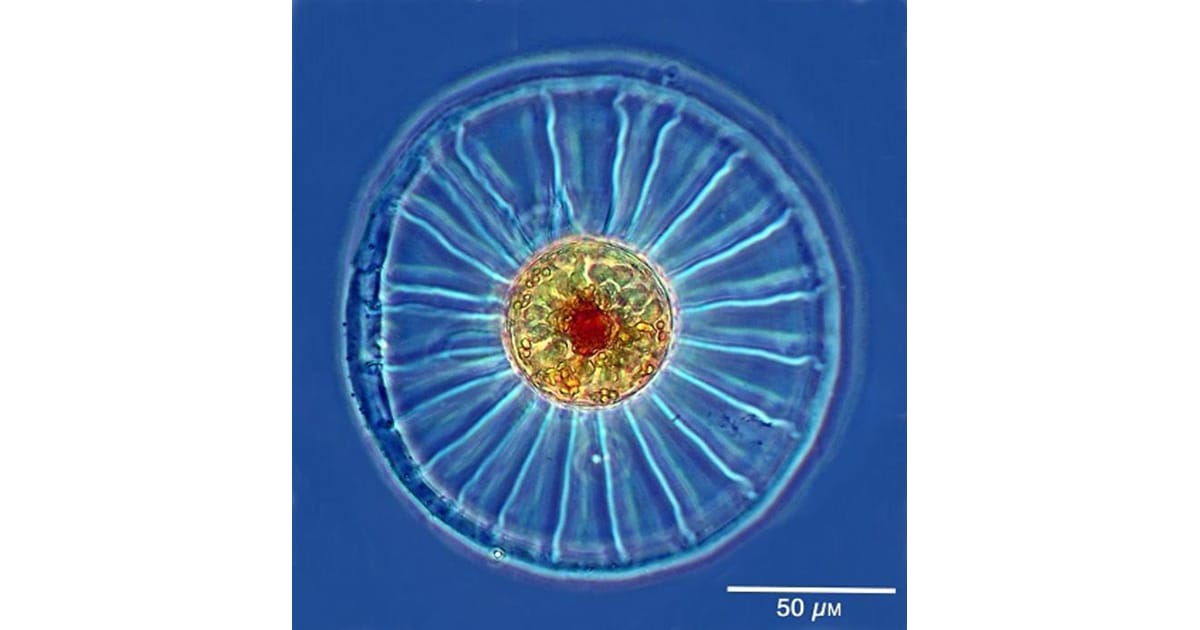
By studying the light perception process of diatoms, a group of phytoplankton, scientists from the CNRS and Sorbonne University discovered that these microalgae use light variation sensors, which are codified in their genomes: phytochromes.
These photoreceptors enable them to detect changes in the light spectrum in the water column, thereby providing information regarding their vertical position within it. This function is especially important in turbulent aquatic environments subject to substantial water mixing—such as high latitude, temperate, and polar regions—in order to adjust their biological activity, in particular photosynthesis. By analyzing environmental genomic data from marine sampling campaigns by Tara Oceans, the team observed that only diatoms from the zones beyond the Tropics of Cancer and Capricorn possess phytochromes. These zones, which are characterized by distinct seasonality, including major differences in day length, suggest that phytochromes enable the diatoms equipped with them to measure the passage of time through the seasons.
This study, which appears in Nature, sheds new light on the mechanisms by which phytoplankton detect and respond to light to find their way into their environment. It also highlights the importance of integrated approaches, both in the laboratory and in the natural environment, for understanding the complex dynamics of marine ecosystems and the ability of organisms to adapt to environmental change.