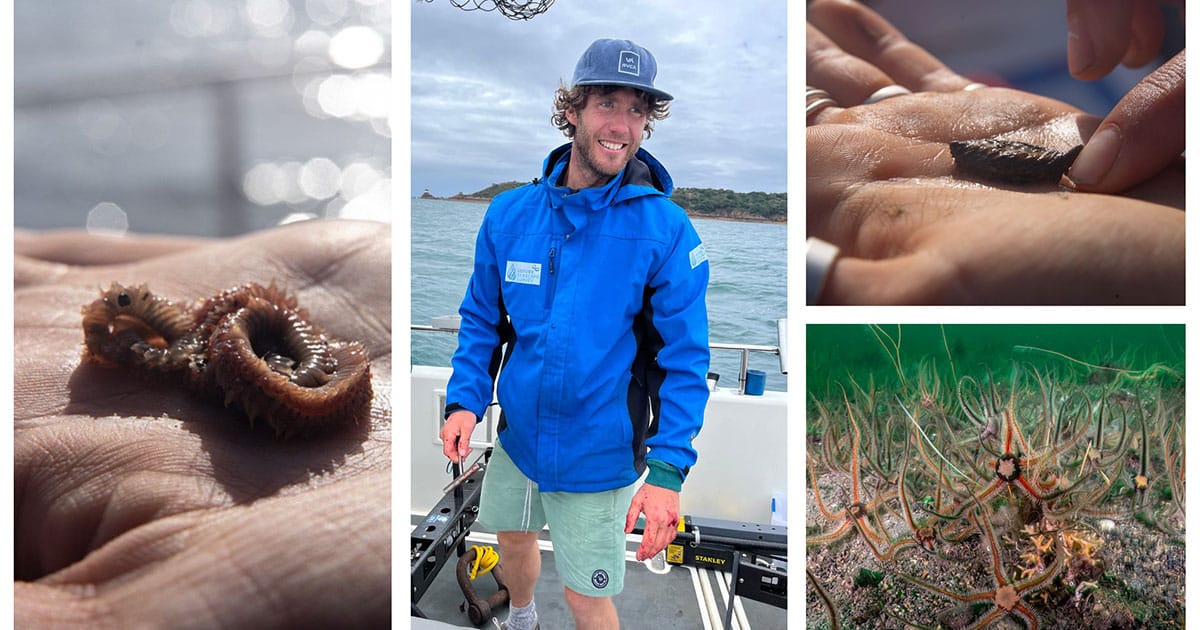
Muddy seabeds, long dismissed as barren, are proving to be anything but. When protected, life recovers rapidly, scientists say.
Research led by Dr. Ben Harris at the University of Exeter, focused on the South Arran Marine Protected Area, shows that nearly ten years without bottom-trawling has significantly boosted biodiversity.
Highly protected zones now host about twice as many species as nearby fished areas, alongside far greater overall abundance. The study, conducted under the Convex Seascape Survey, a global research program involving Blue Marine Foundation, the University of Exeter, and Convex Group, offers one of the clearest pictures yet of recovery in action.
Dr. Harris said: “These seabeds may appear empty, but they are anything but. They can recover when protected, but much more slowly than fish communities in protected areas. That means long-standing, well-enforced protection is needed to realize their full ecological and biodiversity benefits.’’
A Rapid Return of Life
For centuries, heavy fishing gear has been dragged across Europe’s seabed, flattening habitats and stripping away fragile ecosystems. Muddy seabeds, in particular, have been overlooked, written off as lifeless.
The Arran study overturns that assumption. In protected areas, scientists found thriving communities of worms, shellfish, and other invertebrates—species that play a critical role in maintaining healthy marine systems.
The resurgence is unmistakable and foundational to wider ecosystem recovery.
A Long-Term Process, Like Forests
But the study issues a note of caution: while biodiversity rebounds relatively quickly, climate benefits will take far longer. Researchers say carbon storage gains may take decades, more akin to the slow regeneration of an old-growth forest than a quick ecological fix.
“These systems rebuild over time,” said Harris. “Different species return at different stages, and together they shape how carbon is stored in the seabed.”
Delaying protection, he warned, risks pushing those long-term benefits even further out of reach.
Why Biodiversity Matters for Carbon
The research also examined carbon stored in seabed sediments, vast reservoirs of organic material.
Muddy seabeds are known to lock away significant amounts of carbon. Yet while biodiversity responded within a decade, measurable increases in stored carbon were not yet evident.
There were, however, early signs of stabilization: protection appeared to strengthen the relationship between sediment composition and carbon retention.
Scientists say this matters. It suggests that, over time, protected seabeds may become more reliable carbon stores, though the process is slow and easily disrupted.
Further studies in New Zealand and Bermuda aim to build on these findings. “Even marginal gains could matter at scale,” Harris said, “given the sheer extent of muddy seabeds.”
The Case for Stronger Protection
The evidence adds weight to calls for stricter marine protections, particularly full bans on bottom trawling. The most robust recovery was observed in areas with the highest levels of protection, suggesting partial measures may fall short.
Professor Callum Roberts, of the University of Exeter, said: “We’re beginning to reset the system. The signs are promising—but this is only the start.”
Rethinking the Seabed
With muddy sediments covering vast stretches of UK and European waters, the study challenges long-held assumptions about what parts of the ocean matter.
Far from lifeless, these seabeds are dynamic ecosystems, rich in biodiversity and potentially significant in regulating the climate.
Across study sites, more than 1,500 species were recorded. Yet only a fraction of Europe’s seabed—0.2%—is currently protected from destructive fishing practices.
The Bottom Line
The conclusion from scientists is stark: protect now, or pay later.
Marine life in the water column, such as fish, can recover relatively quickly once protection is introduced. However, the seabed responds far more slowly. Long-term, well-enforced protection is needed to see full ecosystem benefits, with carbon recovery taking even longer. Delay, and both are put at risk.
The study lays the groundwork for further research into how seabed protection influences carbon storage. But its immediate message is clear enough: the window for action is narrowing.
Professor Roberts concluded: “The evidence is clear: protection works. What’s missing now is the urgency to act on it.”