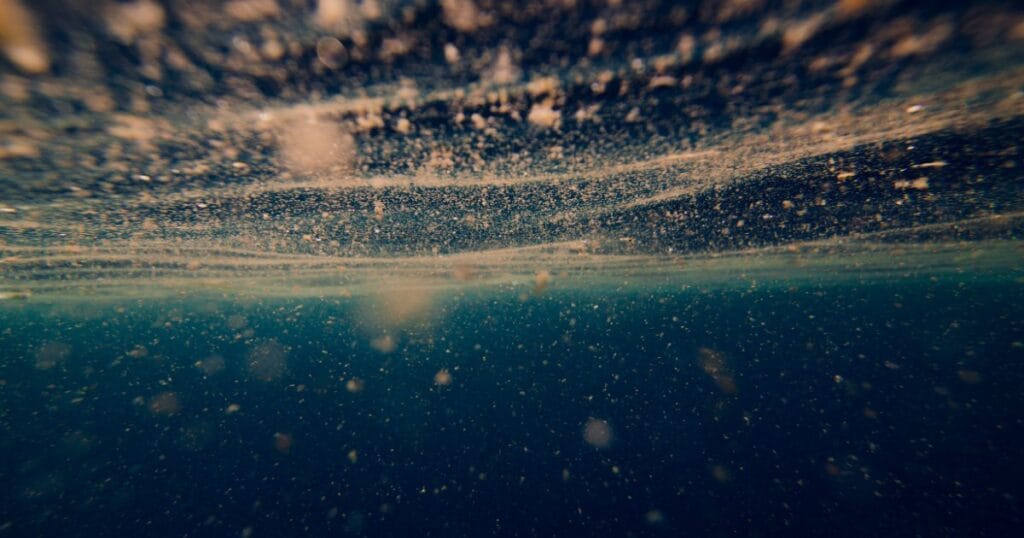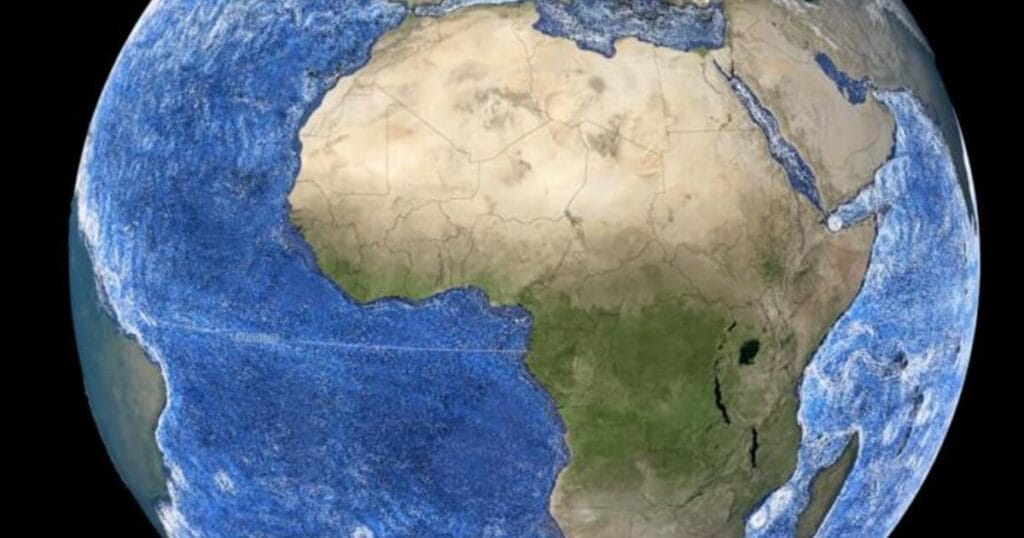
Now, a new study published in the journal Science Advances and led by the Institute of Marine Sciences (ICM-CSIC) and the Barcelona Supercomputing Center – Centro Nacional de Supercomputación (BSC-CNS) has made it possible to observe and quantify a key transport pathway: the large-scale winter upwelling of surface water rapidly delivers nutrient-rich organic particles to depths of over 1,000 meters.
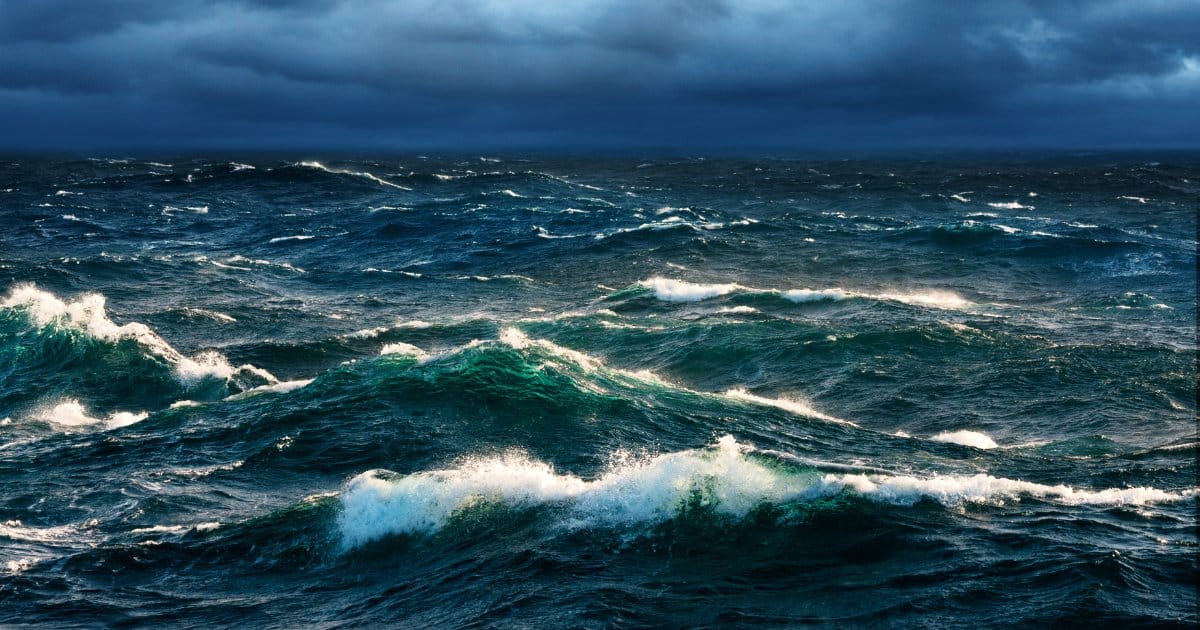
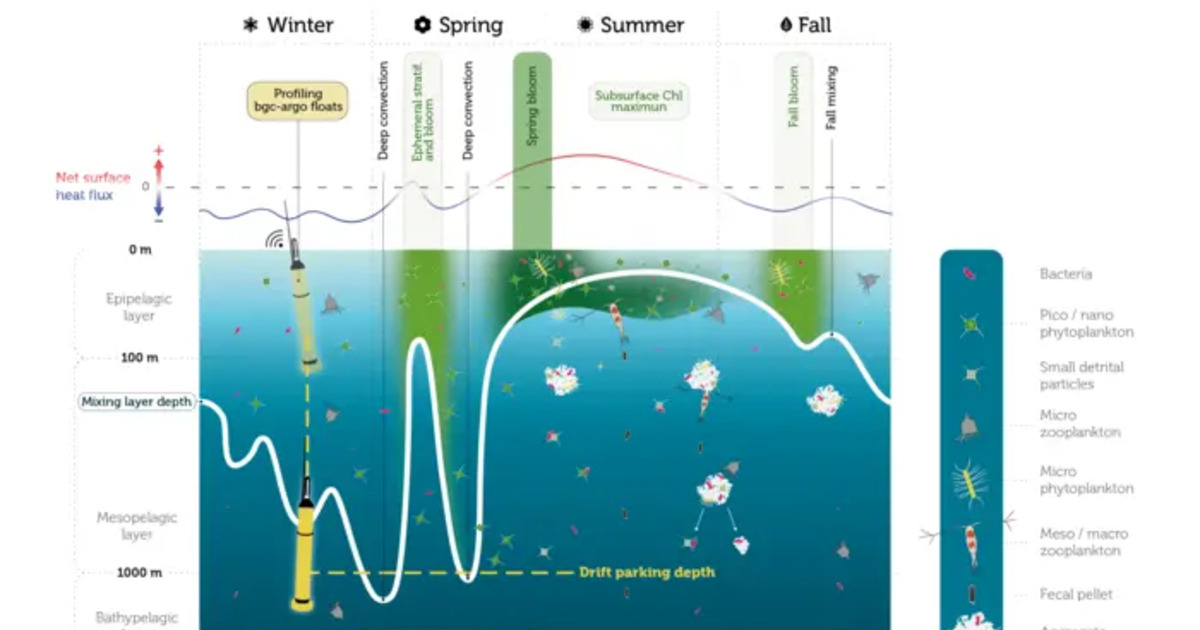
In regions such as the subpolar North Atlantic, the cold and strong winter winds cool the surface water, making it much denser and heavier, causing it to sink rapidly. This process, known as ‘deep convection’, fuels the currents that connect all the oceans over the centuries, and helps regulate the global climate and carbon storage in the ocean.
The study demonstrates that this ‘underwater cascade’ acts as a mechanical shortcut, carrying living microalgae and organic debris to the seabed much more rapidly and to a greater depth than previously thought. This transport is intermittent and regional in scope, but far more efficient than the sedimentation of particles by gravity (the dominant transport mechanism).
Underwater Robotics and Supercomputing
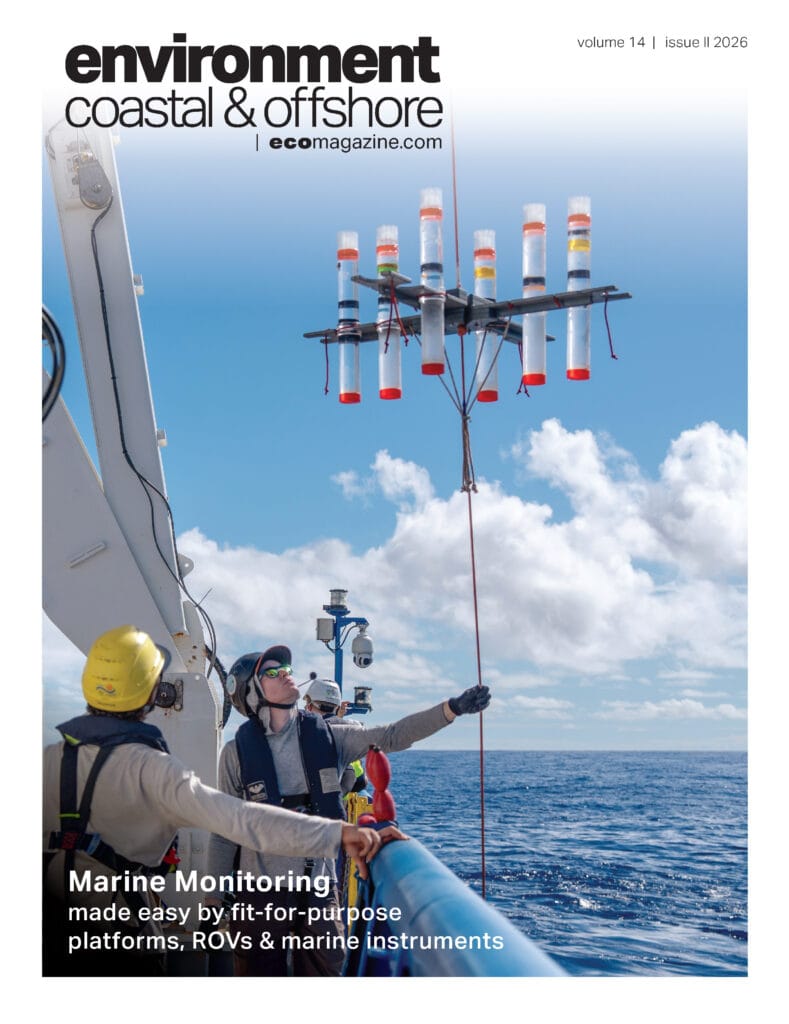
To carry out the study, the scientific team combined real-world data with highly sophisticated computer simulations. On the one hand, they analyzed data from a fleet of autonomous underwater robots (known as Biogeochemical-Argo floats) that drift and take measurements at a depth of around 1,000 meters. Thanks to these devices, surprising peaks of chlorophyll have been detected in the depths of the Labrador and Irminger Seas, coinciding with the intense episodes of surface water sinking that occurred between 2014 and 2017.
“Finding these concentrations of chlorophyll—typically found in the sunlit surface layer—at such a depth came as a huge surprise, because normally it would have broken down long before reaching that depth,” explained Martí Galí, a researcher at ICM-CSIC and lead author of the study. “These data allow us to quantify a hitherto little-known source of carbon within the ocean and open up a vast range of possibilities for using these robots as the eyes of science in the deep ocean.”
To calculate the scale of this shortcut on a global level, the researchers used a computer model that simulates marine physics and biogeochemistry. The simulations were run using the BSC’s supercomputing resources.
“The story began right here at BSC, where we realized that we needed to better link these large-scale water movements with the carbon cycles,” recalled Raffaele Bernardello, a researcher in the BSC’s Earth Sciences Department and co-author of the study. “The simulations have enabled us to estimate that transport doubles during the harshest winters and that the carbon does not remain stagnant; rather, some of it travels laterally and is stored far from the area where it has sunk, prolonging its positive effect on the climate.”
A Feast for the Deep Ocean
Furthermore, the study indicates that in years of strong winter mixing, this mechanism contributes between 30 percent and 50 percent of all organic particles reaching the layers between 500 and 2,000 meters. Furthermore, by analyzing the properties of the particles at 1,000 meters and comparing them with those observed by satellites at the surface, it has been found that the injected material is very rich and full of energy.
Mª Andrea Orihuela-García, who is completing her doctoral thesis at the ICM-CSIC in association with BSC, highlights the implications for deep-sea ecosystems: “This process not only serves to capture carbon from the atmosphere, but also sends energy directly downwards. These vertical currents act as a veritable unexpected seasonal feast that nourishes and energizes the communities of microbes and small animals living in the deep ocean.”
Against this backdrop, the team emphasizes the need for further research in this area to improve observations of this phenomenon and its representation in numerical models, including those of the Intergovernmental Panel on Climate Change (IPCC). Furthermore, the team emphasizes the need to maintain and strengthen ocean observation systems using satellites and autonomous robots, particularly the Argo program, an international, collaborative effort based on the principles of open science.
Finally, at a time when human activity is altering the planet’s climate and threatens to weaken water downwelling in the North Atlantic (a highly significant process), constant and global monitoring of the ocean—from the surface to the depths—is becoming more important than ever for understanding and predicting climate change.