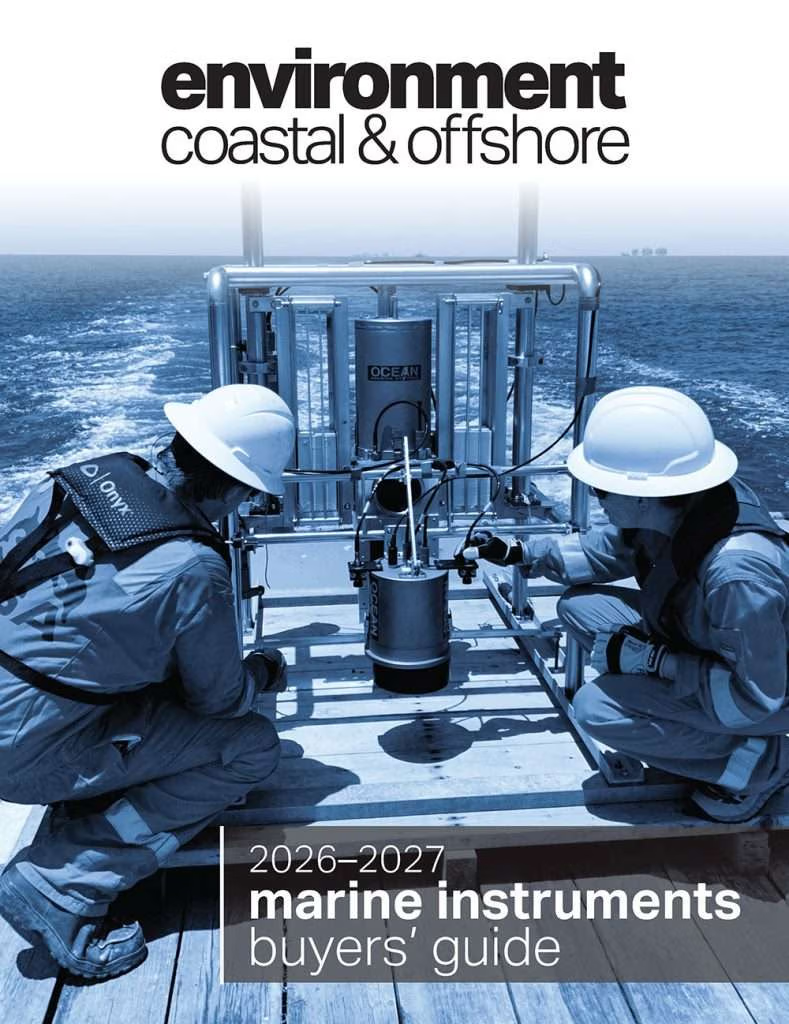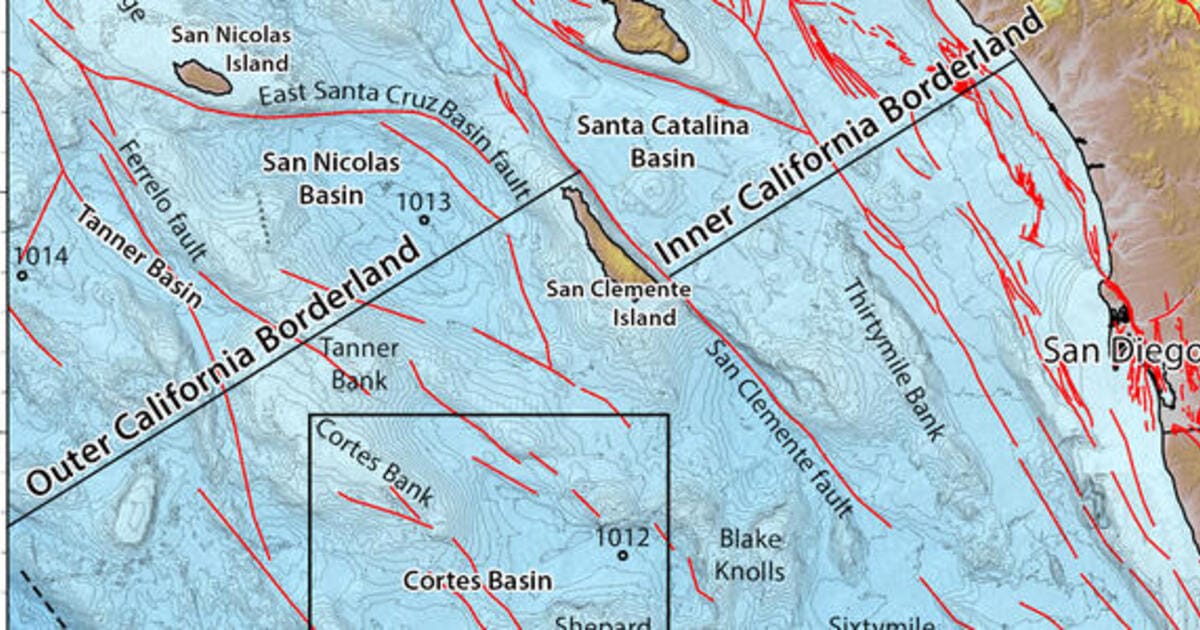
To investigate the basin’s geologic history, scientists aboard the research vessel Sally Ride, operated by the Scripps Institution of Oceanography, used a hull-mounted sub-bottom profiler to collect new, high-resolution geophysical data that imaged the seafloor and the layers below it. These data revealed multiple landslide deposits stacked atop one another, indicating that slope failures have occurred repeatedly over hundreds of thousands of years.
This study found that earthquakes likely triggered most of the identified landslides. Numerous active fault systems capable of generating strong shaking cross Southern California’s offshore basins. When earthquakes occur beneath or near steep underwater slopes, the shaking can destabilize sediments and trigger submarine landslides, which may displace large volumes of seawater and generate tsunamis.
Sea-level fluctuations also affect sediment delivery to offshore basins. Over the past 750,000 years, Earth has experienced repeated cycles of glacial and interglacial periods, causing sea levels to rise and fall dramatically. These changes influence how sediment accumulates on the continental margin and can affect the stability of underwater slopes.
In addition to being triggered by earthquakes, fluctuations in sea level also helped control when and where landslides occurred by altering sediment supply and the conditions that made slopes more susceptible to failure.
Implications for Coastal Communities
Southern California’s coastline is home to millions of people and critical infrastructure, including ports, energy facilities, communication cables, and transportation networks.
Understanding the long-term history of offshore earthquakes and submarine landslides can help scientists better evaluate:
- Tsunami hazards
- Seafloor instability
- Risks to offshore infrastructure
- Potential impacts on coastal communities
These findings highlight the importance of continued research into offshore seismic hazards in the Cortes Basin and similar basins along the Southern California coast.